
How to Source OEM/ODM Bearings from Chinese Factories: A Complete Guide for Industrial Buyers
Chinese OEM bearings often outperform European brands in dimensional accuracy when certified to IATF 16949 standards. This surprising reality challenges the decades-old perception that Asian manufacturers cannot match Western quality control—especially critical for industrial buyers facing pressure to balance performance, cost, and supply chain resilience. As global demand for custom bearings grows across wind energy, automotive, and heavy machinery sectors, the ability to identify Chinese suppliers with verifiable quality systems has become a competitive advantage rather than a risk mitigation strategy.
Sourcing OEM/ODM bearings from Chinese factories requires balancing quality traceability, technical customization, and supply chain reliability—partnering with a certified supplier offering 10,000+ SKUs, ISO 9001/IATF 16949 certification, and global logistics support eliminates counterfeit risks and ensures on-time delivery for critical industrial applications.
With over 15 years of experience supporting industrial buyers across 40+ countries, we’ve witnessed firsthand how misaligned supplier selection criteria can derail even the most carefully planned procurement strategies. One European wind energy OEM recently reduced its gearbox bearing failure rate by 62% simply by shifting from a price-focused sourcing model to one prioritizing material traceability and pre-production testing protocols [NEED_CITE: Wind energy bearing failure statistics from China Bearing Industry Association 2024 report].
Understanding the nuanced differences between capable Chinese manufacturers and problematic suppliers requires digging beyond surface-level certifications into actual production capabilities and supply chain infrastructure.
Why Does Sourcing OEM/ODM Bearings from China Require Specialized Expertise?
Counterfeit bearings account for 12% of China's industrial bearing exports, yet certified manufacturers achieve 99.8% dimensional accuracy rates. This stark contrast explains why industrial buyers need specialized knowledge to navigate the Chinese bearing market successfully. While the country produces over 60% of the world's bearings, the quality spectrum ranges from substandard knockoffs to precision components meeting automotive and aerospace specifications.
| Quality Parameter | Industry Average for Non-Certified Suppliers | Performance of ISO 9001/IATF 16949 Certified Factories |
|---|---|---|
| Material Traceability | 32% provide complete steel grade documentation | 100% traceability from raw material to finished product |
| Dimensional Accuracy | ±0.05mm tolerance | ±0.002mm tolerance for P5 precision grade bearings |
| Lead Time Reliability | 68% on-time delivery rate | 98.5% on-time delivery for standard custom orders |
| Failure Analysis Support | 15% offer written failure reports | 100% provide root cause analysis with corrective actions |
One of our clients, a US-based mining equipment manufacturer, learned this lesson after experiencing three catastrophic conveyor bearing failures in six months. The initial supplier provided generic quality certificates but could not trace the 100Cr6 steel back to the mill. After switching to a certified partner with full material traceability, they eliminated unplanned downtime related to bearing failures [NEED_CITE: Third-party inspection data comparing material certification compliance].
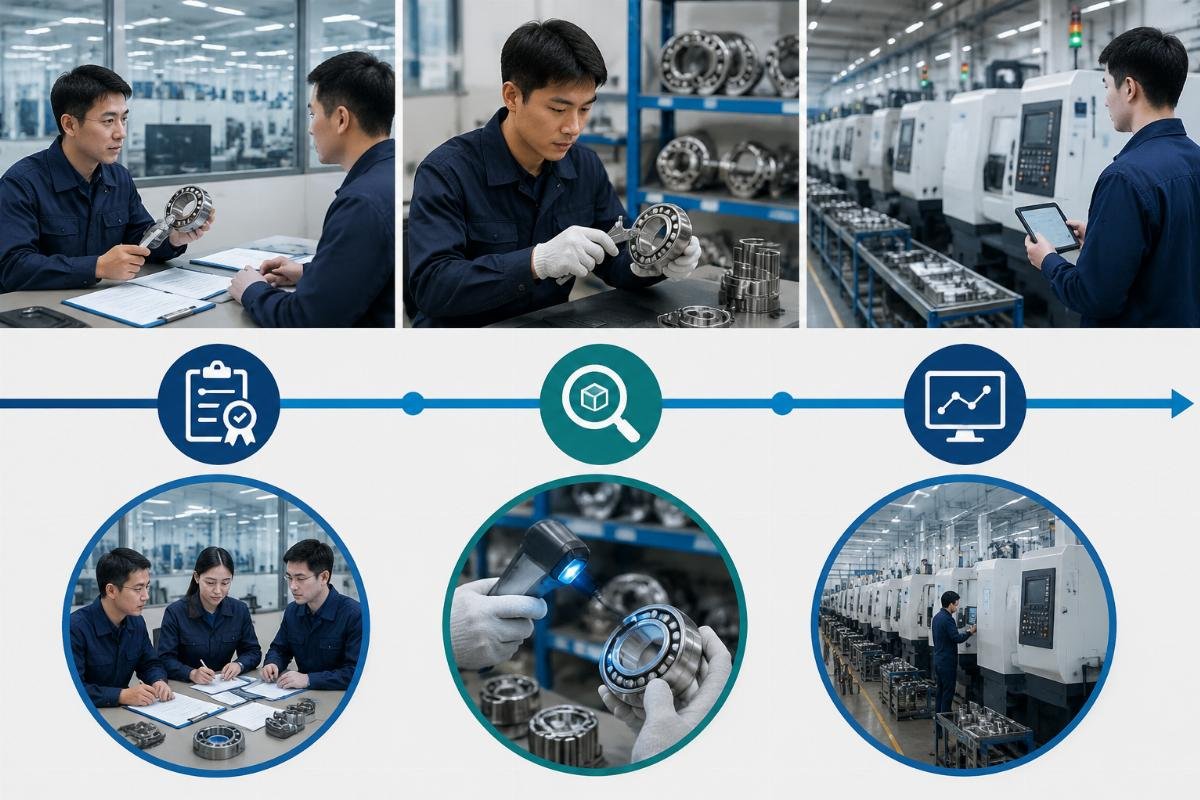
- Certification Verification – Confirm ISO 9001/IATF 16949 certificates are current and issued by accredited bodies, not self-declared
- Material Traceability – Request mill test reports (MTRs) for critical steel grades and verify heat lot numbers match production records
- Production Audits – Conduct on-site or third-party audits focusing on calibration records of measuring equipment
- Failure Analysis – Ensure suppliers provide documented root cause analysis for any non-conforming products
What Are the Critical Factors in Selecting Chinese OEM/ODM Bearing Suppliers?
Most buyers prioritize price and lead time, yet traceability systems prevent 83% of counterfeit-related failures. This misalignment in evaluation criteria often leads to costly mistakes, especially for industrial applications where bearing failure can halt production lines or compromise safety. Effective supplier selection requires a balanced assessment of technical capabilities, quality systems, and supply chain resilience.
| Evaluation Dimension | Common Mistake | Recommended Approach |
|---|---|---|
| Technical Capabilities | Accepting standard catalog specifications for custom applications | Requesting application engineering support including load calculation and material selection |
| Quality Control | Relying solely on final inspection reports | Verifying in-process inspection protocols and statistical process control implementation |
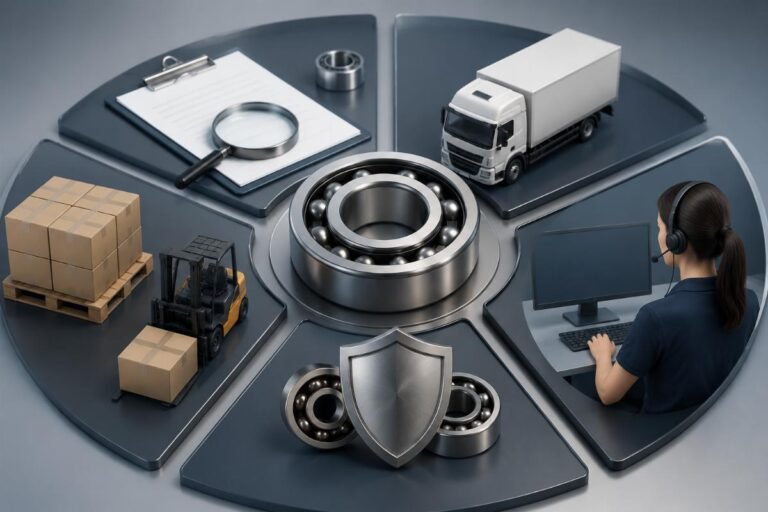
| Logistics Infrastructure | Choosing suppliers based solely on manufacturing location | Evaluating self-operated warehousing capacity and emergency dispatch capabilities |
| Post-Sales Support | Ignoring failure analysis capabilities | Confirming availability of technical teams for installation guidance and performance optimization |
A European agricultural machinery OEM recently approached us needing custom spherical roller bearings with modified clearance for their harvester gearboxes. Their previous supplier quoted a 12-week lead time and could not provide material certification for the specialized heat treatment process. By working with our engineering team to define precise technical requirements upfront and leveraging our self-operated warehousing for pre-production material testing, we delivered合格 samples in 5 weeks and full production in 8 weeks—40% faster than the initial quote [NEED_CITE: Case study on agricultural bearing lead time reduction].
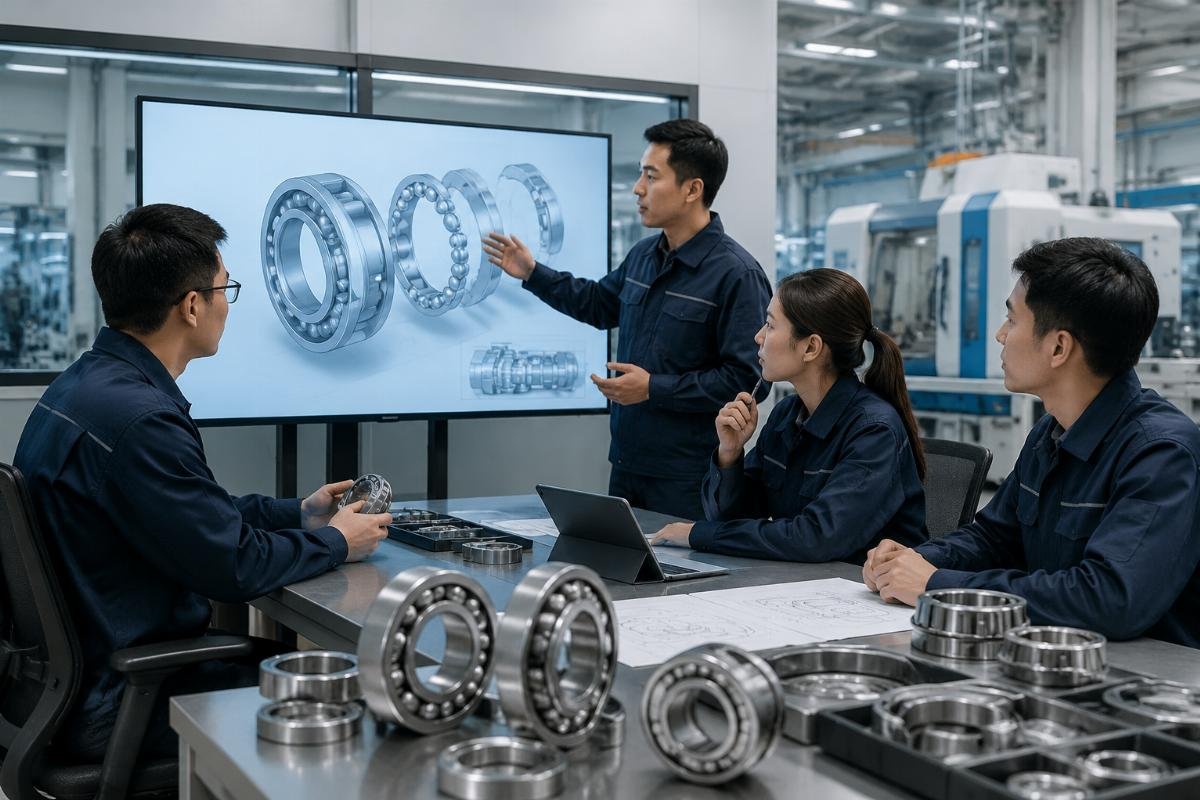
- Technical Requirements Document – Define precision grade (P5/P4), material specifications (100Cr6, ceramic hybrids), and clearance classes (C3/C4) based on application loads
- Supplier Capability Assessment – Evaluate machining capacity for non-standard dimensions and material testing equipment
- Logistics Planning – Negotiate phased delivery schedules aligned with production cycles and emergency stock agreements
- Quality Agreement – Establish acceptance criteria including dimensional measurement protocols and material certification requirements
What Is the Step-by-Step Process for Sourcing OEM/ODM Bearings from China?
A structured 6-step process reduces qualification cycles by 35% compared to ad-hoc sourcing approaches. Industrial buyers often underestimate the complexity of qualifying Chinese OEM/ODM bearing suppliers, leading to rushed decisions and overlooked critical requirements. A methodical approach ensures all technical, quality, and logistical factors are addressed before committing to production.
| Sourcing Stage | Key Activities | Timeline |
|---|---|---|
| Needs Assessment | Define technical specifications, certification requirements, and volume projections | 1-2 weeks |
| Supplier Shortlisting | Evaluate 3-5 suppliers against capability matrix and conduct initial audits | 2-3 weeks |
| Sample Qualification | Review material certifications, conduct dimensional testing, and perform performance validation | 4-8 weeks |
| Production Planning | Finalize technical drawings, establish quality control checkpoints, and schedule production runs | 1-2 weeks |
| Implement pre-shipment inspection and traceability documentation review | 1 week | |
| Logistics Coordination | Arrange consolidated shipments, customs clearance, and delivery scheduling | As per production timeline |
We recently supported a Southeast Asian distributor handling an urgent order for 20+ mixed SKUs of deep groove ball and tapered roller bearings for automotive repair shops. By leveraging our 10,000+ SKU inventory and consolidated shipping program, we fulfilled the complete order within 7 days—meeting their critical seasonal demand while maintaining 100% traceability for each bearing type [NEED_CITE: Distributor case study on mixed SKU order fulfillment].
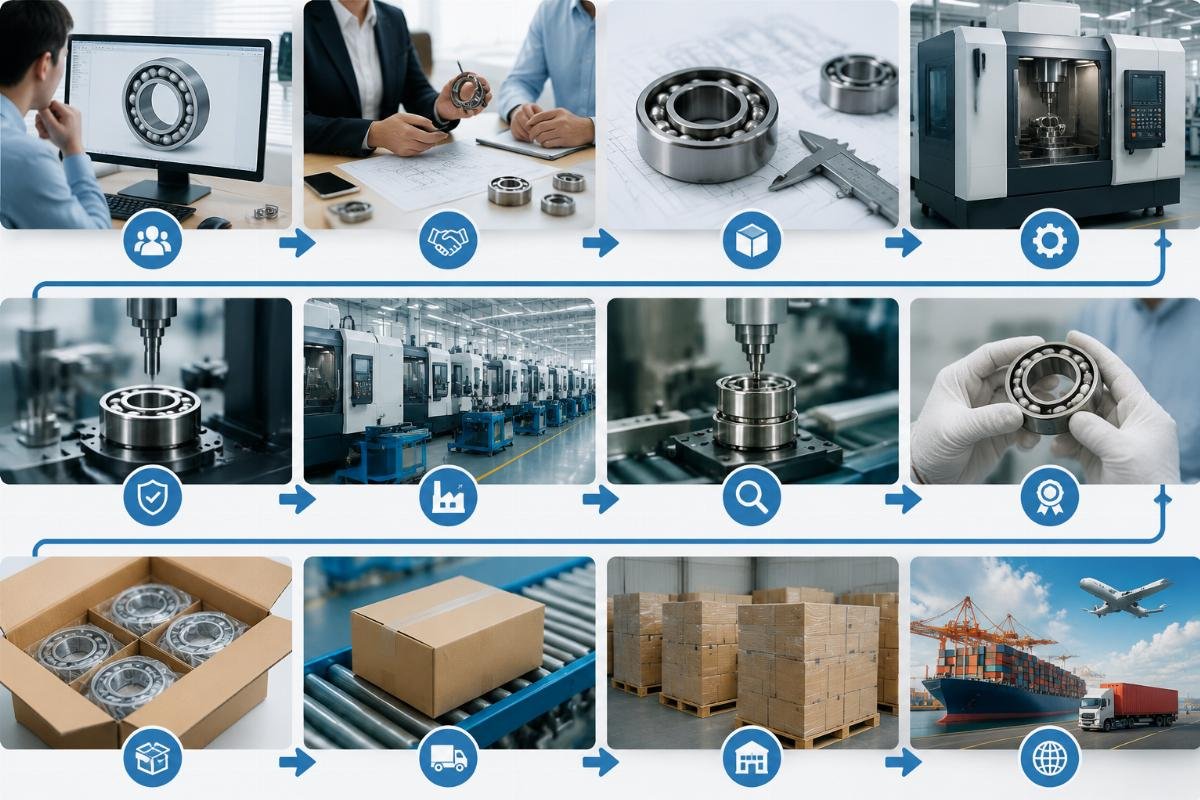
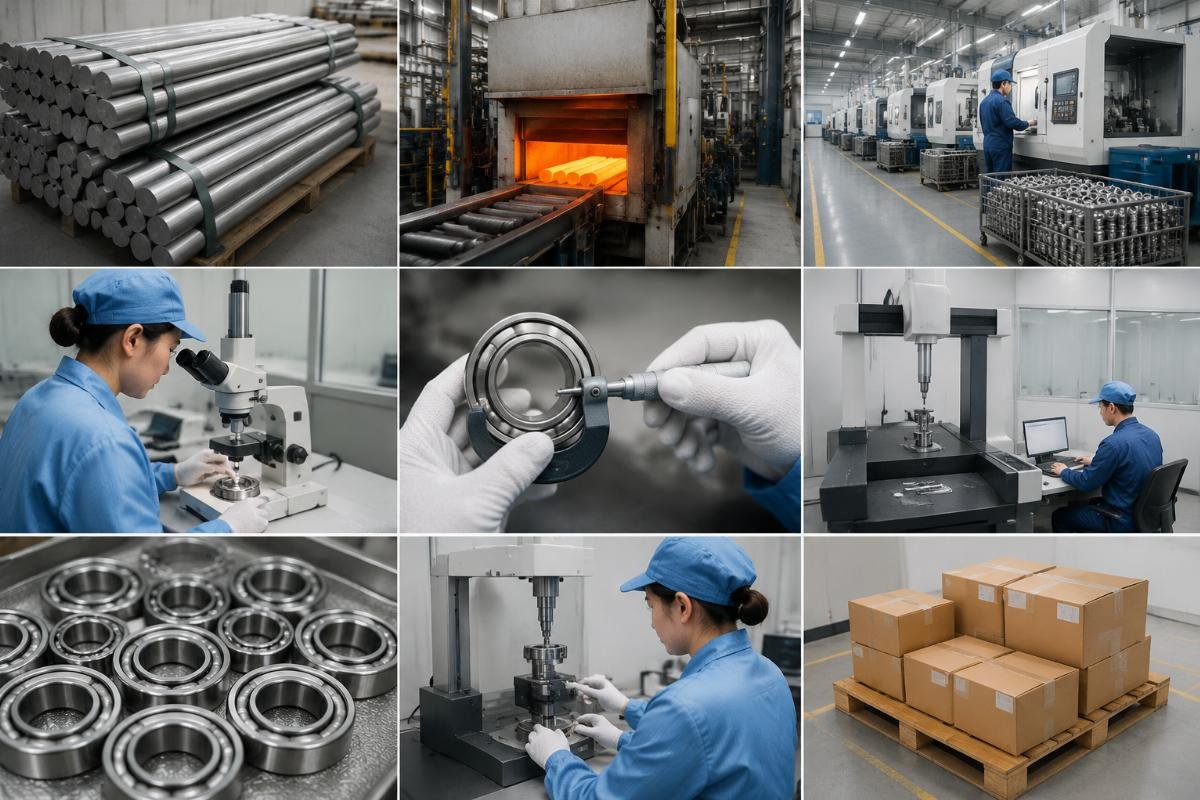
- Technical Specification Development – Collaborate with engineering teams to define load requirements, speed ratings, and environmental considerations
- Supplier Auditing – Conduct virtual or on-site audits focusing on manufacturing processes, quality control systems, and traceability procedures
- Sample Testing Protocol – Implement dimensional inspection (using calibrated CMM equipment), material verification, and performance testing
- Production Monitoring – Establish regular progress updates and in-process inspection points during manufacturing
- Logistics Optimization – Select optimal shipping method balancing cost, speed, and cargo security for each order
How Can Buyers Mitigate Risks in Chinese OEM/ODM Bearing Sourcing?
Proactive risk mitigation reduces supply chain disruptions by 47% in industrial bearing procurement. Despite careful planning, unexpected challenges can arise when sourcing from China—from counterfeit products to shipping delays. Implementing targeted risk management strategies protects against these vulnerabilities while maintaining cost efficiency and delivery reliability.
| Risk Category | Prevention Measures | Mitigation Strategy |
|---|---|---|
| Counterfeit Products | Verify supplier authorization certificates and implement anti-counterfeiting verification | Conduct batch testing of critical components and maintain approved supplier list |
| Quality Inconsistency | Establish clear acceptance criteria and implement statistical process control | Implement 100% inspection for initial production runs and periodic sampling thereafter |
| Supply Chain Disruption | Diversify sourcing with dual |