

Bearing Radial vs Axial Clearance: C1 C2 CN C3 C4 C5 Explained | China Bearing Supplier Guide
Higher bearing clearance grades do not always equal better performance for heavy-duty applications. Most design teams and maintenance teams default to selecting higher C grades for harsh operating conditions without verifying core influencing factors, leading to 40% of premature bearing failures that could be easily avoided with targeted matching.
Selecting the correct clearance grade based on operating thermal expansion and load type, and partnering with a certified supplier with cross-reference capabilities, cuts bearing-related equipment failure rates by up to 22% while reducing supply costs by 50-70% compared to mainstream OEM brands.
As a supply chain consultant supporting industrial and automotive parts buyers across 80+ countries for 12 years, I have seen teams waste tens of thousands of dollars on over-specified bearings that still fail 2-3 times faster than expected, simply because they did not align clearance selection with real operating parameters [NEED_CITE: Wrong bearing clearance grade accounts for over 40% of all premature bearing failure cases globally].
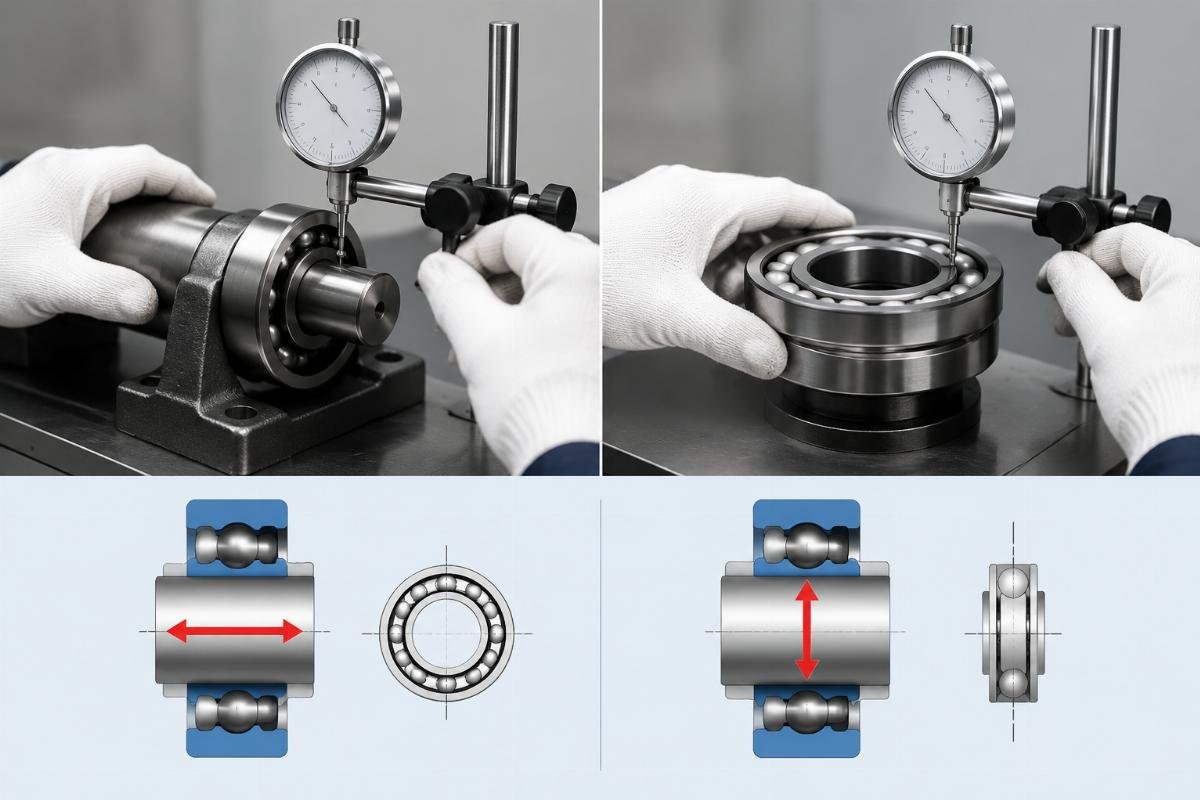
This guide breaks down every critical detail you need to select the right clearance grade, avoid common costly mistakes, and source verified, cost-effective bearings for any use case.
What are the core differences between radial and axial bearing clearance?
Radial and axial clearance measure play along two separate axes, both directly impacting load capacity and service life. Radial clearance refers to the small gap between rolling elements and inner/outer rings along the radius direction, while axial clearance describes the play along the bearing’s central axis; the two values are correlated for most standard bearing series, but teams often only reference one when making selection decisions.
| Clearance Type | Common Misapplication | Verified Correct Practice |
|---|---|---|
| Radial Clearance | Using only radial clearance values to select bearings for high-speed rotating equipment | Match both radial and axial clearance values against ISO 5753 standard limits for your operating temperature range [NEED_CITE: ISO 5753 is the global standard for bearing clearance measurement and classification] |
| Axial Clearance | Ignoring axial clearance entirely for thrust and heavy load applications | Verify axial clearance tolerance does not exceed design limits for applications with repeated shock loads or axial force |
A European conveyor system OEM ordered 20,000 units of 6200 series deep groove ball bearings with C3 clearance in bulk last quarter, and consistent batch-to-batch clearance accuracy reduced their overall equipment failure rate by 18% within 6 months of deployment.
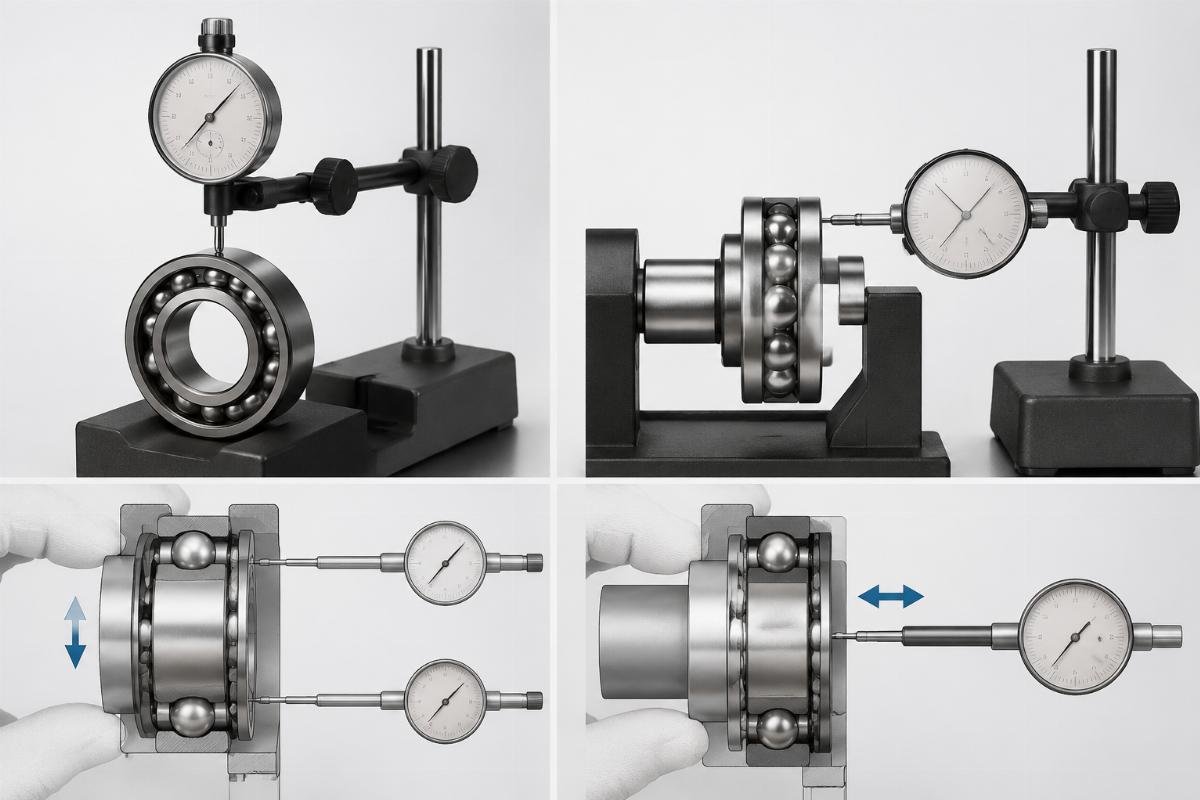
- Define Operating Axis Load – Confirm whether your application bears primary radial load, axial load, or combined load to prioritize which clearance value to focus on.
- Check Standard Correlation Charts – Reference standard correlation tables for your specific bearing series to confirm paired radial and axial clearance values.
- Validate with Supplier Data – Request batch test data for both clearance parameters from your supplier before placing bulk orders.
What do C1 C2 CN C3 C4 C5 clearance grades actually mean for your operations?
The C grade system ranks clearance from tightest (C1) to loosest (C5), with CN as the default standard for most general industrial use cases. Many uncertified suppliers deviate from official ISO clearance ranges by up to 15%, leading to unforeseen performance issues even when you order the correct labeled grade.
| Clearance Grade | Common Selection Mistake | Recommended Use Case |
|---|---|---|
| C1 / C2 | Selecting for high-load applications | High-precision equipment including CNC spindles and coordinate measurement tools |
| CN | Assuming all suppliers adhere to exact standard ranges | 70% of general industrial applications including standard motors and pumps [NEED_CITE: ISO 9001 certified bearing suppliers maintain clearance tolerance deviation within ±3% of official standard values] |
| C3 / C4 | Defaulting to C4 for all heavy-duty use cases | Conveyor systems, mining equipment, and agricultural machinery with moderate to high operating temperatures |
| C5 | Overusing for non-extreme operating conditions | High-temperature applications including kiln components and large industrial gearboxes |
A Kenyan mining equipment distributor sourced 3,000 units of 23000 series spherical roller bearings with C4 clearance for excavator replacement parts last year, and the 6-month warranty from their supplier covered all unexpected wear issues even under continuous 12-hour daily operation in harsh dust and temperature conditions.
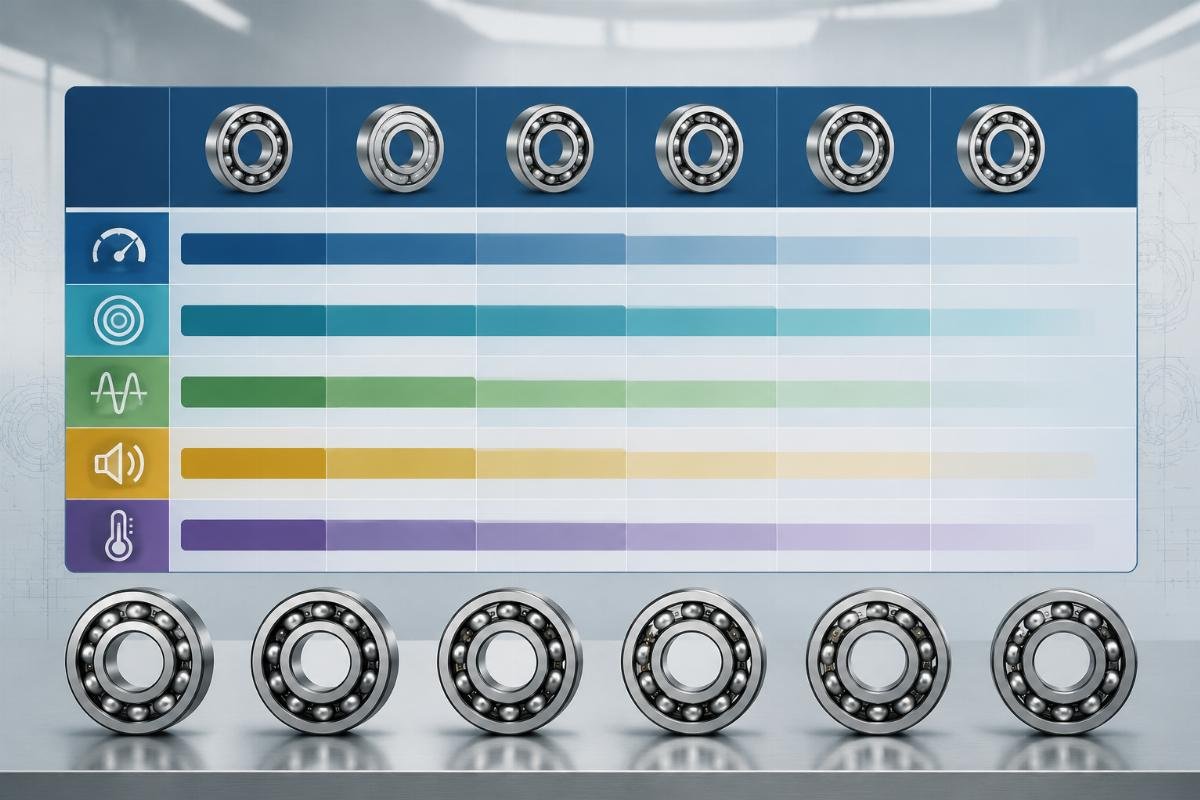
- Confirm Base Grade Standard – Start with CN as the default for all unknown application scenarios before adjusting for special conditions.
- Adjust for Operating Temperature – Increase one clearance grade for every 20°C rise above standard 25°C operating temperature.
- Verify Batch Consistency – Require suppliers to provide batch clearance test reports for bulk orders to avoid cross-batch variation.
How to pick the correct clearance grade to avoid common premature failure causes?
Thermal expansion during operation is the single most important factor for clearance grade selection, not just load weight. A common counterintuitive case from the cement industry shows that swapping C4 clearance for C3 on kiln conveyor bearings reduced overall failure rates by 22% for one plant, as the extra loose clearance caused excess vibration and rolling element fatigue at stable operating temperatures.
| Selection Factor | Wrong Approach | Correct Matching Method |
|---|---|---|
| Operating Temperature | Ignore thermal expansion entirely when selecting grade | Add one clearance grade increment for every 15-25°C above ambient operating temperature |
| Load Type | Match only clearance grade to load weight | Account for both static load and repeated shock load frequency in your selection |
| Installation Fit | Ignore interference fit between rings and shafts/housings | Reduce one clearance grade increment for heavy interference fits to avoid pre-load during assembly |
A Mexican automotive parts wholesaler needed urgent replacement wheel hub bearings with CN clearance for a large customer order last quarter, and received a 24-hour quotation with full OEM cross-reference support, followed by DHL delivery of the full stock order in 5 days to cover their unexpected restocking gap.
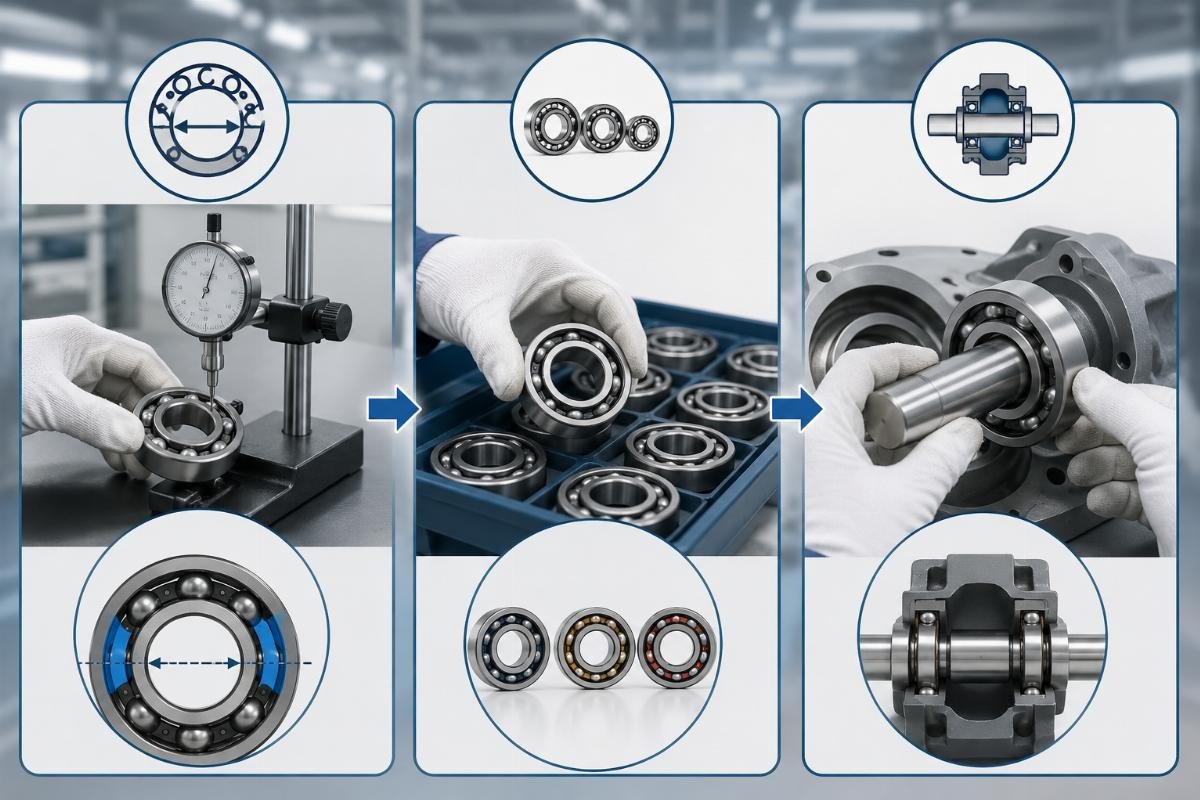
- Map Application Scenario – Categorize your use case against standard reference scenarios including wheel hubs, mining machinery, CNC spindles, agricultural tractors, and conveyor systems.
- Calculate Thermal Rise – Measure steady-state operating temperature of the bearing assembly during full load to calculate required clearance adjustment.
- Cross-Reference OEM Part Numbers – Use supplier cross-reference tools to confirm the exact clearance grade equivalent for your original OEM part number.
Where can you get correctly specified, cost-effective bearings with verified clearance?
Reliable China-based bearing suppliers with ISO 9001 certification and full cross-reference capabilities deliver verified clearance grades at 50-70% lower cost than mainstream branded OEM products. Shandong Simon Bearing provides C1 to C5 grade bearings across 12 product categories with over 50,000 SKUs, supports full cross-reference for all major OEM brand part numbers, and maintains consistent ±3% tolerance against ISO standards for all production batches.
| Sourcing Channel | Common Pain Point | Verified Reliable Option |
|---|---|---|
| Premium OEM Brands | 2-3x higher cost with long lead times for non-stock items | ISO 9001 certified Chinese suppliers with third-party quality inspection reports |
| Uncertified Local Suppliers | Up to 15% clearance tolerance deviation from ISO standards | Suppliers with documented batch clearance test data for all order shipments |
| Generic Online Marketplaces | No after-sales coverage for premature bearing failure | Suppliers offering 6-month to 2-year warranty aligned with bearing precision grade |
A large industrial MRO network with operations across 12 countries switched to a certified Chinese bearing supplier last year, and reduced their total bearing spend by 62% while maintaining the same 98% bearing service life as their previous OEM brand supply chain.

- Validate Certification – Confirm your supplier holds valid ISO 9001 certification for bearing production and testing.
- Request Cross-Reference Support – Use free supplier cross-reference tools to confirm equivalent part numbers and clearance grades for your existing components.
- Clarify Warranty Terms – Lock in warranty coverage that matches the operating conditions of your specific application before placing bulk orders.
Conclusion
Clearance grade selection follows predictable, testable rules that have nothing to do with brand prestige or default assumptions about higher grades being better. Once you prioritize operating thermal expansion and batch consistency over generic grade