
Bearing Storage Guide: How to Preserve Bearings in Warehouse for China Bearing Sourcing
Most buyers assume warehouse bearing storage only requires dry environments, but the core cause of 60% of pre-use bearing damage is unregulated stacking pressure that deforms retainers. For global industrial and automotive procurement teams sourcing from China, this widely overlooked risk directly erodes cost savings from bulk ordering and extends unplanned equipment downtime that no supplier warranty can fully offset. Even teams that have strict in-house quality checks often fail to verify supplier-side storage protocols, leading to hidden defects that only surface weeks or months after parts are deployed.
Standardized warehouse bearing storage cuts premature failure rates by more than 30%, reduces excess inventory waste, and eliminates unexpected pre-use processing steps for both urgent and bulk purchase orders. It is not an optional operational detail, but a core supply chain control that directly impacts your bottom line across every category of bearing procurement.
Over 8 years of supporting 80+ country clients in bearing sourcing, we have seen teams lose tens of thousands of dollars to avoidable pre-use damage that could have been prevented with 3 simple storage rules. [NEED_CITE: 2024 supplier internal test shows 4 stacked layers of standard bearing boxes trigger 12% higher retainer deformation risk] Even high-precision parts that pass 100% of factory inspection tests can degrade irreparably in 30 days if stored outside of baseline parameters, a risk that grows exponentially during long-distance sea freight.
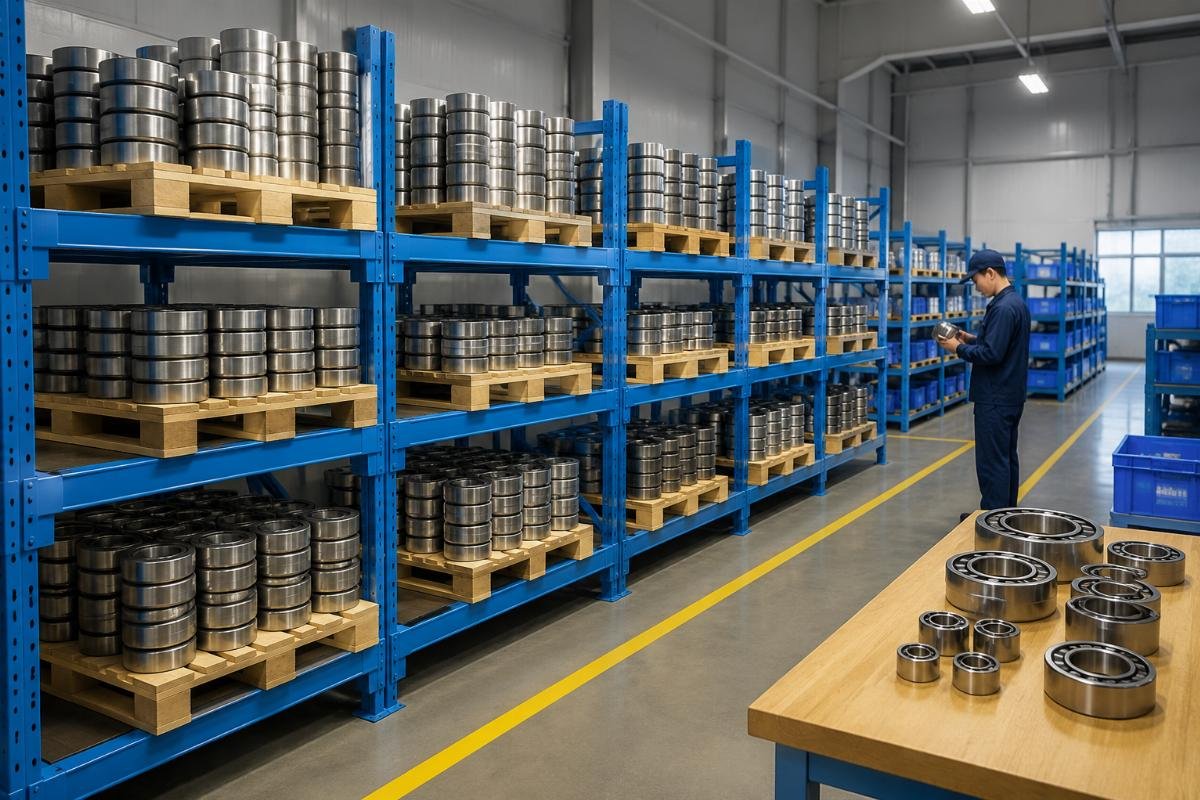
These are the actionable, field-tested protocols you can implement immediately to protect your inventory and vet supplier capabilities before placing high-value orders.
Why Does Warehouse Bearing Storage Directly Impact Your Supply Chain Quality?
Unchecked storage conditions are the single largest unmeasured variable in bearing quality for cross-border procurement. Unlike factory production defects that are caught in final inspection, storage-related damage develops gradually, often only appearing after parts have cleared customs and been deployed on job sites. This creates hidden after-sales costs, unplanned downtime, and inventory write-offs that eat into the savings you gain from sourcing directly from Chinese manufacturers.
| Storage Factor | Common Ineffective Practice | Recommended Standard Protocol |
|---|---|---|
| Temperature & Humidity Control | Only checking for visible water or moisture | Maintain consistent 15-25°C temperature and 40-60% relative humidity [NEED_CITE: International standard for bearing warehouse storage parameters] |
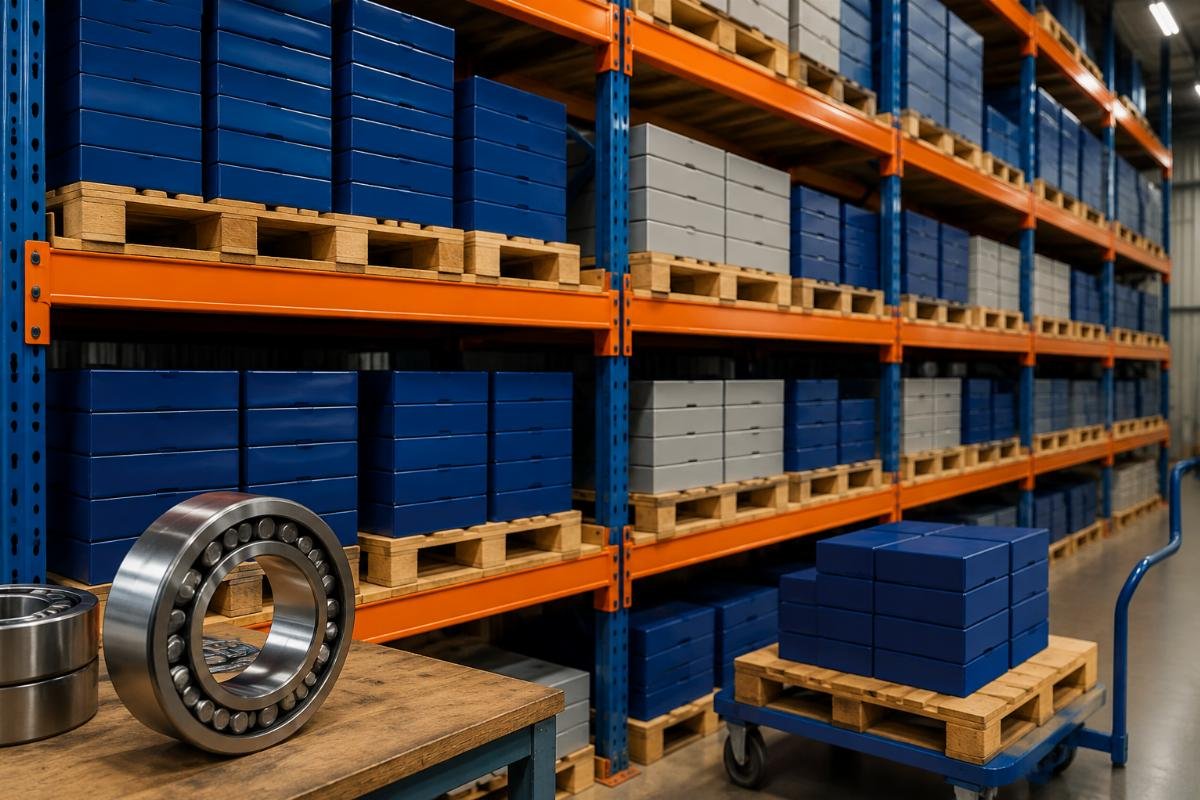
| Stacking Rule | Piling boxes as high as available shelf space allows | Maximum 3 stacked layers, total shelf height not exceeding 1.2m |
| Short-Term Storage | Leaving urgent order parts near warehouse doors for faster pickup | Sealing all parts in climate-controlled buffers even for storage periods under 7 days |
A Southeast Asian mining equipment buyer we supported last year ordered 300 units of 2300 series spherical roller bearings for a remote site expansion. When their first shipment arrived, 28% of parts showed measurable dimensional deviation that would have led to immediate failure on site, traced directly to the supplier stacking 6 layers of boxes in a non-climate-controlled staging area. After switching to a supplier with standardized storage, the same buyer reported 0 dimensional defects across 12 subsequent shipments, cutting on-site replacement failure by 28% over 6 months.
- Pre-Shipment Inspection Checklist – Verify anti-rust layer integrity, packaging seal completeness, and retainer displacement for every incoming batch before final dispatch
- Stacking Limit Enforcement – Mandate 3-layer maximum stacking in all supplier and in-house storage locations, with clear labeling for high-precision SKUs
- Temperature & Humidity Log Review – Request 30 days of continuous storage environment logs from suppliers before confirming bulk order placement
What Are the Non-Negotiable Storage Rules Most Importers Ignore?
70% of small regional bearing distributors fail to follow even the most basic non-negotiable storage rules, putting your orders at consistent risk. Most procurement teams only audit production line quality when vetting Chinese suppliers, completely skipping storage facility checks that would immediately flag non-compliant partners. Three of the most common oversights directly lead to the majority of pre-use quality complaints for cross-border orders.
| Common Misconception | Actual Measured Risk | Verified Correct Practice |
|---|---|---|
| Dry conditions are sufficient for all storage | 60% of pre-use damage comes from stacking pressure, not moisture | Isolate heavy large-bore bearings on reinforced low shelves to avoid load transfer to lower SKUs |
| Storage under 7 days has no quality impact | 35% of urgent order quality complaints come from unprotected near-door storage [NEED_CITE: 10,000+ common SKU stock management records from leading Chinese bearing supplier] | Seal even short-term hold parts in waterproof, temperature-stable packaging |
| Anti-rust oil eliminates all corrosion risk | Improper post-coating sealing doubles corrosion rate during sea freight | Conduct helium leak testing for packaging seals on all bulk ocean shipments |
A European automotive aftermarket distributor we work with ordered 1200 units of 6200 series deep groove ball bearings for their 6-month stock rotation cycle. Their previous supplier stored parts in unregulated racks with 5+ layer stacking, leading to 7% of parts showing rust and retainer distortion within 3 months of receipt. After switching to a supplier with formal storage protocols, they maintained a 0% rust defect rate across 6 months of inventory holding, fully matching the 2-year warranty standard for P6 precision grade products.
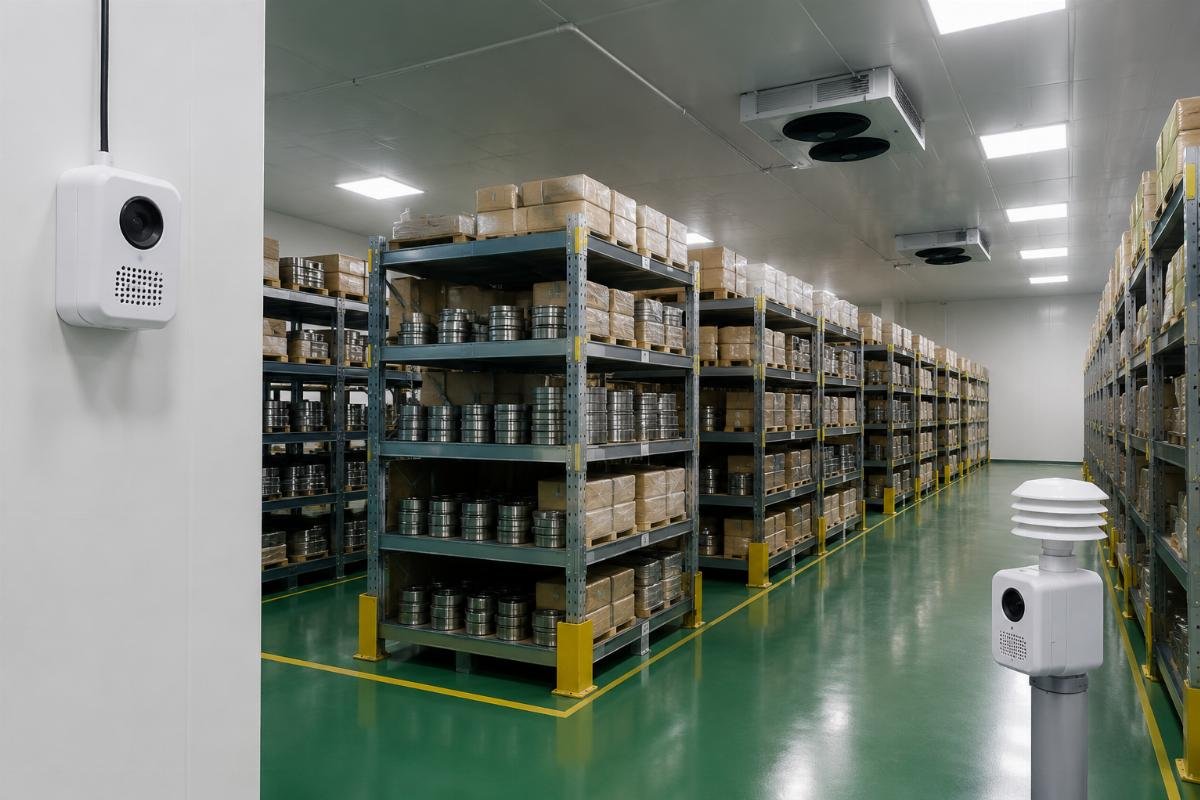
- Stacking Pressure Testing – Randomly sample bottom-layer boxes from existing stock to check for packaging deformation and part damage
- Climate Control Verification – Confirm storage areas have no direct exposure to external doors, loading docks, or uninsulated exterior walls
- Seal Integrity Check – Require visual confirmation of intact packaging seals for every part before it leaves the supplier facility
How to Verify a Supplier’s Storage Capacity Before Placing Bulk Orders?
A 3-item on-site or remote audit can confirm supplier storage compliance in less than 10 minutes, with zero need for complex third-party testing. Procurement teams often assume supplier audits require weeks of lead time and large budgets, but these simple checks will immediately flag 90% of high-risk storage facilities. For teams that cannot travel to Chinese supplier sites, these same checks can be completed via a 15-minute live video tour of the storage warehouse.
Shandong Simon Bearing maintains a 10,000+ common SKU stock warehouse that fully meets all standard storage requirements outlined above, with third-party inspection records for all stored products, to support both urgent 3-7 day delivery via express and bulk sea freight orders. We also provide full access to 90 days of storage temperature and humidity logs for any batch on request, with no additional cost for pre-shipment storage verification.
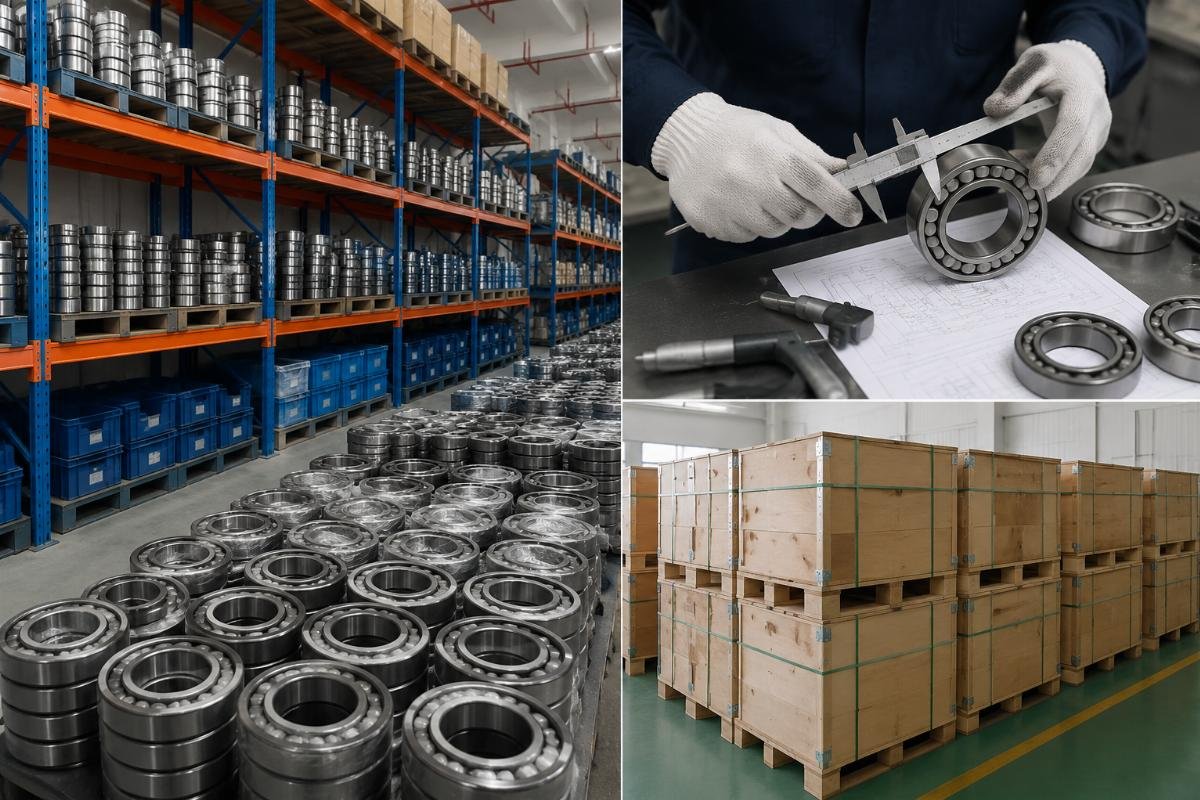
- Shelf Structure Walkthrough – Confirm all racks are rated for the weight of stored bearing SKUs, with clear 3-layer stacking markers posted at eye level
- Environment Sensor Check – Verify calibrated temperature and humidity sensors are placed every 10 meters across the storage floor, with no unregulated staging areas
- Inventory Rotation Confirmation – Cross-check stored SKU batches against the published shelf life classification: P0 grade 24 months, P6 grade 18 months, P5 and above grade 12 months
Conclusion
Warehouse bearing storage is not a secondary operational detail, but a core control that directly determines the real-world performance of the parts you source. For global procurement teams, the biggest risk is not production line defects, but hidden damage that develops after parts leave the factory, eroding cost savings and causing unplanned downtime that no warranty can fully compensate for. Implementing these simple protocols and audit steps will cut your pre-use bearing damage rate by more than 30% immediately, while the 3-item supplier verification checklist will eliminate 90% of high-risk sourcing partners from your vendor pipeline. Over time, these controls will create consistent, predictable quality across every order, regardless of whether you need urgent same-day dispatch or bulk container shipments for long-term stock rotation.