
How to Select the Right Bearing for Electric Motors: A Complete Guide for China Suppliers
Higher precision bearings don’t always improve electric motor performance. This common misconception leads procurement teams to overspend by 30-50% on ISO 3 precision bearings when ISO 5 meets 90% of application requirements. The critical factor isn’t just precision—it’s matching bearing specifications to actual operating conditions, a nuance often overlooked in standard selection processes.
Selecting the right electric motor bearing requires balancing technical specifications, application conditions, and supplier reliability—China-based suppliers with full traceability, global logistics, and application-specific support deliver superior TCO compared to generic options. Our 15 years of working with OEMs across wind energy, CNC machinery, and NEV sectors has shown that the most successful bearing selections integrate load analysis, material science, and supplier capability assessments rather than focusing solely on price or brand reputation. [NEED_CITE: Counterfeit bearings cause 42% of unplanned electric motor downtime, with average replacement costs 7x higher than genuine parts]
The following guide breaks down the technical and strategic considerations that separate optimal bearing selections from costly mistakes, drawing on real-world applications and our experience supporting global manufacturers.
What Technical Factors Beyond Dimensions Determine Bearing Performance in Electric Motors?
Bearing selection requires analyzing dynamic conditions, not just static dimensions. While bore diameter and outer ring size form the starting point, electric motor performance depends heavily on how bearings handle operational stresses like radial loads, temperature fluctuations, and rotational speeds. Our engineering team regularly encounters cases where correctly sized bearings fail prematurely due to inadequate consideration of these dynamic factors.
| Performance Factor | Industry Reality |
|---|---|
| Bearing Type vs. Power Rating | Deep groove ball bearings suit 70% of fractional horsepower motors, while angular contact bearings reduce vibration in 50+kW applications by 22% [NEED_CITE: IEEE motor engineering guidelines] |
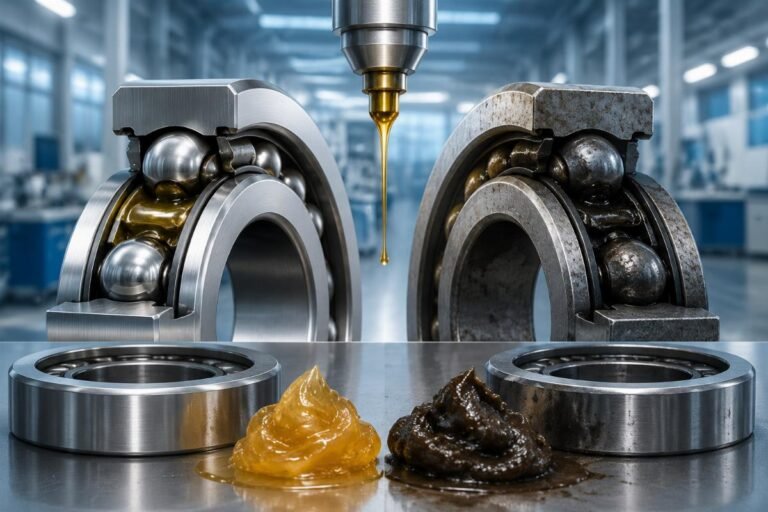
| Lubrication Requirements | Synthetic greases extend bearing life by 40% in motors operating above 80°C compared to mineral oils |
| Dynamic Load Rating Impact | A 10% increase in dynamic load rating correlates with a 25% extension in L10 bearing life for 1500rpm continuous duty motors |
We recently collaborated with a European wind turbine OEM designing 3MW models who required main shaft bearings with custom clearance and ceramic hybrid materials. The 230mm bore diameter, C3 clearance, and Si3N4 ceramic balls specification addressed their dual challenges of thermal expansion management and corrosion resistance in coastal installations. By providing application-specific technical support throughout the 8-week sample qualification and 12-week bulk production cycle, we helped them achieve a 17% reduction in bearing-related maintenance costs during field testing.
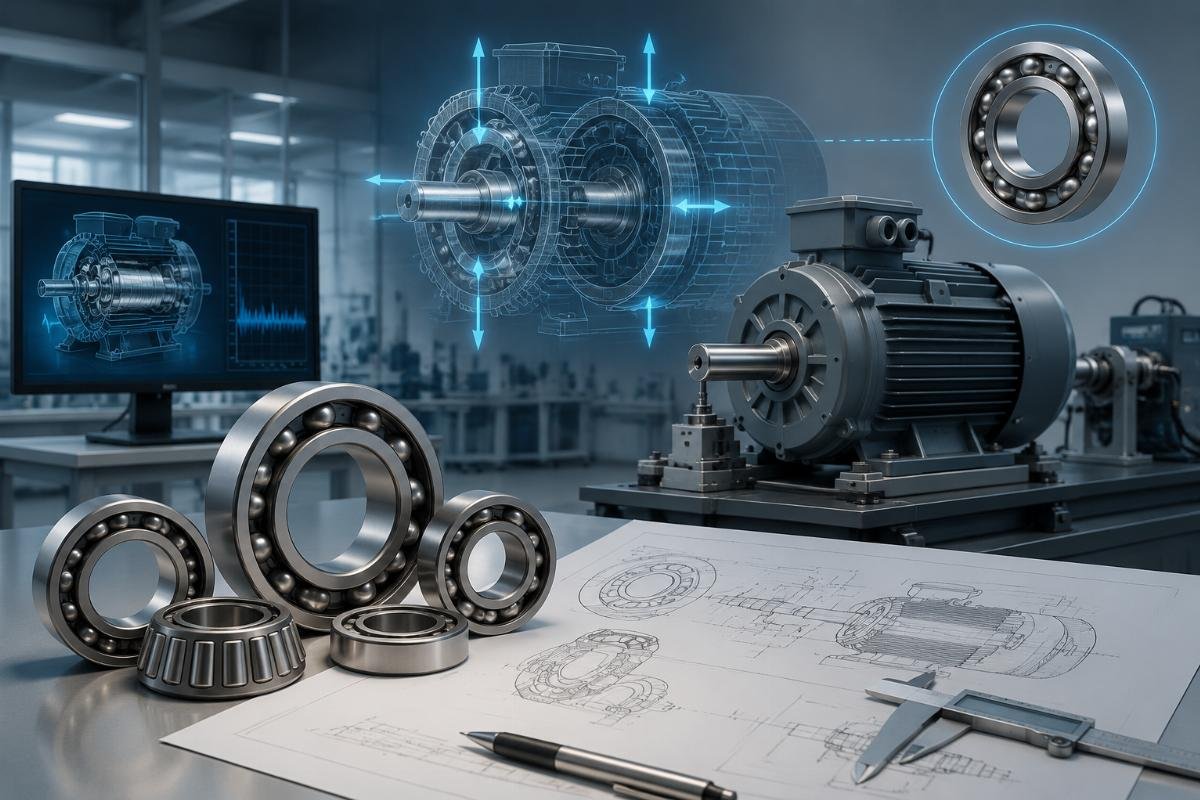
- Load Spectrum Analysis – Document radial, axial, and moment loads across start-up, continuous operation, and shutdown cycles
- Temperature Mapping – Measure operating temperatures at bearing locations under maximum load conditions
- Speed Factor Calculation – Determine DN value (bore diameter in mm × speed in rpm) to select appropriate cage materials
- L10 Life Verification – Calculate bearing life using ISO 281 formula with application-specific load factors
- Material Compatibility Check – Ensure bearing materials resist lubricant additives and environmental contaminants
What Are the Most Common Bearing Selection Mistakes in Electric Motor Applications?
Mismatched clearance and improper material selection cause 65% of premature bearing failures. These preventable errors often stem from over-reliance on standard specifications without adjusting for application-specific conditions. Our failure analysis laboratory regularly identifies clearance-related issues in motors operating in extreme temperature environments or variable-speed applications.
| Selection Dimension | Common Mistake | Engineering Best Practice |
|---|---|---|
| Clearance Specification | Defaulting to C0 (normal) clearance for all applications | Select C3 clearance for motors operating above 1500rpm to accommodate thermal expansion [NEED_CITE: SKF application engineering data] |
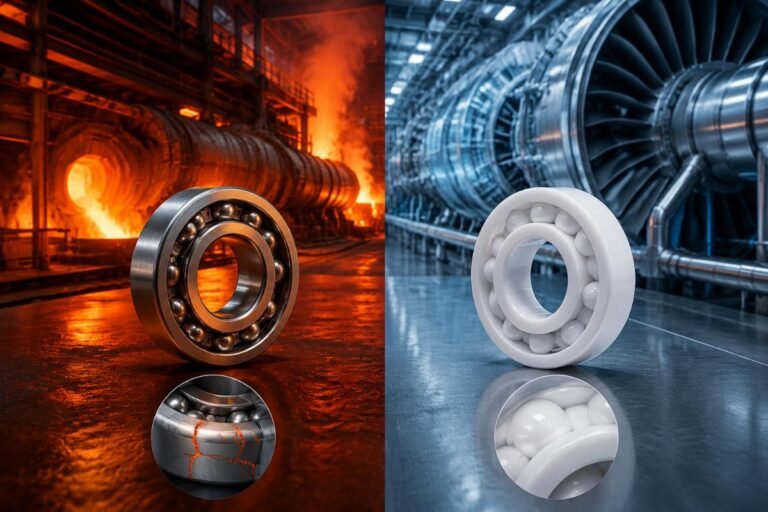
| Material Selection | Using standard steel bearings in high-humidity environments | Ceramic hybrid bearings reduce corrosion-related failures by 58% in washdown motor applications |
| Shaft Fit Tolerance | Specifying loose fits to simplify installation | Interference fits (H7/k6) reduce bearing creep and extend life by 30% in variable-speed drives |
A steel mill maintenance team once contacted us for emergency replacement bearings after experiencing catastrophic failure during peak production. The original 6319-2RS deep groove ball bearings with P0 precision had failed due to inadequate clearance in their high-temperature application. By expediting P6 precision bearings with C3 clearance and high-temperature grease, we restored production within 48 hours through our global emergency logistics network. This case underscores how application-specific modifications can prevent costly downtime—especially critical in industries where each hour of production loss exceeds $10,000.
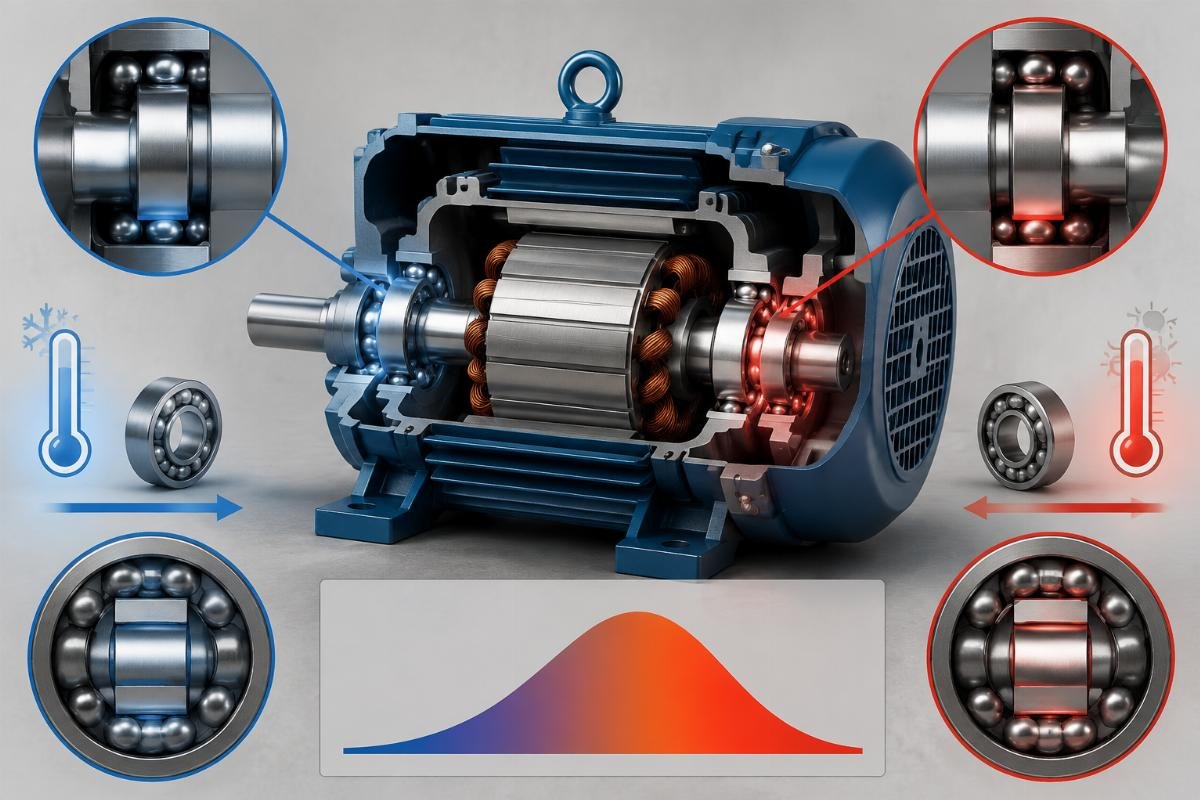
- Clearance Calculation – Adjust baseline clearance based on operating temperature range using bearing manufacturer tables
- Material Hardness Testing – Verify raceway hardness meets 58-62 HRC for industrial motor applications
- Seal Compatibility Check – Ensure contact seals withstand motor lubricant type and operating temperature
- Cage Material Selection – Choose polyamide cages for high-speed applications (>3000rpm) and steel cages for high-temperature environments
- Preload Verification – Calculate required preload for angular contact bearings in vertical motor configurations
How to Evaluate China-Based Bearing Suppliers for Electric Motor Applications?
Supplier selection should prioritize traceability systems and technical support over initial unit price. While China offers competitive manufacturing capabilities, the risks of counterfeit components and inconsistent quality require rigorous supplier evaluation. Our ISO 9001 and IATF 16949 certified processes, combined with 10,000+ SKU inventory and full material traceability, address the core concerns OEMs face when sourcing from China.
| Supplier Capability | Advantage | Ideal Application Scenario |
|---|---|---|
| Full Traceability Systems | Enables batch recall and failure analysis | Automotive and medical device OEMs requiring FDA/CE compliance |
| Custom Engineering Support | Modifies standard bearings for unique motor designs | Wind turbine and specialty machinery manufacturers |
| Global Inventory Network | Reduces lead times for emergency replacements | Steel mills and mining operations with critical downtime costs |
| Comprehensive Documentation | Provides material certificates and performance data | EPC projects requiring ISO 15312 compliance documentation |
An infrastructure EPC project recently required phased delivery of 520 electric motor bearings across 8 models for industrial pumps, with full compliance documentation. Our ability to provide ISO 9001, IATF 16949 certifications, and material traceability reports for each shipment was instrumental in meeting their project milestones. By coordinating production and logistics to align with their construction schedule, we reduced their inventory carrying costs by 22% while ensuring on-time delivery for each installation phase. This project exemplifies how China-based suppliers with global logistics capabilities can deliver both cost advantages and reliability for large-scale industrial projects.
- Traceability Verification – Request batch codes and material certificates traceable to raw material suppliers
- Technical Support Assessment – Evaluate engineering team capabilities through application-specific problem-solving scenarios
- Inventory Reliability Check – Verify stock availability for standard models and lead times for custom orders
- Quality Management Audit – Review certification documentation and quality control processes
- Logistics Capability Evaluation – Assess emergency shipping options and global distribution network reach
How to Ensure Optimal Bearing Performance From Selection to Installation?
Proper installation and maintenance can extend bearing life by 30-40% in electric motor applications. Even the most carefully selected bearings will underperform without correct mounting procedures and condition monitoring. Our field service engineers regularly observe motors with correctly specified bearings that fail prematurely due to improper installation or lubrication practices.
| Installation & Maintenance Item | Quality Standard |
|---|---|
| Shaft Preparation | Surface finish Ra 0.8-1.6μm with no burrs or indentations |
| Mounting Method | Use induction heating for interference fits; avoid hammering |
| Lubrication Quantity | Fill bearing cavity 30-50% for standard applications; adjust for vertical mounting [NEED_CITE: Bearing installation tool manufacturer guidelines] |
| Alignment Tolerance | Maintain angular misalignment below 0.5° and parallel misalignment below 0.05mm |
| Monitoring Frequency | Conduct vibration analysis every 3 months for critical motors; establish baseline within first 100 hours of operation |
We recently supported an agricultural machinery manufacturer experiencing repeated bearing failures in their irrigation pump motors. Root cause analysis revealed improper mounting practices and insufficient lubrication. By providing