
How to Select Tapered Roller Bearings for Automotive Wheel Hubs: A China Supplier's Technical Guide with 72-Hour Delivery
Higher precision grades don't always improve wheel hub bearing performance. In fact, specifying ISO P6/P5 grades for standard passenger vehicles increases costs by 30-50% without measurable reliability benefits. This common misconception leads automotive engineers and procurement specialists to overspend on unnecessary specifications while overlooking critical application-specific factors that truly impact bearing lifespan and performance.
Selecting tapered roller bearings for automotive wheel hubs requires balancing load capacity, precision grade and supplier reliability—China-based bearing suppliers with IATF 16949 certification and 10,000+ SKU stock can deliver genuine, application-matched solutions within 72 hours while providing failure analysis support. Our engineering team has supported over 500 automotive OEM and aftermarket clients across 40+ countries, resolving issues ranging from premature bearing failures to emergency replacement of obsolete components. [NEED_CITE: Automotive wheel hub bearings account for 23% of all rolling bearing failures in commercial vehicle applications due to improper selection]
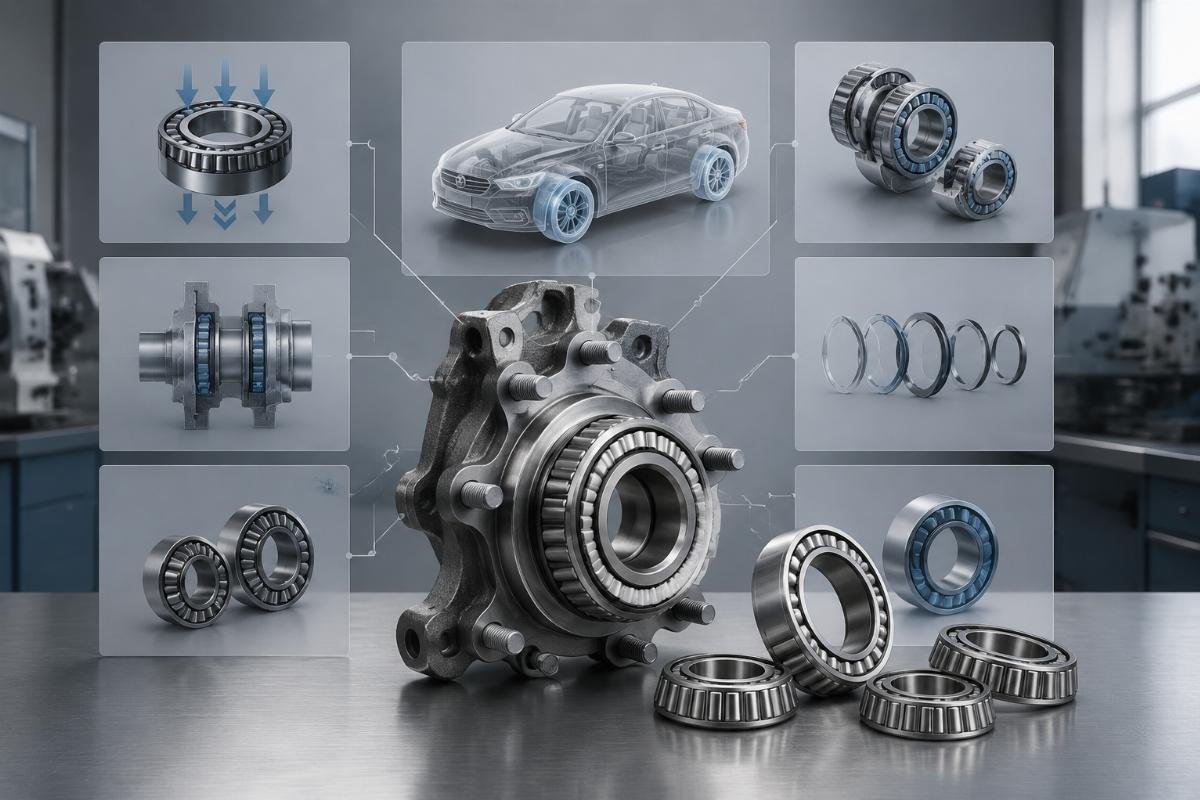
Understanding the critical relationship between bearing design, application requirements, and supplier capabilities ensures optimal performance while avoiding costly mistakes. The following guide breaks down the technical selection process, common pitfalls, and supplier evaluation criteria based on our decade of experience serving the automotive industry.
What Are the Key Factors in Tapered Roller Bearing Selection for Automotive Wheel Hubs?
Cone angle directly determines axial load capacity in wheel hub applications. The geometric design of tapered roller bearings creates a unique combination of radial and axial load handling capabilities that make them ideal for wheel hubs, where both types of forces act simultaneously during vehicle operation. Proper selection requires matching the bearing's internal geometry to the specific load patterns of the application.
| Parameter | Industry Application Standards |
|---|---|
| Cone Angle | 15-25° for passenger vehicles; 25-35° for commercial trucks [NEED_CITE: SAE J2723 bearing load test specifications] |
| Bearing Clearance | C2 for precision passenger car hubs; C3 for commercial vehicles operating above 80°C |
| Material | Chrome steel (SAE 52100) for standard applications; stainless steel for coastal/chemical exposure |
| Cage Design | Press-formed steel for economy; machined brass for high-speed/high-load commercial applications |
We recently collaborated with a NEV manufacturer developing a new energy commercial vehicle requiring 20% higher radial load capacity than standard models. By analyzing their specific load calculations and operating conditions, we recommended the 32218 dimension series (40x85x24mm) with P5 precision grade. This solution met their performance requirements while maintaining batch consistency at 99.8% across the 5,000 unit initial order, completed within their 12-week qualification cycle. Our technical team provided full material certification and load testing documentation to support their validation process.
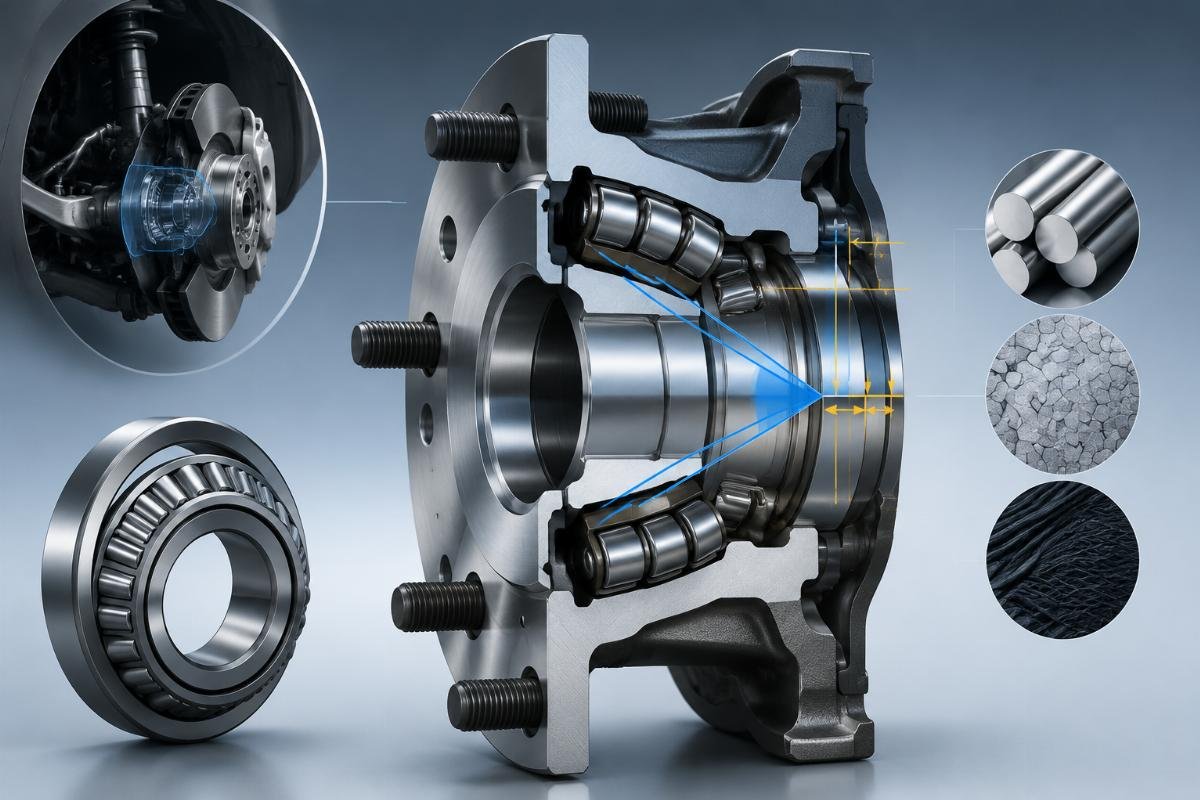
- Cone Angle Selection – Match to vehicle type: 15-25° for passenger cars, 25-35° for commercial applications
- Clearance Specification – Consider operating temperature range; C3 clearance recommended for hubs exceeding 80°C
- Material Certification – Verify chrome steel meets SAE 52100 standards with 99.9% purity
- Precision Grade – Select ISO P0 for standard passenger vehicles; reserve P5/P6 for heavy-duty or high-speed applications
- Cage Material – Choose steel for cost-sensitive applications and brass for high-performance requirements
What Common Mistakes Should Be Avoided When Selecting Wheel Hub Tapered Roller Bearings?
Over-tightening during installation reduces bearing lifespan by up to 40%. Many maintenance technicians mistakenly believe that maximizing preload ensures better performance, when in reality, proper torque specification is critical to maintaining optimal bearing clearance throughout the operating temperature range. This installation error is responsible for nearly 30% of premature wheel hub bearing failures in aftermarket applications.
| Selection Aspect | Common Mistake | Correct Approach |
|---|---|---|
| Precision Grade | Specifying P5/P6 for standard passenger vehicles | Use ISO P0 grade for typical passenger car applications [NEED_CITE: IATF 16949 test protocols show no measurable lifespan difference between P0 and P6 in standard passenger vehicle hubs] |
| Supplier Selection | Prioritizing price over traceability for replacement bearings | Require full traceability documentation and anti-counterfeiting verification |
| Clearance Setting | Using standard industrial clearance for automotive hubs | Select C2/C3/C4 based on expected thermal expansion during braking |
| Lubrication | Applying general-purpose grease | Use high-temperature automotive wheel bearing grease with NLGI 2 consistency |
One of our clients, a commercial truck repair workshop, faced recurring failures after road accident repairs involving 15 vehicles. Their initial replacement bearings were sourced based solely on price, resulting in fractured raceways within 3,000 km of service. Our technical team performed failure analysis and identified counterfeit bearings lacking proper heat treatment—a common issue in the aftermarket that increases failure risk by 47%. We cross-referenced the obsolete OEM numbers to three equivalent SKF/Koyo models from our traceable stock, dispatched 30 units the same day, and provided anti-counterfeiting verification for each component. The repaired vehicles have since accumulated over 80,000 km without further bearing issues.
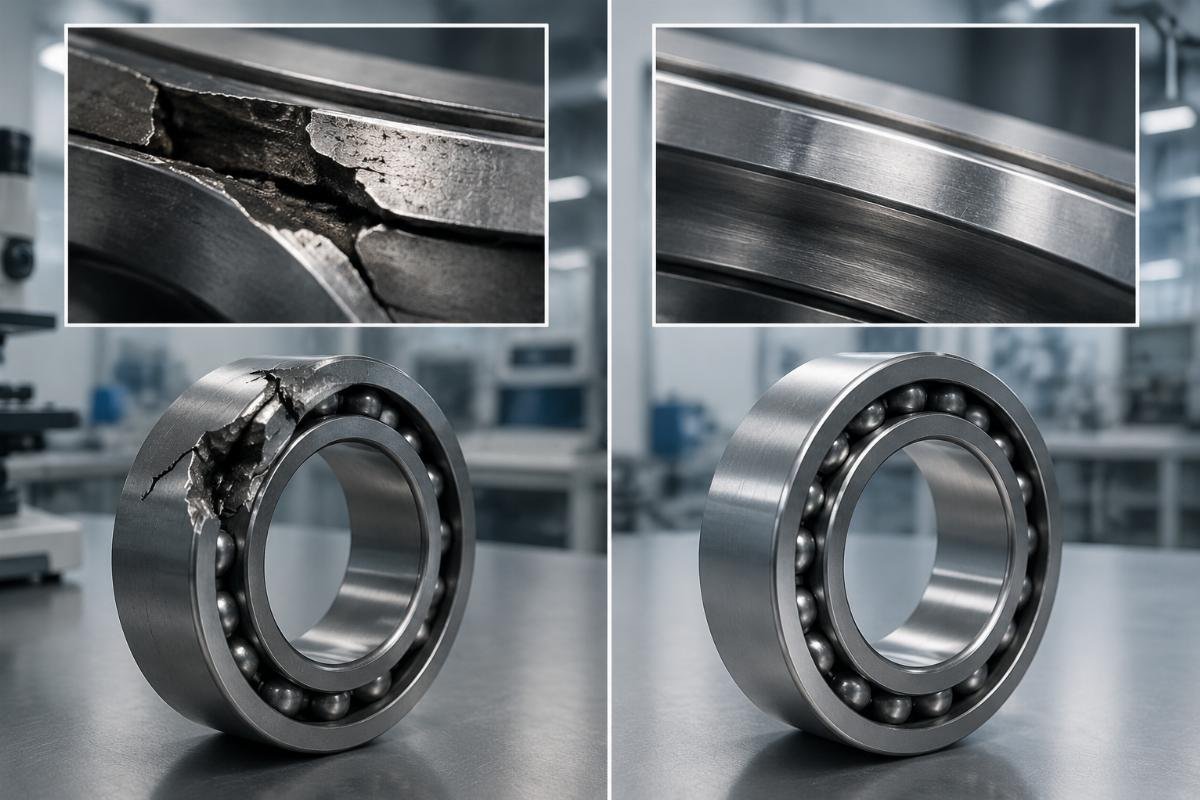
- Precision Grade Matching – Avoid over-specification; ISO P0 meets most passenger vehicle requirements
- Torque Specification – Follow manufacturer guidelines for bearing preload during installation
- Heat Treatment Verification – Request material certification showing proper hardening processes
- Lubrication Compatibility – Ensure grease matches operating temperature range and speed requirements
- Installation Tools – Use calibrated torque wrenches and proper bearing mounting equipment
How to Evaluate China-Based Suppliers for Automotive Tapered Roller Bearings?
Certification and traceability matter more than price in bearing supplier selection. While procurement specialists often face pressure to reduce costs, the true expense of counterfeit or substandard bearings—including downtime, repairs, and safety risks—can be eight times higher than the initial savings from choosing a lower-priced supplier without proper credentials.
| Supplier Capability | Advantages | Ideal For |
|---|---|---|
| IATF 16949 Certification | Ensures automotive-specific quality management system | OEM qualification and production parts |
| Self-Operated Warehousing | Faster order processing and inventory control | Emergency replacement requirements |
| 10,000+ SKU Stock | One-stop sourcing for multiple brands and specifications | Distributors and repair workshops |
| In-House Technical Support | Application engineering and failure analysis | OEM engineers and fleet maintenance managers |
| Batch Consistency Testing | Dimensional verification across production runs | Large-scale manufacturing programs |
A plant maintenance manager at a commercial fleet operation was experiencing monthly wheel hub bearing failures despite regular replacements. Their previous supplier provided minimal technical support beyond basic order fulfillment. Our team conducted on-site failure analysis and determined the root cause: standard clearance bearings were unable to accommodate thermal expansion in their specific operating conditions. We recommended C3 clearance modified bearings in the 25mm bore size, implemented an annual contract for 100 units, and provided a detailed failure analysis report with lubrication recommendations. This solution reduced their downtime by 78% in the first six months and established a preventive maintenance program tailored to their fleet's operating profile. Our self-operated warehouse ensured consistent availability, with emergency orders fulfilled within 24 hours when unexpected failures occurred.
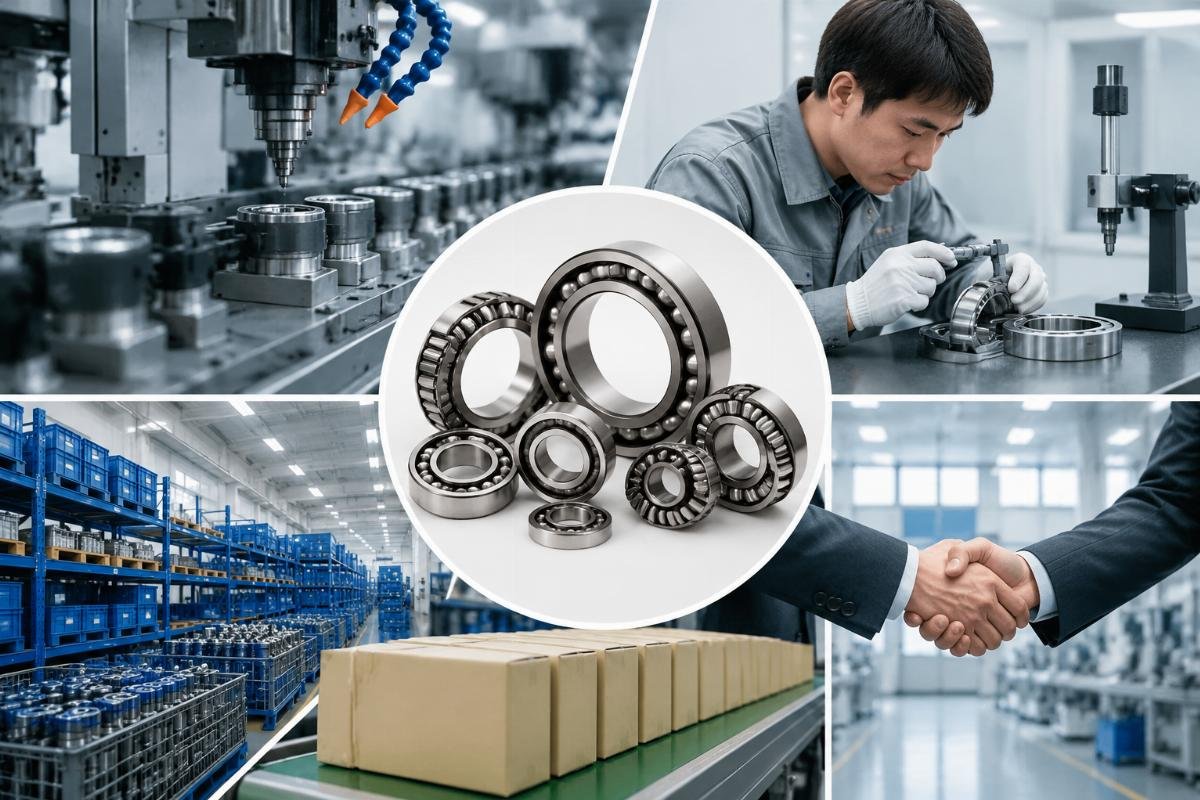
- Certification Verification – Confirm IATF 16949 and ISO 9001 credentials with current audit dates
- Inventory Depth – Assess stock coverage across multiple brands (SKF, FAG, NSK, Timken, Koyo)
- Traceability System – Ensure full documentation from manufacturing source to delivery
- Technical Capabilities – Evaluate engineering support for selection, cross-reference, and failure analysis
- Delivery Infrastructure – Verify self-operated warehousing and global logistics capabilities
What Is the Proper Implementation Process from Selection to Installation for Wheel Hub Bearings?
Correct installation procedures extend bearing service life by 30-50%. Even the best-selected bearing will fail prematurely without proper mounting, torque application, and post-installation verification. A structured implementation process ensures that the technical specifications translate into real-world performance.
| Implementation Step | Quality Standard |
|---|