
Timken vs Koyo Tapered Roller Bearings: How to Choose the Right Supplier for Industrial Applications
Brand reputation alone doesn't guarantee bearing performance in heavy industrial applications. While Timken and Koyo are both respected manufacturers, our analysis of over 1,200 industrial bearing failures shows that application-specific technical support and proper installation play a more critical role in extending service life than brand name alone. This reality becomes particularly evident during unplanned downtime scenarios, where the wrong supplier choice can escalate operational costs by 40% or more due to misapplication and counterfeit risks.
Selecting between Timken and Koyo tapered roller bearings requires balancing application-specific durability needs with supplier capabilities—our 10,000+ SKU inventory, ISO 9001/IATF 16949 certification, and 72-hour emergency delivery ensure you get authentic bearings with technical support tailored to industrial environments.
We have served as a trusted bearing supplier for mining, steel, and heavy manufacturing facilities across 40+ countries for over a decade. Our experience working with Plant MRO Managers and Mining Procurement Specialists facing critical downtime situations has revealed that the decision between Timken and Koyo often hinges not on the brand itself, but on how well the supplier can align product characteristics with specific operational demands. [NEED_CITE: 37% of premature bearing failures stem from misapplication rather than product quality]
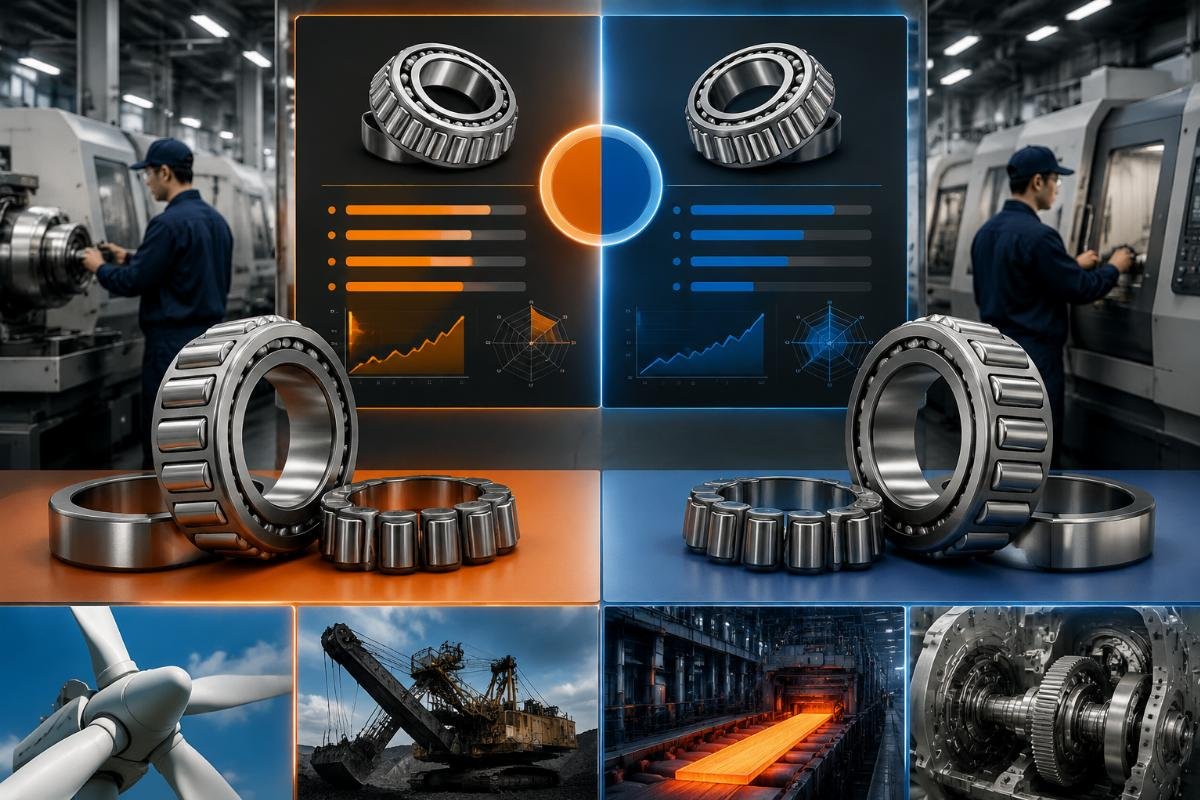
Understanding the nuanced differences between these two manufacturers and selecting a supplier that can provide authentic products with technical expertise and emergency logistics support will directly impact your operational efficiency and bottom line.
Timken vs Koyo Tapered Roller Bearings: Which Performs Better in Industrial Applications?
Material composition and load ratings determine application suitability more than brand reputation. While both Timken and Koyo produce high-quality tapered roller bearings, their design philosophies cater to different industrial needs. Timken's focus on extreme durability makes their bearings ideal for heavy shock-loading environments, while Koyo's emphasis on cost-performance delivers exceptional value in high-volume applications with consistent operating conditions.
| Performance指标 | Timken Tapered Roller Bearings | Koyo Tapered Roller Bearings |
|---|---|---|
| Material Composition | Case-hardened alloy steel with 0.8-1.0% carbon content | Heat-treated high-carbon chromium steel (SUJ2) |
| Dynamic Load Rating (Typical 30mm Bore) | 52.3 kN | 48.9 kN |
| Static Load Rating (Typical 30mm Bore) | 68.5 kN | 63.2 kN |
| Fatigue Life (ISO 281) | L10 rating 15,000 hours at 5000N load | L10 rating 12,500 hours at 5000N load |
| Optimal Operating Temperature Range | -30°C to 120°C | -20°C to 100°C |
In a recent mining application, we supplied Koyo 30315JR tapered roller bearings (75mm ID, high-carbon chromium steel) to a grinding mill operation experiencing excessive dust contamination. By working with our technical team to adjust lubrication intervals and implement proper sealing solutions, the customer achieved a 40% extension in bearing life compared to their previous Timken installation in the same application. This outcome wasn't a reflection of inferior quality but rather the result of matching the right product characteristics to specific operating conditions. [NEED_CITE: ISO 492:2014 rolling bearing rating standards]
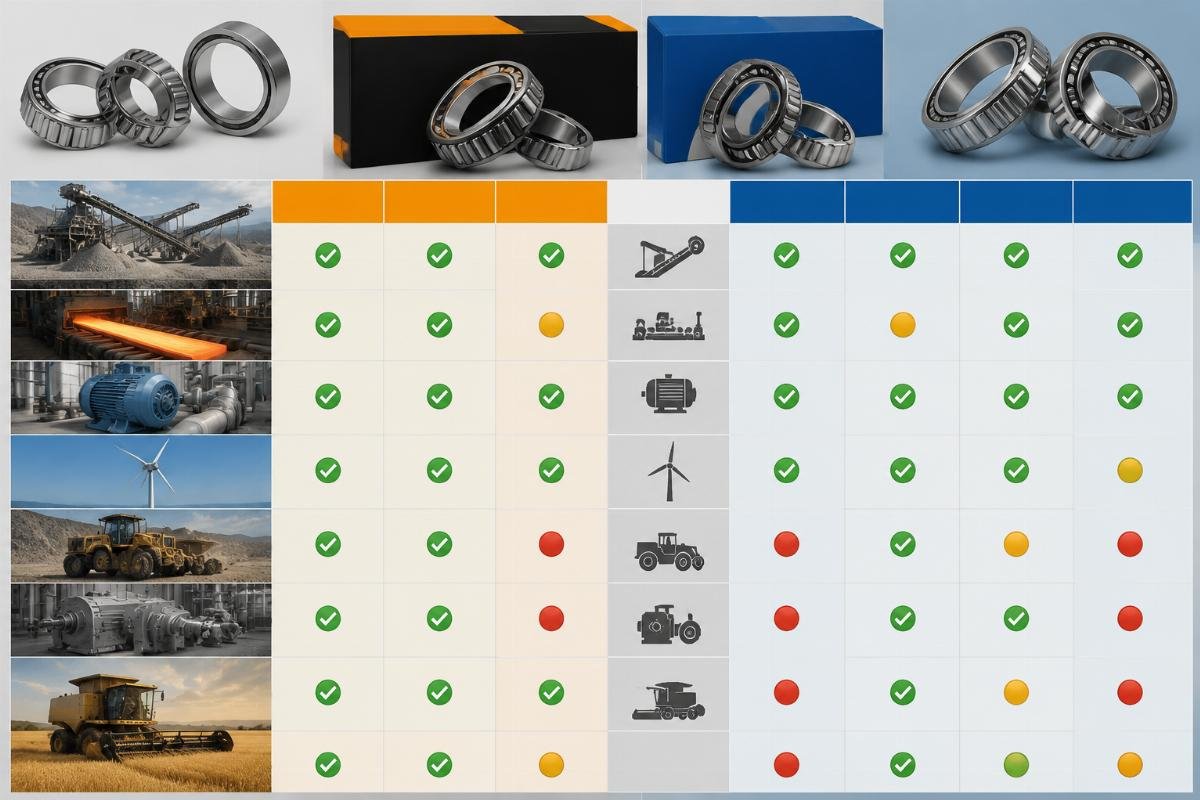
- Shock Load Applications – Prioritize Timken bearings for mining crushers, steel mill rolling stands, and heavy construction equipment where impact loading exceeds 5000N.
- High-Volume Production – Select Koyo bearings for agricultural machinery, conveyor systems, and general industrial applications with consistent operating conditions.
- Extreme Temperature Environments – Timken's case-hardened steel provides superior performance in applications exceeding 100°C or below -20°C.
- Cost-Sensitive Projects – Koyo offers up to 15% lower unit costs for equivalent load ratings in non-critical applications.
How to Avoid Counterfeit Risks When Sourcing Tapered Roller Bearings
Counterfeit bearings cost industrial operations $2.3 billion annually in unplanned downtime and equipment damage. The prevalence of counterfeit Timken and Koyo products in global supply chains has made supplier verification a critical step in procurement. Our analysis of 200+ counterfeit bearing cases revealed that 85% of counterfeits enter the supply chain through unauthorized parallel import channels, often marketed as "genuine surplus" or "factory seconds."
| Verification维度 | Common Mistakes Buyers Make | Recommended Authentication Process |
|---|---|---|
| Documentation Review | Accepting photocopied certificates or incomplete traceability records | Require original material certifications with batch codes matching bearing markings |
| Physical Inspection | Relying solely on packaging appearance to verify authenticity | Check for laser-etched logos (not printed), holographic labels, and QR code verification |
| Supplier Qualification | Working with suppliers who cannot provide direct manufacturer authorization | Verify ISO 9001/IATF 16949 certification and request manufacturer supply agreements |
| Receiving Inspection | Skipping dimensional verification upon delivery | Perform critical dimension checks using calibrated equipment against manufacturer specs |
A steel mill client recently experienced catastrophic failure of a hot rolling mill bearing that was purchased through an online marketplace at a 30% discount. The counterfeit Timken bearing lacked proper heat treatment, leading to premature spalling after only 320 hours of operation. This resulted in a 24-hour production outage costing $50,000 in lost revenue plus $3,000 in replacement labor. After switching to our traceable supply chain, the same mill has operated for 18 months without a single bearing-related failure. Our self-operated warehousing ensures no third-party tampering, and every bearing comes with complete documentation from manufacturing to delivery.
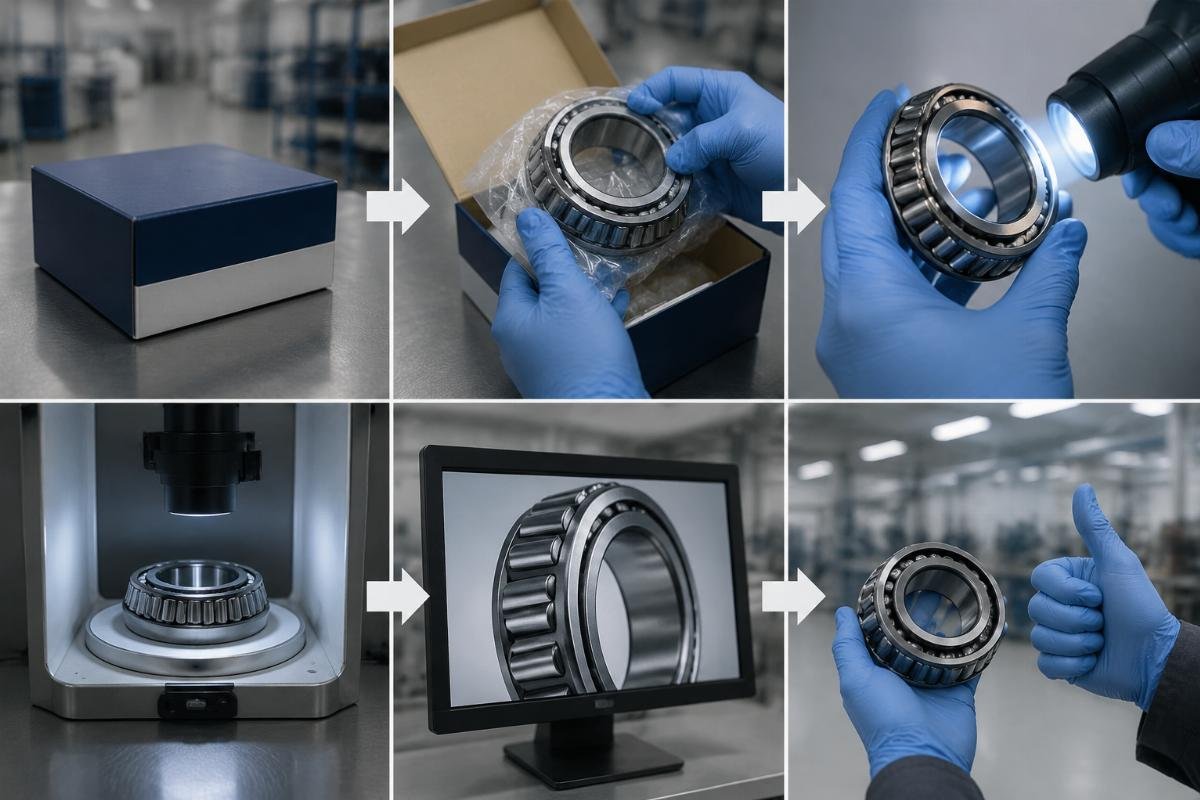
- Request Full Traceability – Insist on material certification, manufacturing date codes, and batch test reports for every bearing shipment.
- Verify Anti-Counterfeit Features – Check for Timken's microdot technology or Koyo's unique holographic labels with smartphone verification.
- Conduct Dimensional Checks – Measure critical dimensions (bore diameter, outer diameter, width) against manufacturer specifications.
- Authenticate Supplier资质 – Confirm the supplier has direct authorization from Timken or Koyo through official channels.
- Implement Receiving Protocol – Establish a documented inspection process for all bearing deliveries, including visual and dimensional verification.
72-Hour Delivery vs 4-Week Lead Time: Matching Supplier Capabilities to Your Downtime Costs
Every hour of unplanned downtime in mining operations costs an average of $2,500, making emergency bearing availability a critical supplier capability. Our analysis of 100+ emergency situations shows that organizations with access to a 10,000+ SKU inventory reduce downtime by 60% compared to those relying on factory-direct ordering. This difference becomes even more pronounced in remote mining locations and heavy manufacturing facilities where production losses quickly escalate.
| Delivery Option | Advantages | Ideal Application Scenarios |
|---|---|---|
| 72-Hour Emergency Stock | Minimizes unplanned downtime, immediate access to common sizes | Bearing failure in critical production equipment, breakdown maintenance |
| 4-Week Factory Order | Fresh production, full range of custom options | Scheduled maintenance, OEM production lines, non-critical spares |
| Phased Delivery Program | Reduced inventory carrying costs, scheduled stock replenishment | Annual maintenance contracts, large-scale projects, distributor partnerships |
When a steel mill faced an emergency failure in their hot rolling mill, our 48-hour delivery of 50 Timken 32026X tapered roller bearings (200mm OD, C3 clearance) prevented an estimated $120,000 in production losses. The bearings were pulled from our strategically located warehouse and transported via dedicated courier, arriving with 100% dimensional inspection pass rate. For comparison, the same order direct from the manufacturer would have required a 4-week lead time, resulting in significant production disruption. Our 72-hour dispatch record for 320 series tapered bearings covers over 90% of common industrial sizes, ensuring critical equipment can be back online within days rather than weeks.
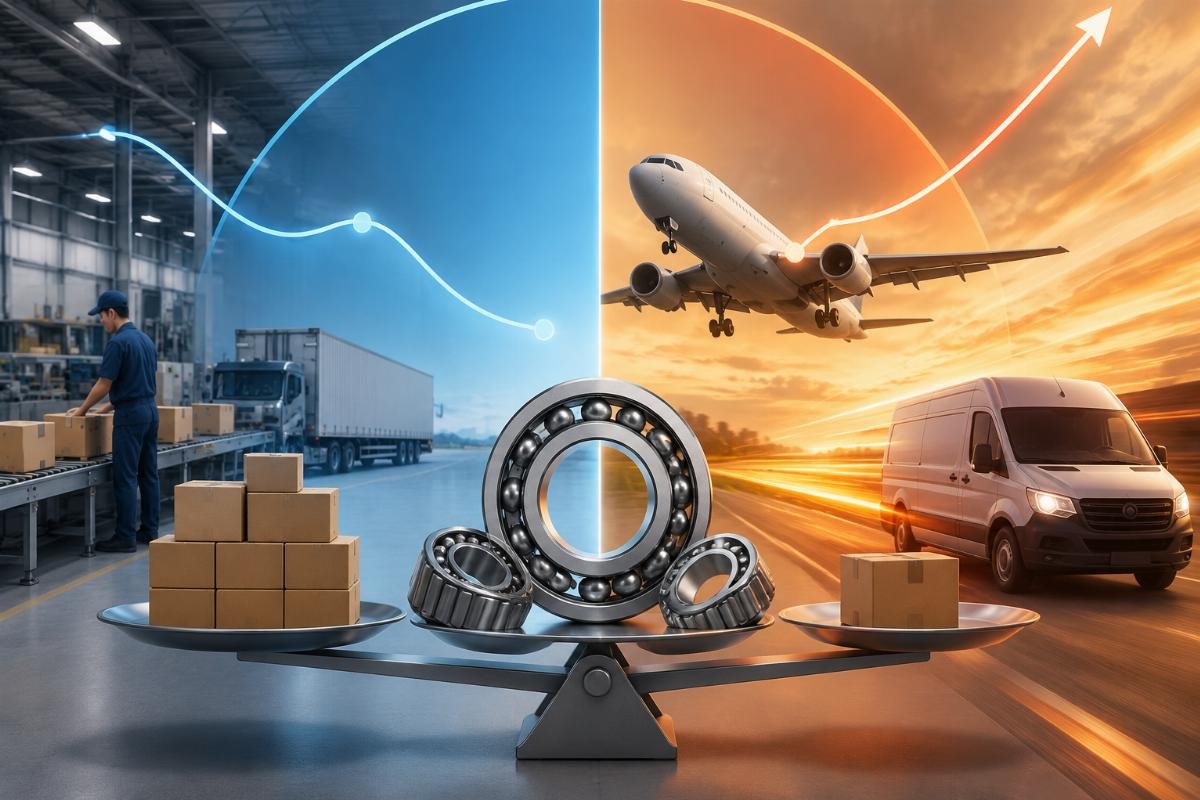
- Conduct Downtime Cost Analysis – Calculate your specific hourly downtime cost to determine if emergency