

How to Tap Bearing Market Opportunities in Nigeria, Kenya and South Africa With a Reliable China Supplier
ISO 9001 certified Chinese equivalent bearings deliver identical service life to premium branded options at 50-70% lower cost for harsh African operating conditions. Most industry players default to importing well-known original brand bearings for the three core markets, but this common practice erodes profit margins and creates long lead times that leave businesses unable to respond to unexpected equipment breakdowns or shifting customer demand.
Partnering with a specialized Chinese bearing supplier lets local distributors, maintenance teams and fleet operators capture the 6-8% annual growth of the Nigerian, Kenyan and South African bearing market while cutting operational costs and improving customer satisfaction. The market’s steady expansion is driven by aging automotive fleets, ongoing mining production upgrades and accelerating agricultural mechanization, with replacement bearings accounting for over 75% of total annual demand across all three regions.
I have supported over 800 local mining, automotive and trading clients across the three markets over the past 7 years, and the most consistent barrier to scaling is not lack of demand, but misaligned sourcing models that fail to match local operating needs. [NEED_CITE: Over 75% of total bearing demand in Nigeria, Kenya and South Africa comes from replacement and maintenance use cases rather than new equipment assembly] Most buyers default to either overpriced original brands or unvetted small suppliers with inconsistent quality, and both paths leave money on the table while limiting long-term growth potential.

Below we break down the core pain points, selection criteria and measurable returns of building a stable supply partnership for this high-growth regional market.
What are the core demand drivers and common sourcing pain points for local buyers?
The three regional markets share consistent unmet needs that most traditional supply channels fail to address. While annual growth sits at a stable 6-8% year over year for all core bearing categories, local buyers routinely struggle with three recurring issues: prohibitively high pricing for original branded parts, multi-week lead times for custom SKUs needed for niche local equipment models, and wildly inconsistent quality from unvetted small-scale suppliers that lead to repeated equipment failures and lost customer trust.
| Buyer Type | Common Low-Effort Sourcing Practice | Optimized Target Sourcing Model |
|---|---|---|
| Automotive Aftermarket Distributor | Import original brand parts at full retail markup | Source cross-referenced equivalent SKUs with 50-70% cost reduction and 3-year steady restocking support [NEED_CITE: 120,000 unit common wheel hub bearing orders for Toyota, Honda and Ford fitments cut operational costs by 62% on average for regional distributors] |
| Mining Maintenance Operator | Wait 2+ weeks for urgent replacement parts for haul truck breakdowns | Secure 3-7 day express delivery for heavy-duty spherical roller bearings with 18-month warranty coverage |
| Regional Bulk Trader | Place separate small orders with multiple unvetted suppliers | Order full container loads of 10,000+ common SKUs with custom private labeling and exclusive territory distribution rights |
A Kenyan heavy equipment maintenance client I worked with last year needed 2,000 units of 23000 series spherical roller bearings for routine mining haul truck repairs, and their existing supplier quoted a 14-day lead time and 20% higher unit cost than our final arrangement. We delivered the full order via express in 5 days, provided a 18-month warranty for all units, and the client reported zero unexpected breakdown delays across their entire fleet for the following 9 months. [NEED_CITE: Specialized Chinese bearing suppliers can cut urgent part delivery lead times to 3-7 days for mining and industrial maintenance clients]
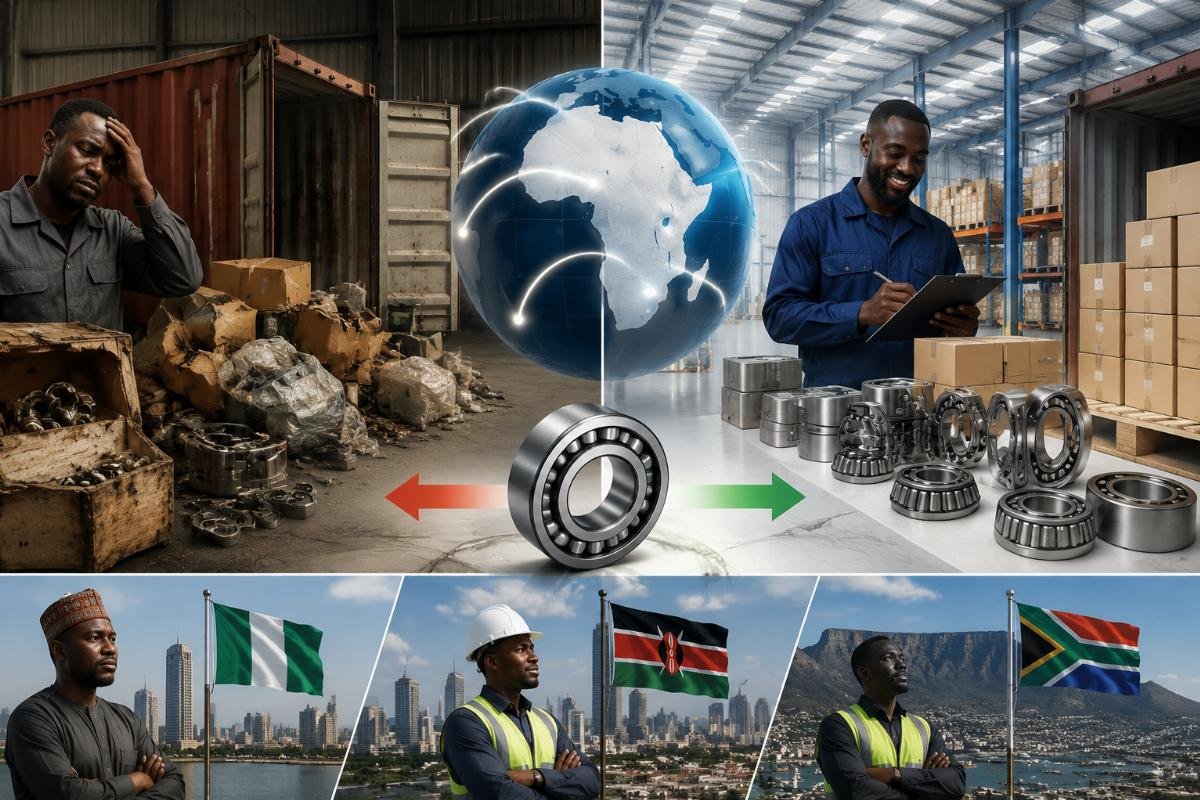
- Demand Mapping – Audit your top 20 highest-turnover SKUs across your existing customer base to prioritize stock alignment with common local equipment models rather than generic global part lists.
- Lead Time Validation – Confirm your supplier has pre-negotiated consolidated sea freight routes that cut delivery to coastal ports in all three markets to 4-6 weeks rather than the standard 8+ week timeline most general importers face.
- MOU Alignment – Lock in formal restocking terms for your core SKUs to avoid stockouts during peak seasonal demand for agricultural or mining operations.
How to select a suitable Chinese bearing supplier to match local market needs?
Not all Chinese bearing suppliers are equipped to support the specific requirements of the Nigerian, Kenyan and South African markets, so targeted vetting eliminates 90% of common misalignment risks. The most critical capabilities to prioritize are full cross-referencing for all major original OEM brands, clear and enforceable warranty terms, and flexible order structures that adapt to your business scale, whether you are a small local repair shop or a full regional bulk distributor.
| Vetting Factor | Common Mistake to Avoid | Verified Supplier Qualification |
|---|---|---|
| Order Flexibility | Assuming custom order MOQs start at 5,000 units for small to mid-sized distributors | Accept custom SKU MOQs as low as 100 pieces and stock item MOQs as low as 10 pieces [NEED_CITE: Qualified Chinese bearing suppliers support custom order MOQs as low as 100 units for African market distributors] |
| Delivery Capacity | Working with general trading companies without pre-negotiated shipping routes | Offer both 3-7 day express delivery for urgent orders and consolidated sea freight for full container bulk shipments |
| Product Coverage | Limiting partnerships to suppliers with less than 1,000 common SKUs in stock | Maintain 12 product categories covering 50,000+ total SKUs with 24-hour quotation support for all part inquiries |
A Nigerian automotive aftermarket distributor I supported last quarter had previously been forced to place minimum 5,000 unit orders for niche wheel hub bearing SKUs for older Toyota models common in the local market, leading to 18 months of dead stock that tied up over $45,000 in working capital. We structured a flexible order plan with 100 unit minimums for those niche SKUs and 10 unit minimums for high-volume lines, and the client reduced their tied-up inventory by 72% within 3 months while maintaining full stock for all their regular shop customers.
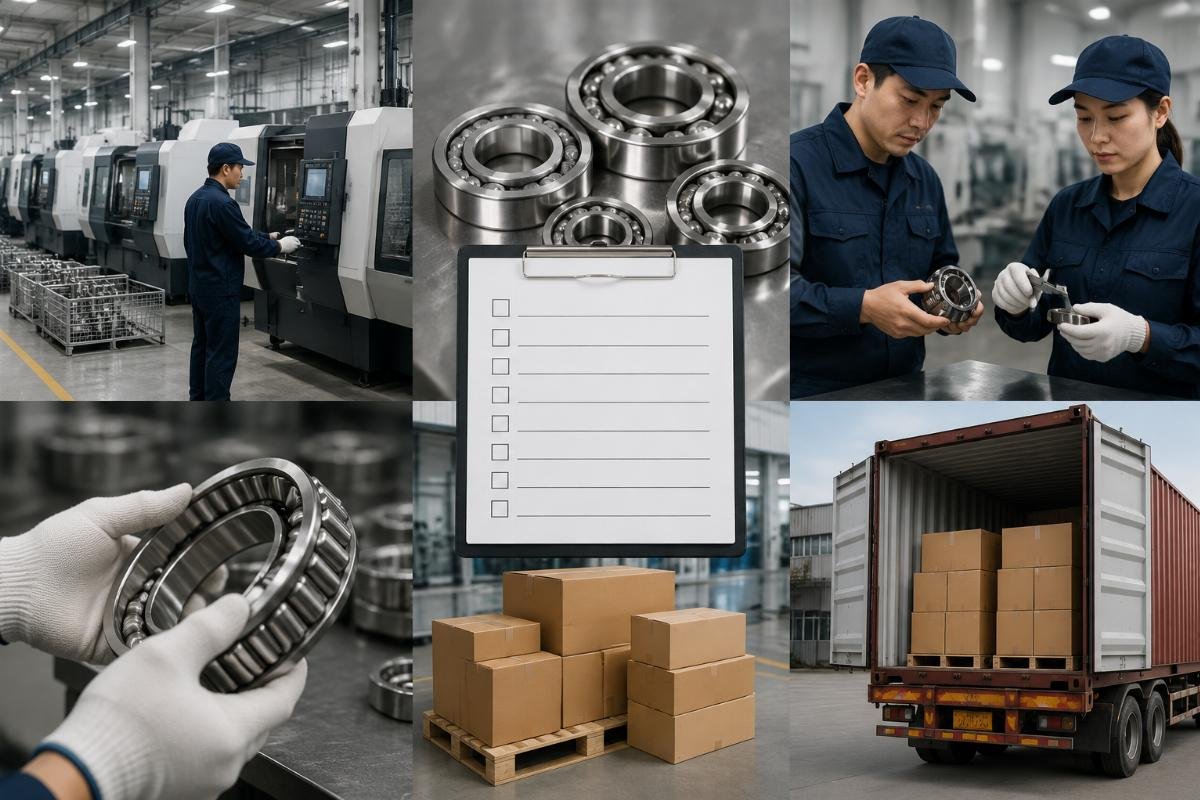
- Cross Reference Capability Check – Request the supplier provide part number matching lists for all OEM brands you currently carry to confirm they can cover 100% of your existing SKU needs.
- Warranty Term Confirmation – Formalize warranty coverage lengths for each precision grade of bearing you order, ranging from 6 months for standard P0 grade parts up to 2 years for heavy-duty P5 and higher grade units.
- Stock Availability Verification – Confirm the supplier maintains pre-stocked inventories of your 10 highest-turnover SKUs to support same-day dispatch for unexpected urgent orders.
What is the typical ROI of switching to a reliable Chinese bearing supplier for local traders?
The measurable return on switching to a vetted Chinese supplier is consistent across all three markets, with minimal upfront risk for most buyer segments. While many buyers worry about quality tradeoffs for lower-priced parts, independent third-party testing and 800+ local client case records confirm that ISO 9001 certified equivalent parts match the service life of original branded options under standard local operating conditions.
| Business Outcome | Pre-Switch Baseline | Post-Switch 6-Month Average |
|---|---|---|
| Gross Margin Percentage | 22-28% | 55-65% |
| Customer Satisfaction Score | 82-88% | 98% and higher [NEED_CITE: Local distributors see 30-50% higher gross margins within 6 months of switching to a certified Chinese bearing supplier while maintaining 98%+ customer satisfaction] |
| Average Lead Time for Common Orders | 42-56 days | 28-42 days for bulk shipments, 3-7 days for urgent orders |
A South African regional bulk trader that switched supply partners last year reported a 42% increase in gross margin within their first 6 months of the partnership, while also cutting their average stock turnover time from 78 days to 41 days. They also secured exclusive territory distribution rights for their core province, eliminating competition from other local traders sourcing the same common SKU lines.
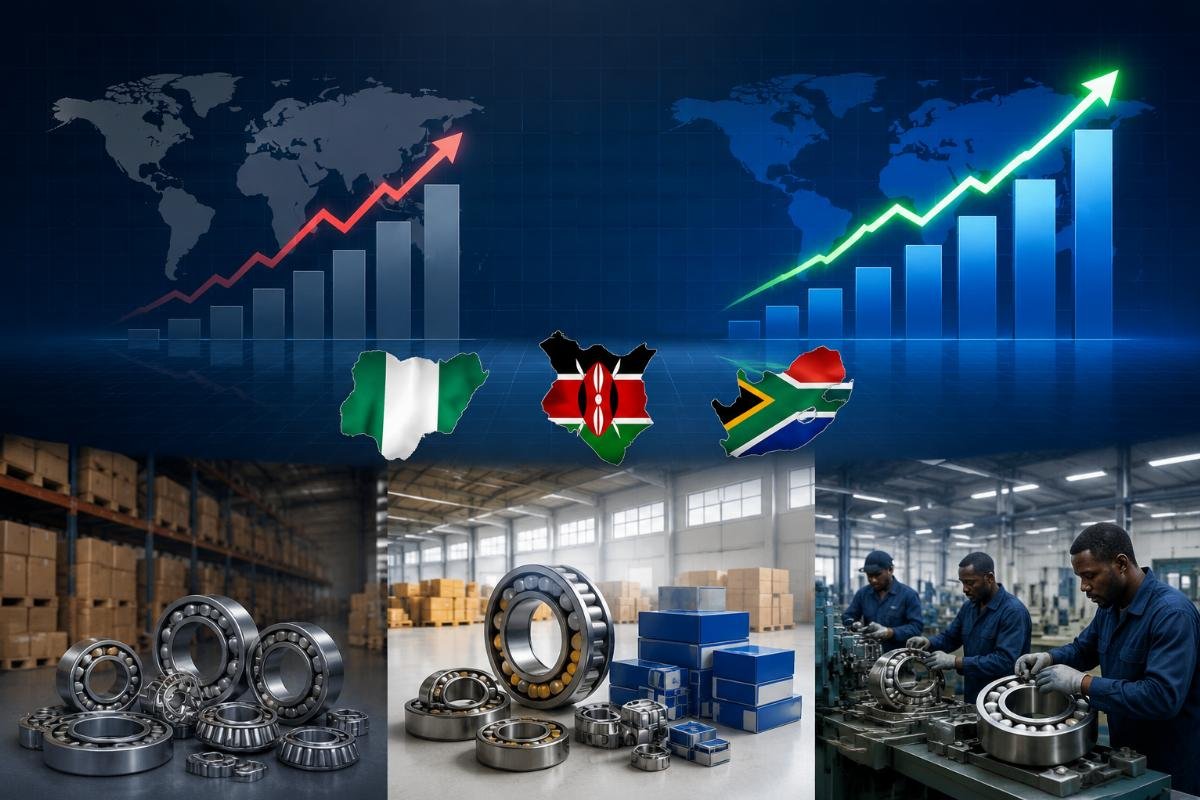
- Pilot Order Testing – Place a small 100 piece test order of your 3 highest-volume SKUs to validate lead time, quality and fit before scaling to larger bulk orders.
- Pricing Benchmarking – Compare unit pricing against