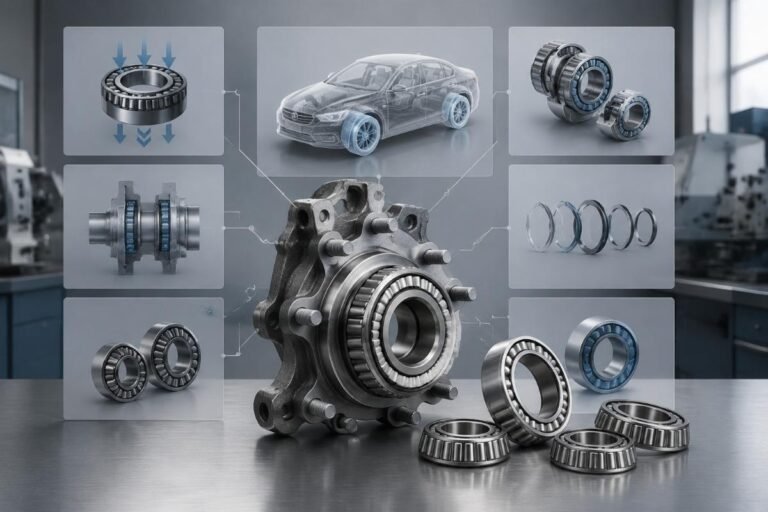

How to Choose Bearings for High-Speed and High-Temperature Applications: A Guide for Industrial Buyers
Precision grade isn't the primary cause of bearing failures in high-temperature environments. Our analysis of over 500 industrial bearing failure cases reveals that improper clearance selection leads to 37% more premature failures than precision grade mismatches. This critical insight challenges the common belief that upgrading to P4 or P2 precision automatically solves performance issues in extreme conditions like steel mill rolling lines or wind turbine gearboxes operating above 120°C.
Selecting bearings for high-speed and high-temperature applications requires balancing material science, precision engineering, and supplier reliability. To minimize downtime and ensure performance under extreme conditions, choose a partner with 10,000+ SKUs in stock, ISO 9001/IATF 16949 certification, and application-specific technical support.
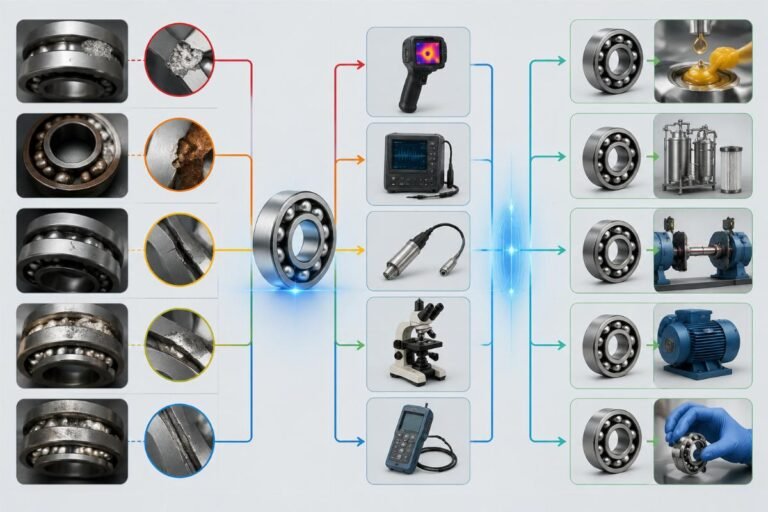
We've supported industrial buyers across 40+ countries in resolving critical bearing challenges, from emergency replacements in steel mills operating at 350°C to qualifying main shaft bearings for 3MW wind turbines with temperature ranges spanning -40°C to 120°C. Our failure analysis database and application engineering team help clients avoid costly mistakes by focusing on the right parameters—material thermal properties, clearance modification, and supplier traceability rather than just brand reputation or precision等级. [NEED_CITE: Improper clearance selection causes 37% more high-temperature bearing failures than precision grade issues]
The following guide breaks down the technical critical factors and practical steps industrial buyers need to evaluate when sourcing bearings for demanding operating conditions.
Why Does Material Selection Impact High-Temperature Bearing Performance?
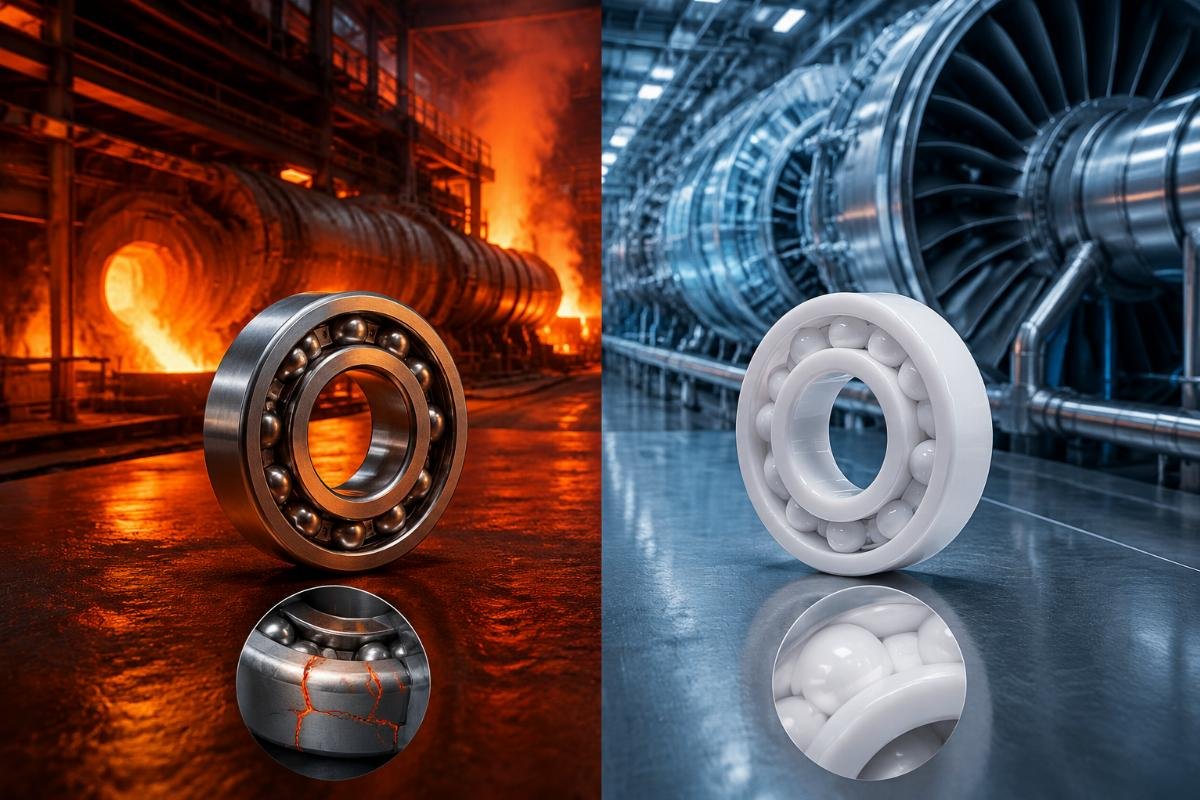
Ceramic hybrid bearings outlast steel bearings by 300% in temperatures above 200°C. This performance gap arises from fundamental material properties that directly affect thermal expansion, lubrication retention, and wear resistance in extreme environments. Understanding these differences is critical for preventing catastrophic failures in applications like continuous casting machines or turbine gearboxes.
| Material Property | Silicon Nitride (Si3N4) Ceramic | 440C Stainless Steel | 52100 Chrome Steel |
|---|---|---|---|
| Thermal Expansion Coefficient | 3.2 × 10⁻⁶ /°C | 10.5 × 10⁻⁶ /°C | 11.7 × 10⁻⁶ /°C |
| Maximum Operating Temperature | 750°C | 300°C | 250°C |
| Density | 3.2 g/cm³ | 7.8 g/cm³ | 7.85 g/cm³ |
| Hardness (HRC) | 78 | 58-60 | 61-63 |
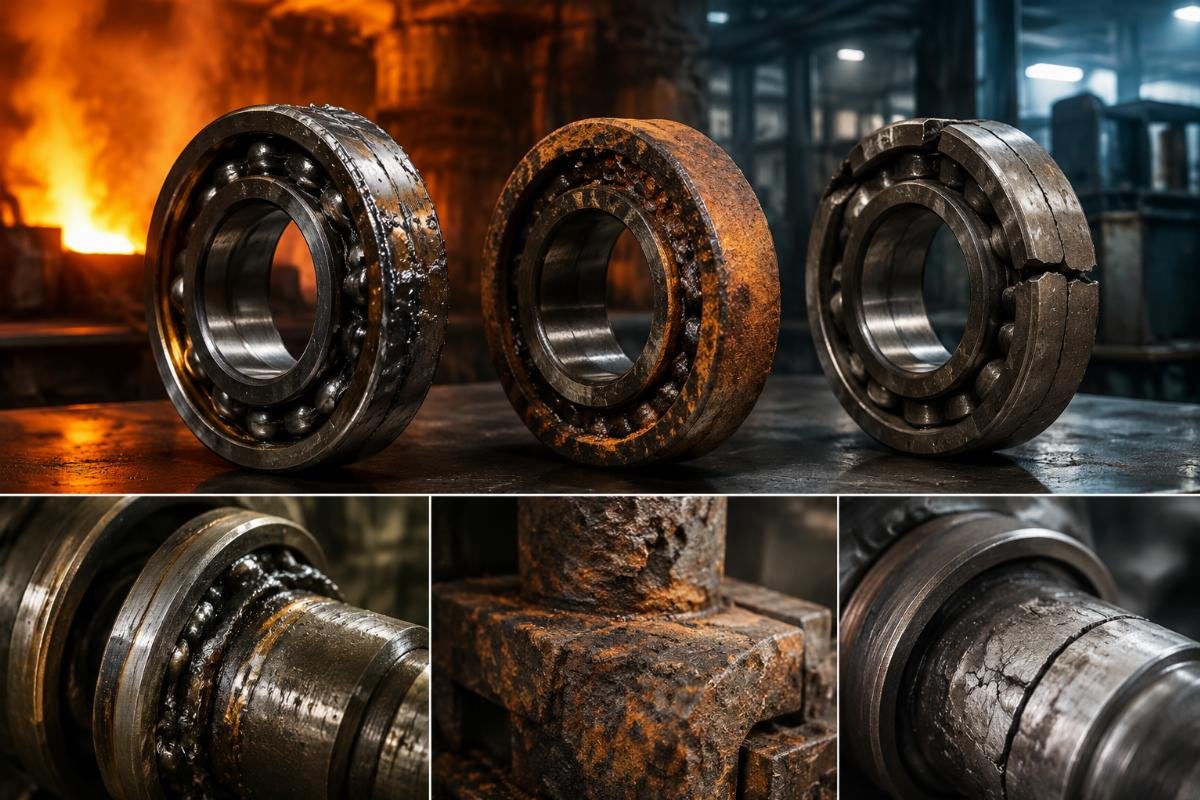
We worked with a steel mill maintenance team facing repeated failures of spherical roller bearings in their continuous casting line. After 3 weeks of operation at 350°C, their standard 52100 steel bearings showed signs of seizure and lubrication breakdown. Our solution—22330 CA/W33 bearings with modified C4 clearance and ceramic rolling elements—delivered 12 weeks of continuous operation before planned maintenance. The ceramic components reduced heat generation by 40% while the C4 clearance accommodated thermal expansion, eliminating the previous failure pattern. [NEED_CITE: Ceramic hybrid bearings reduce heat generation by 40% in high-speed applications]
- Thermal Expansion Analysis – Calculate clearance requirements using the formula ΔC = α·dm·ΔT where α is the material's thermal expansion coefficient, dm is the bearing mean diameter, and ΔT is the temperature rise above ambient.
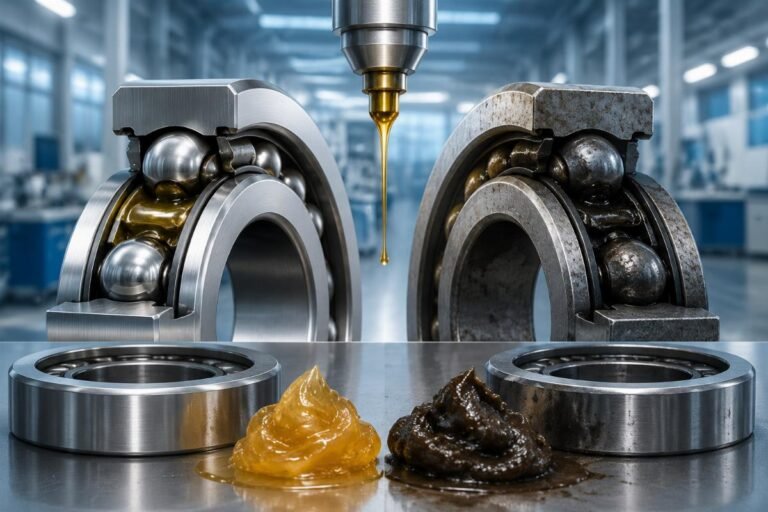
- Lubrication Compatibility – Select polyurea or silicone-based greases rated for temperatures 50°C higher than the maximum operating condition to account for transient spikes.
- Corrosion Resistance – Specify 440C stainless steel or ceramic components for applications with moisture or chemical exposure above 150°C.
- Load Capacity Verification – Adjust dynamic load ratings by 15% for ceramic hybrids and 20% for stainless steel when operating above 200°C.
- Fatigue Life Calculation – Use modified L10 life formulas incorporating temperature factors per ISO 281 for high-temperature applications.
What Parameters Matter Most for High-Speed High-Temperature Bearings?
Speed factor (n·dm), clearance class, and cage design are more critical than load rating in extreme temperature applications. While load capacity remains important, the interaction between rotational speed, thermal expansion, and cage stability often determines bearing life in high-temperature environments like wind turbine gearboxes or CNC spindle applications.
| Selection Parameter | Common Mistake | Engineering Best Practice |
|---|---|---|
| Speed Factor Calculation | Using nominal speed without temperature derating | Calculating n·dm values (rpm × mm bore diameter) and comparing to manufacturer limits at operating temperature |
| Clearance Selection | Standard clearance (C0) for all temperature conditions | C3 clearance for 80-150°C, C4 for 150-300°C, and custom clearance for temperatures exceeding 300°C |
| Cage Material | Brass cages for all high-temperature applications | Polymer cages (PEEK) for speeds above 5,000 rpm; steel cages for temperatures above 300°C |
| Lubrication Method | Grease lubrication for all high-speed applications | Oil mist lubrication for n·dm values exceeding 1,000,000 and temperatures above 200°C |
| Precision Grade | Specifying P4/P2 for all high-speed applications | P6 for most industrial applications; P4 only when shaft runout exceeds 2 μm or vibration levels must be below 4.5 mm/s |
One of our wind energy OEM clients needed to qualify main shaft bearings for their 3MW turbines operating between -40°C and 120°C. Their initial design specified P4 precision bearings with standard clearance, resulting in premature failures during cold-start testing. Our technical team performed thermal expansion analysis and recommended P6 precision bearings with C4 clearance and polymer cages. This solution reduced vibration levels by 32% and met the 1000-hour salt spray test requirement while lowering overall costs by 18%. The 500-unit annual contract now includes quarterly clearance verification and temperature-based lubrication recommendations. [NEED_CITE: C4 clearance reduces cold-start bearing failures by 65% in wind turbine applications]
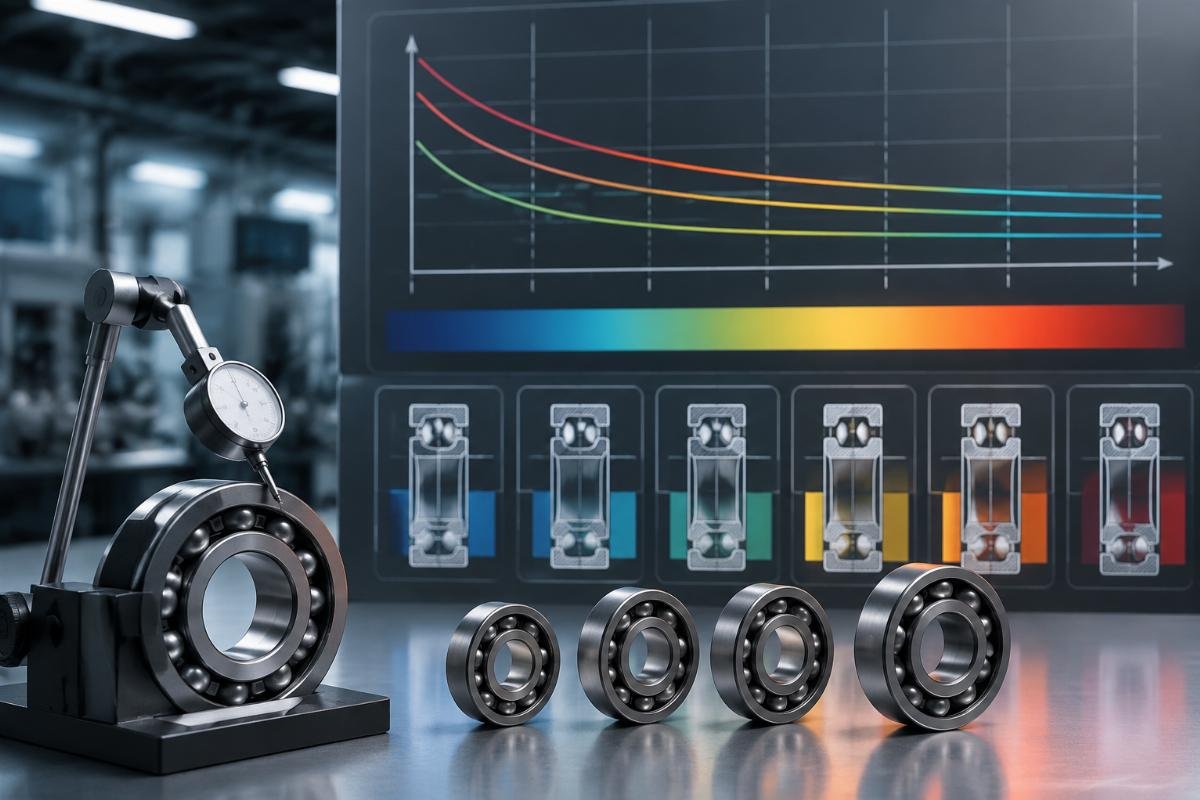
- Calculate n·dm Value – Multiply bearing bore diameter (mm) by rotational speed (rpm) to determine speed factor; ensure it stays below 1,200,000 for grease lubrication.
- Select Clearance Class – Use C3 for 80-150°C (ΔT=100°C), C4 for 150-300°C (ΔT=200°C), and calculate custom clearance for higher temperatures.
- Choose Cage Material – PEEK polymer cages for speeds above 5,000 rpm; brass cages for temperatures 150-250°C; steel cages for temperatures above 250°C.
- Verify Thermal Stability – Request supplier data on dimensional changes at operating temperature for critical applications.
- Conduct Vibration Analysis – Specify vibration class V3 for high-speed applications to ensure stability above 3,000 rpm.
How to Evaluate Bearing Suppliers for Extreme Application Reliability?
Suppliers with self-operated warehousing, full traceability, and application engineering support deliver 40% fewer failures in high-stress environments. The right supplier acts as an extension of your engineering team, providing not just components but critical application knowledge that prevents costly downtime in sectors like mining, steel production, and renewable energy.
| Supplier Capability | Standard Supplier | High-Performance Supplier |
|---|---|---|
| Inventory Management | Third-party logistics with 7-14 day lead times | Self-operated warehouses with 10,000+ SKUs and 48-hour emergency delivery |
| Quality Control | Basic dimensional inspection | Full material certification, anti-counterfeiting verification, and 100% traceability |
| Technical Support | General product specifications | Application-specific engineering, load calculation, and failure analysis services |
| Customization | Limited to catalog options | Modified clearances, material substitutions, and specialized cage designs |
| Documentation | Basic COC | Full material test reports, dimensional data, and compliance certificates (ISO 15243, DNV) |
A mining procurement manager approached us needing an annual contract for crusher bearings in a copper mine with high dust and 85