

How to Calculate Bearing L10 vs L50 Fatigue Life Estimation for China Bearing Sourcing
Overinvesting in a higher L10 rating for non-critical applications wastes 30% or more of your bearing budget for zero functional gain. Most procurement teams default to chasing the highest listed L10 value without cross-referencing their actual operating conditions, leading to unnecessary cost hikes that eat into margin across bulk and repeat orders.
L10 and L50 are not hierarchical quality metrics, but distinct reliability benchmarks aligned to specific use cases: L10 represents the 10% failure threshold (90% reliability) for regulated production environments, while L50 is the median 50% failure threshold for high-tolerance replacement and heavy-duty scenarios.
Over 8 years supporting global bearing buyers across 80+ markets, we’ve seen teams repeatedly misapply these two metrics, leading to either premature field failure or overpayment for specs they never use. [NEED_CITE: ISO 281 standard defines the core calculation framework for both L10 and L50 bearing fatigue life] The gap between a supplier’s listed spec and real-world performance almost always traces back to whether the calculation was adjusted for actual operating loads, lubrication, and temperature.
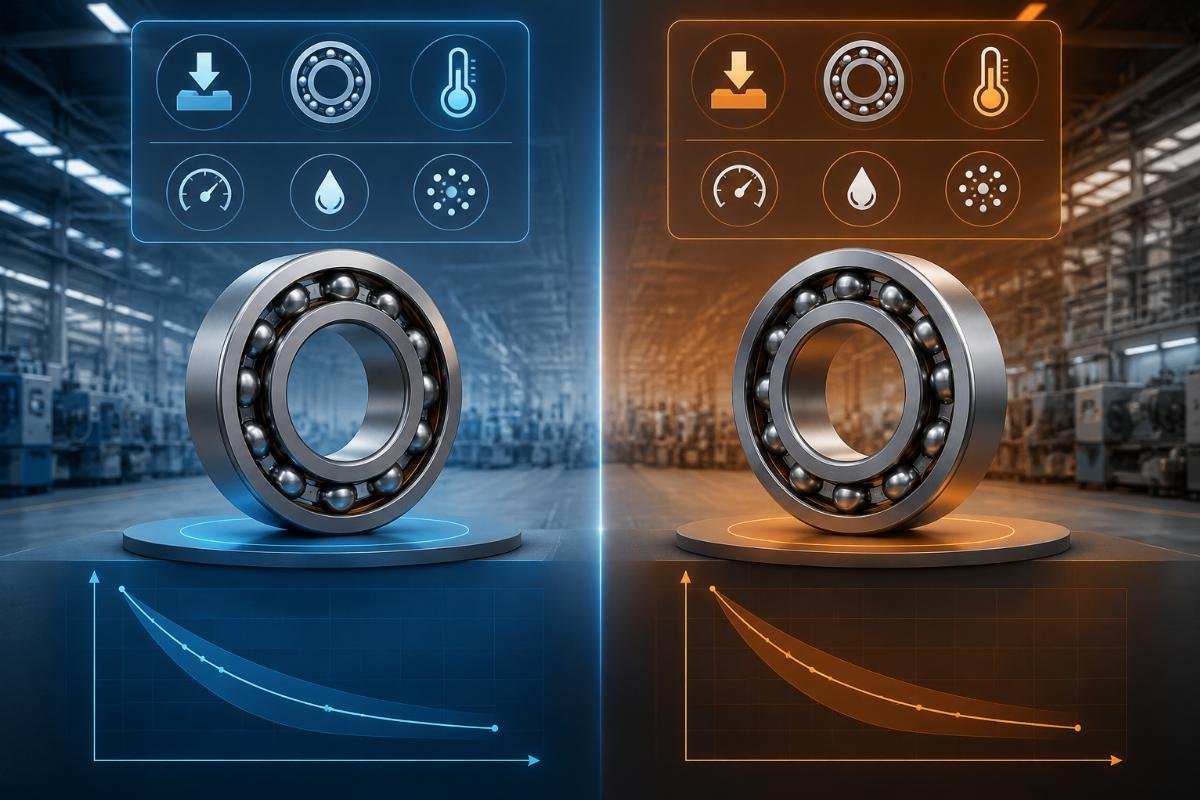
This guide breaks down how to calculate both metrics correctly, avoid common costly mistakes, and verify supplier claims to source consistent bearings from Chinese manufacturers at the right price point.
What’s the core difference between L10 and L50 bearing fatigue life?
L10 is a conservative baseline for guaranteed performance, while L50 reflects expected real-world average performance. L10 is the minimum life you can expect 9 out of 10 identical bearings to reach under defined load and speed conditions, standardized for OEM production lines where unplanned downtime carries extreme cost. L50, by contrast, is the median life where half the bearings will exceed and half will fall short, making it a more practical reference for replacement parts and heavy-duty use cases where full 90% reliability is not a mandatory requirement.
| Metric | Common Misapplication | Correct Sourcing Application |
|---|---|---|
| L10 Rating | Treat as a direct measure of overall bearing quality | Use as a non-negotiable spec only for regulated industrial OEM production lines [NEED_CITE: L10 calculation follows a fixed power law per ISO 281 for all standard bearing types] |
| L50 Rating | Assume it equals L10 multiplied by a fixed 3-5x constant | Adjust calculation based on actual lubrication conditions and load fluctuation, which can shift the conversion factor by up to 2.7x |
| Reliability Benchmark | Pick the highest listed value regardless of use case | Match to your risk tolerance for unplanned downtime per application |
Last quarter, we worked with a conveyor system OEM based in Western Europe that needed P6 grade deep groove ball bearings for a standard mid-speed line; we ran L10 calculations aligned to their 20000 hour required operating window, and were able to fulfill the order from our 50000+ SKU stock without forcing them to pay for overengineered specs they did not need.
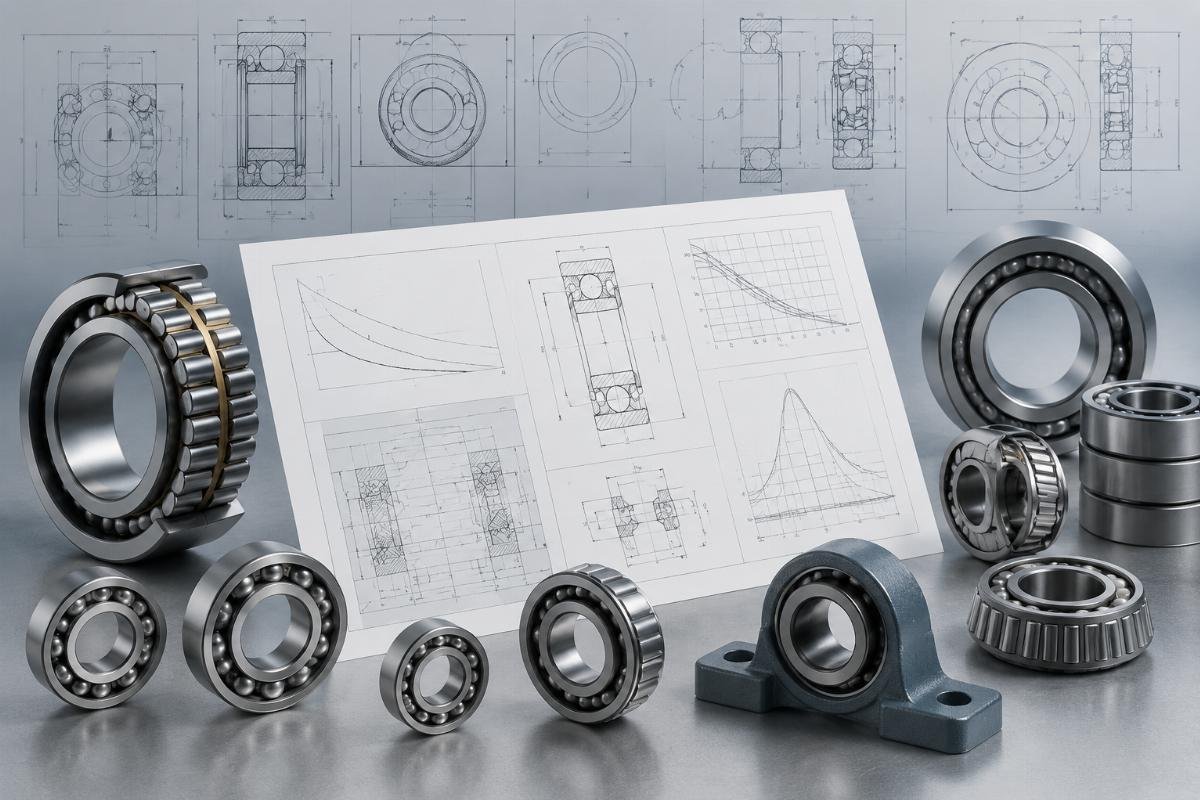
- Confirm Standard Baseline – Start with the core L10 formula from ISO 281 using the dynamic load rating listed on the supplier’s product sheet, before applying any use case adjustments.
- Map Failure Threshold – Define whether your operation requires 90% reliability (use L10 as core spec) or can work with median performance (use L50 as core spec).
- Check Conversion Factors – Reference the published L10/L50 conversion table for your specific load range to avoid using a generic fixed multiplier.
How do you pick the right life metric for your specific use case?
The correct metric directly ties to how costly unplanned downtime is for your operation. For high-volume OEM production lines where a single bearing failure can halt an entire shift, L10 is the non-negotiable baseline to build your order spec around. For heavy-duty mining and agricultural equipment where parts are replaced on a scheduled cycle rather than at the first sign of wear, L50 delivers more actionable insight for balancing cost and performance.
| Use Case | Common Suboptimal Choice | Recommended Metric Alignment |
|---|---|---|
| Industrial OEM New Production | Spec L50 to cut upfront costs | Lock in L10 as the minimum required spec to avoid post-delivery warranty claims |
| Heavy Equipment Replacement Parts | Spec L10 for every component to reduce service calls | Use L50 as the core reference to source parts at 50-70% below branded OEM pricing [NEED_CITE: L50 adjusted for real-world load delivers equivalent field performance for non-critical heavy duty parts] |
| Emergency MRO Replacement | Wait for brand-name parts to confirm specs | Use L10 cross-reference to source equivalent in-stock parts for 24 hour dispatch |
Earlier this year, a mining equipment distributor based in Southeast Asia came to us looking for lower cost alternatives to branded OEM spherical roller bearings; we adjusted L50 parameters to match their operating conditions, and delivered parts that met their performance requirements at a 62% lower price point than the original branded units.
- Downtime Cost Audit – Calculate the actual cost per hour of unplanned failure for the specific component to set your reliability bar.
- Bearing Type Match – Apply the published life correction factors for your specific bearing category (deep groove ball, tapered roller, spherical roller) before finalizing numbers.
- Precision Grade Adjustment – Account for the 15-40% impact of P0/P6/P5 precision grades on real world life, depending on your operating speed.
What common mistakes lead to wrong life calculation results?
Failing to apply use case correction factors leads to life estimate errors of over 40% in the majority of bulk orders. The most frequent error teams make is taking a supplier’s listed baseline L10 number at face value, without adjusting for real-world variables like inconsistent lubrication, fluctuating load, and operating temperature that directly shift actual performance.
| Mistake | Typical Outcome | Correct Mitigation |
|---|---|---|
| Generic L10/L50 multiplier | 30-50% mismatch between estimated and actual field life | Reference load-specific conversion tables to adjust for operating conditions |
| Ignoring lubrication quality | Premature failure 20% earlier than calculated | Add a 0.6 to 1.2 correction factor based on your lubrication type and maintenance schedule |
| No load fluctuation adjustment | Inconsistent performance across batches | Apply a 0.7 to 1.5 correction factor for variable vs constant load operations |
We recently supported a North American MRO team that needed an emergency replacement bearing for a factory line breakdown; we ran a full L10 cross-verification against the original part spec in 3 hours, and dispatched the equivalent in-stock unit the same day for delivery in 4 days via standard DHL service.
- Standard Baseline Check – Confirm the supplier’s listed dynamic load rating matches ISO 281 standard values for the bearing part number.
- Variable Factor Audit – List all operating variables (temperature, load variance, lubrication type) before applying correction factors to the base calculation.
- Batch Consistency Review – Request at least 3 recent batch test records to confirm the listed spec holds across production runs, not just for individual test units.
How to verify a supplier’s stated bearing life claims?
Third party test reports aligned to ISO 281 are the only reliable proof of a supplier’s stated performance. A common misconception is that only global branded OEMs can deliver verified life ratings, but ISO 9001 certified Chinese bearing manufacturers can produce fully compliant test reports that match OEM standard requirements. We work with 30+ vetted Chinese bearing factories, with a standardized quality control process that delivers consistent performance across every order, and offer tiered warranty terms from 6 months to 2 years depending on the precision grade of the parts you order.
| Verification Step | Common Lazy Approach | Rigorous Validated Process |
|---|---|---|
| Test Report Review | Accept a single lab report for one part | Request test records for 3 consecutive production batches to confirm consistency |
| Certification Check | Only check for general ISO 9001 | Confirm the scope explicitly covers fatigue life testing per ISO 281 |
| Warranty Validation | Assume generic warranty applies | Confirm warranty |