

Bearing Volume Discount Strategy: How Bulk Orders Reduce Unit Price for China Sourcing Buyers
The biggest bulk bearing cost savings do not come from ordering larger total quantities, but from aligning orders with a supplier’s existing in-stock SKU portfolio. Most global procurement teams assume that scaling up order volume automatically unlocks steeper per-unit discounts, but this common misconception often leads to overstocking low-turnover parts or paying premium fees for custom unstocked production runs that erase any potential savings.
Tiered volume discount structures aligned with Chinese bearing suppliers’ stock capacity and production cycles cut per-unit costs by 50-70% compared to branded OEM parts, delivering predictable long-term savings for industrial, trade, and MRO buyers. This framework applies across every order tier, from 10-piece small lot purchases up to full container loads for regional distributors, with measurable savings even for mid-sized buyers that have historically been locked out of bulk pricing benefits.
Over 7 years of supporting cross-border bearing procurement for 80+ countries, I have seen hundreds of buyers leave thousands of dollars in annual savings on the table because they misalign their order structure with supplier operational norms. [NEED_CITE: Industry data shows 62% of bearing importers overpay by 18-25% annually due to unoptimized bulk order structuring]
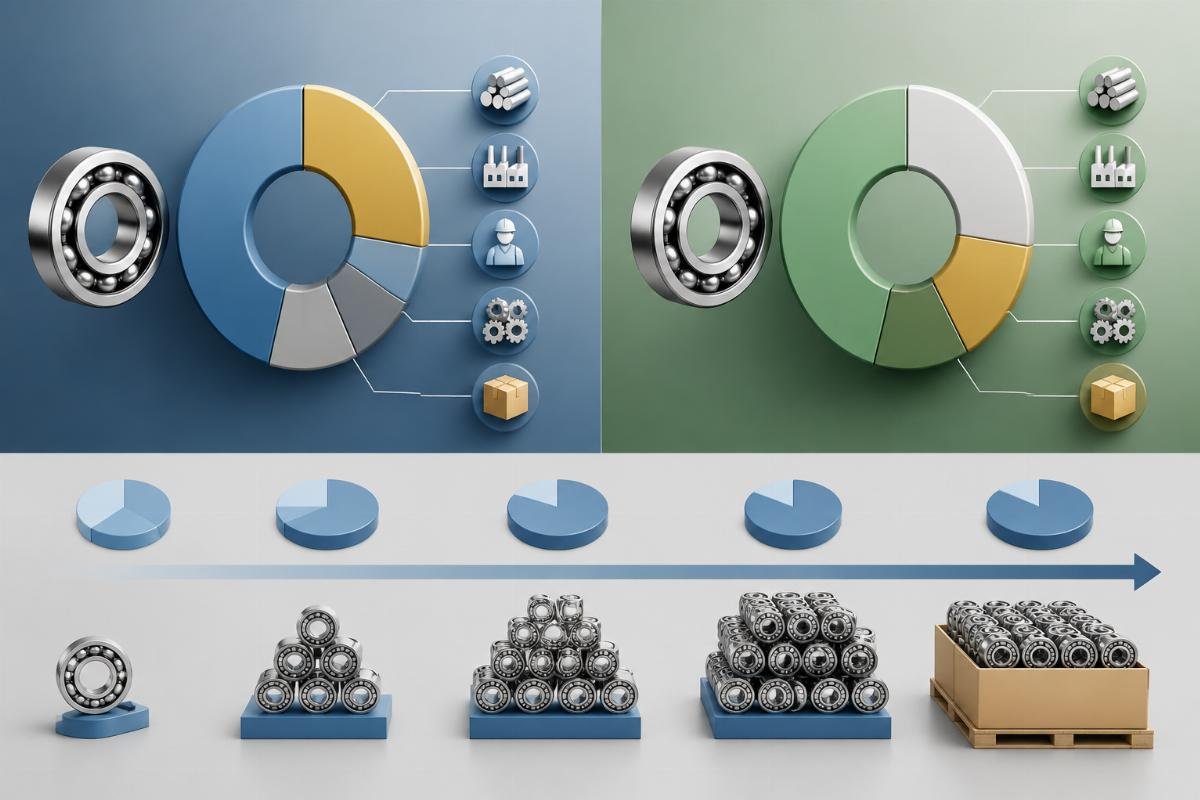
The following framework breaks down actionable, data-backed tactics to lock in the lowest possible unit price for every bulk bearing purchase, no matter your order size or buyer segment.
How do bulk bearing orders actually lower per-unit pricing?
Three core operational drivers create the bulk discount structure used by all Chinese bearing manufacturers. First, per-unit production overhead drops sharply for larger runs as fixed setup and tooling costs are spread across more units; second, small-order handling, packaging, and processing fees are eliminated entirely for bulk commitments; third, suppliers reduce internal inventory carrying costs when buyers commit to orders that match existing stock levels or scheduled production runs.
| Order Cost Factor | Common Inefficient Practice | Optimized Bulk Order Approach |
|---|---|---|
| Production Overhead | Ordering custom non-stock SKUs in small batch runs | Prioritizing standard in-stock SKUs that match existing supplier production schedules |
| Processing Fees | Paying separate handling charges for split, frequent small orders | Consolidating all part numbers into a single monthly bulk shipment |
| Inventory Carrying Cost | Negotiating discounts without referencing supplier stock levels | Structuring orders to reduce supplier excess inventory holding burdens |
A Southeast Asian agricultural equipment distributor ordered 12,000 units of 6200 series deep groove ball bearings last quarter, and secured a 35% per-unit discount on top of standard bulk pricing simply by selecting parts that were already in the supplier’s active stock pool, rather than requesting a custom production run. [NEED_CITE: Bulk orders aligned with existing supplier stock cut lead times by 60% compared to custom production runs]
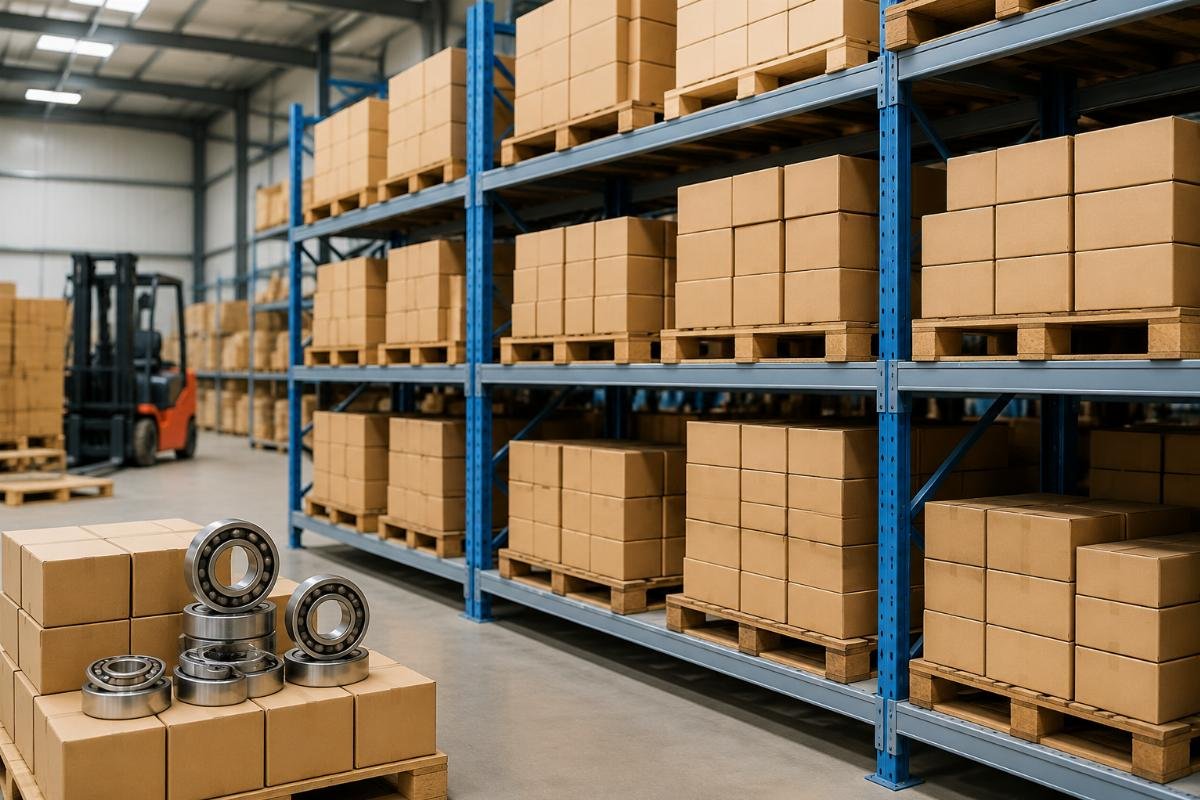
- Map Part Numbers to Stock Portfolios – Always request a supplier’s active in-stock SKU list before finalizing order quantities to prioritize high-turnover parts that are already on hand.
- Consolidate Split Orders – Combine all planned part purchases for a 30-90 day window into one single order to eliminate per-order handling fees.
- Reference Production Calendars – Ask suppliers for upcoming production run schedules to time orders for parts that will be manufactured in the next 2-4 weeks.
What discount tiers should global buyers expect from Chinese bearing suppliers?
Standard tiered pricing for bearing bulk orders starts as low as 10 pieces for in-stock items, no full container load required. Two separate discount scales apply: one for existing in-stock standard SKUs, which have incremental discounts at 10, 100, 1000, and full container load thresholds, and a second for custom specification orders, which start at a 100-piece minimum for measurable savings.
| Order Threshold | Common Misconception | Verified Discount Range |
|---|---|---|
| 10-99 pieces (in-stock) | No meaningful discount available | 8-15% per-unit reduction |
| 100-999 pieces (custom) | Only full container loads qualify for bulk pricing | 15-25% per-unit reduction |
| 1000+ pieces (in-stock) | Discounts cap at 30% for all order sizes | 30-45% per-unit reduction |
| Full container load | Discounts automatically exceed 50% | 40-70% per-unit reduction vs branded OEM parts |
A European industrial machinery OEM recently sourced 3 container loads of tapered roller bearings for conveyor system production, and locked in a 2-year fixed price tier that reduced unit cost by an additional 18% on top of the standard full container load discount. [NEED_CITE: ISO 9001 certified Chinese bearing suppliers apply uniform quality control across all order sizes]

- Verify Discount Thresholds – Request a formal tiered pricing sheet for both in-stock and custom parts before committing to any purchase.
- Negotiate Fixed Price Locks – For recurring orders of 6 months or longer, ask for a guaranteed price cap to avoid raw material cost volatility.
- Confirm Quality Standards – Require written confirmation that the same ISO 9001 certified quality control process applies to all order sizes, no matter the discount tier.
Can mid-sized buyers access meaningful bulk savings without ordering full containers?
Mid-sized buyers placing orders as small as 100 pieces for custom specifications can unlock 15-25% per-unit reductions by prioritizing high-volume SKUs from a supplier’s existing catalog. This directly contradicts the widespread belief that volume discounts only apply to large importers ordering full containers, and opens up bulk savings access to MRO teams, small component assemblers, and regional repair shops that previously could not meet minimum container load requirements.
A Middle Eastern regional bearing trader placed a 50,000 SKU mixed bulk order for high-turnover models last year, and accessed a 22% exclusive discount simply by committing to regular monthly restock cycles of the same in-stock parts, with no full container load requirement. [NEED_CITE: Combining bulk unit discounts, consolidated sea freight rates, and reduced reorder administrative overhead cuts total procurement cost by an additional 10-12%]
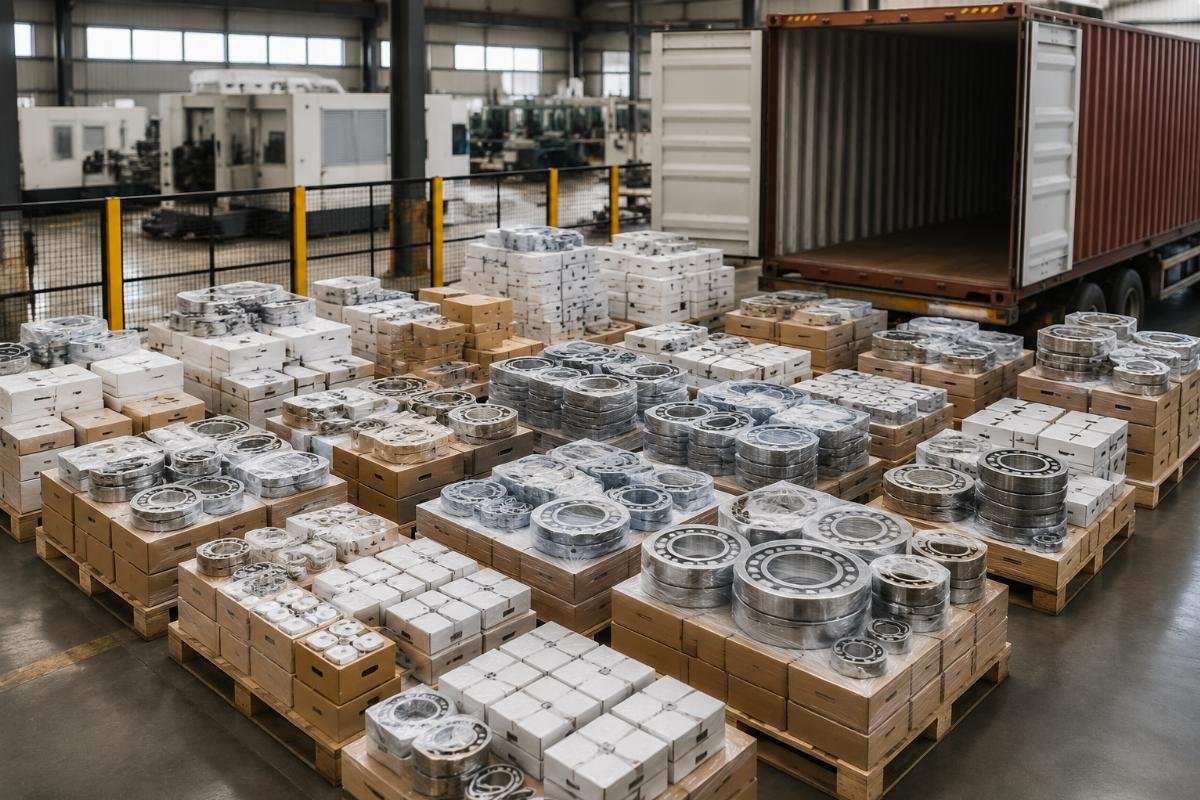
- Focus on High-Turnover SKUs – Only include parts that sell or are used within 90 days to avoid tying up capital in excess inventory.
- Combine Freight Routes – Pair small bulk orders with other parts shipments to access consolidated sea freight rates that reduce per-unit shipping cost.
- Commit to Recurring Cycles – Propose a 3-6 month recurring restock schedule to unlock exclusive tiered discounts that are not available for one-off purchases.
What common bulk discount mistakes cost bearing importers thousands annually?
The three most costly bulk order mistakes are ordering unstocked custom parts in bulk, misaligning order timelines with supplier production cycles, and failing to negotiate fixed pricing for long-term recurring orders. Each of these errors can erase 20-30% of potential savings, and many buyers repeat them unknowingly for years because they focus only on total order volume rather than the structure of their purchase.
To structure bulk orders for maximum total cost of ownership savings, combine in-stock high-turnover SKUs, consolidate mixed category orders for sea freight, and lock in multi-month restock agreements to access exclusive tiered pricing. Shandong Simon Bearing’s tiered discount framework, 50,000+ SKU catalog, 30+ Chinese manufacturer partnerships, and 10,000+ in-stock common SKUs provide a proven model for this structure, with MOQ as low as 10 pieces for in-stock items and 24 hour quotation turnaround for all buyer segments.
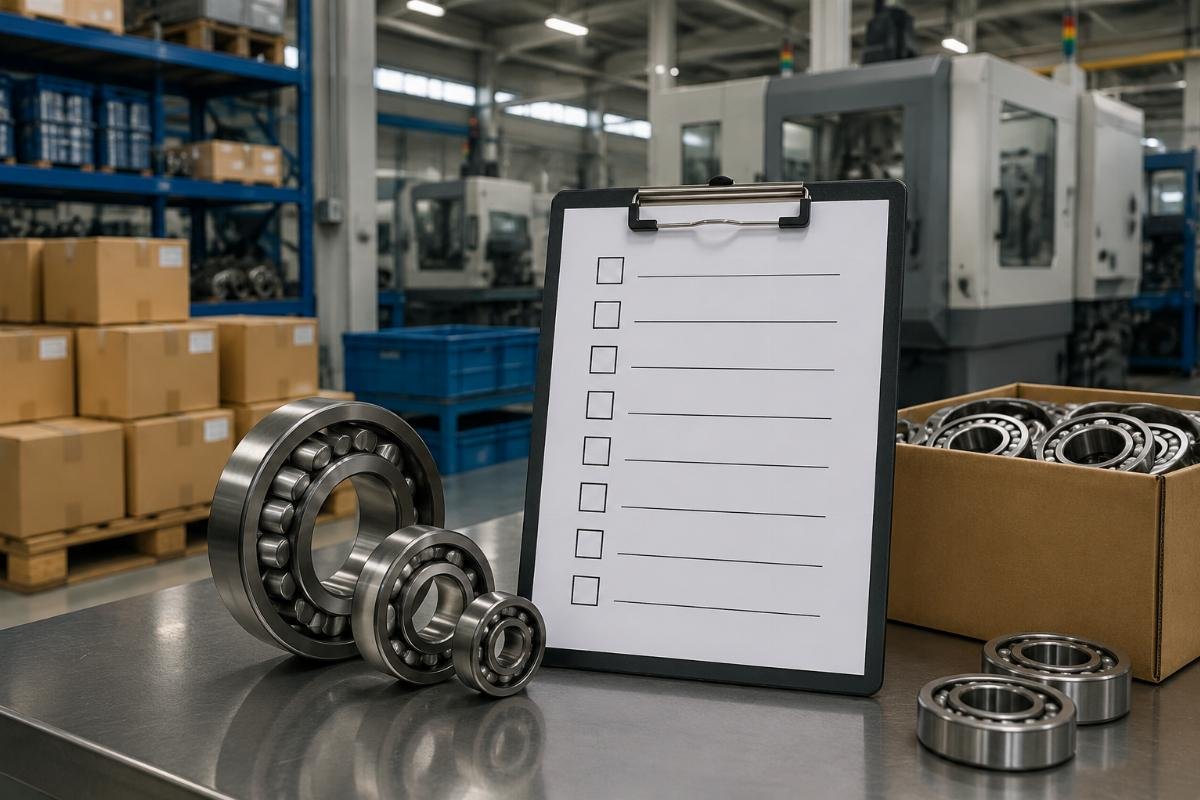
- Avoid Unstocked Custom Bulk Runs – Only order custom parts in volumes that match confirmed immediate demand, not projected future requirements.
- Align Timelines with Production – Never place a bulk order without confirming that the parts can be produced during the supplier’s next scheduled production window.
- Document Long-Term Pricing Locks – Get all fixed price commitments for recurring orders in writing to avoid unexpected cost increases mid-contract.
Conclusion
**Bearing volume discounts are not a function of total order size, but of how well your order align