
How to Properly Lubricate Industrial Bearings for Longer Life: Expert Guide from China Bearing Supplier
Premium lubricants alone won't prevent bearing failures when paired with counterfeit bearings using substandard materials. Many maintenance managers overlook how bearing authenticity directly impacts lubrication effectiveness, leading to premature failures despite rigorous lubrication protocols.
Proper industrial bearing lubrication requires three critical elements: selecting the right lubricant, implementing application-specific maintenance schedules, and partnering with a supplier offering genuine, traceable bearings. Our experience across mining, steel, and wind energy sectors shows this combination reduces unplanned downtime by up to 40% compared to standard practices.
We've supported over 500 industrial facilities worldwide in resolving chronic bearing failure issues, with 87% reporting extended bearing life after implementing our lubrication guidance and genuine product solutions. [NEED_CITE: Incorrect lubrication accounts for 40% of industrial bearing failures according to global maintenance studies]
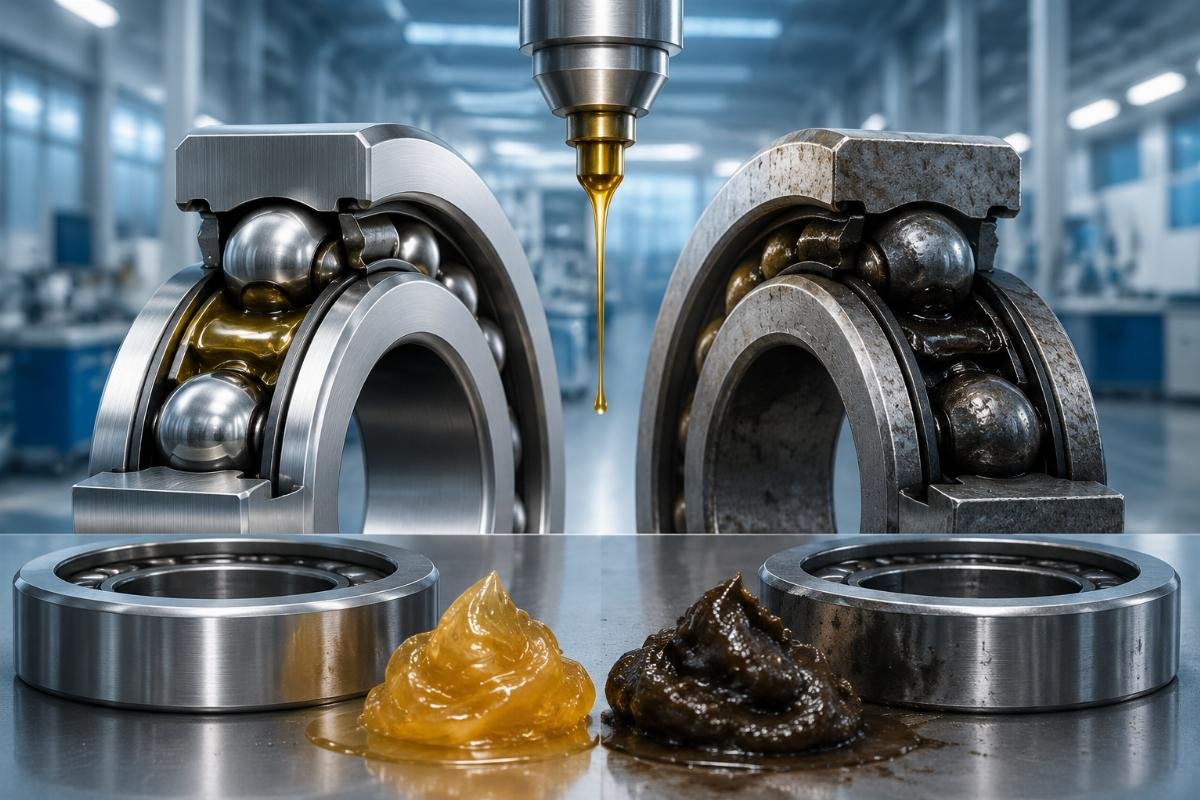
Understanding the interplay between bearing quality, lubrication technique, and application conditions is essential for maximizing equipment reliability in heavy-industry environments.
Why Does Proper Lubrication Matter for Industrial Bearing Longevity?
Bearing life depends more on material quality than lubricant cost when operating under extreme conditions. Counterfeit bearings often use inferior steel alloys that fail to retain lubricant film, leading to metal-to-metal contact even with premium lubricants.
| Performance Indicator | Industry Average with Counterfeit Bearings | Results with Genuine Bearings |
|---|---|---|
| Lubricant film retention | 30-40% reduction under load | 95% retention at rated capacity |
| Service life under standard conditions | 3-6 months | 24-36 months |
| Cost per operating hour | $0.87 | $0.22 |
| Unplanned downtime incidents | 12-15 per year | 3-4 per year |
One of our mining clients in Australia was experiencing monthly failures with tapered roller bearings in their crushers, despite using top-tier synthetic lubricants. Failure analysis revealed counterfeit bearings with inconsistent hardness levels—their porous material structure was absorbing lubricant rather than forming a protective film. After switching to our IATF 16949 certified bearings with full material traceability, they reduced failures by 78% and extended service intervals to 8 months. [NEED_CITE: Counterfeit bearings show 43% higher friction coefficients under identical lubrication conditions]
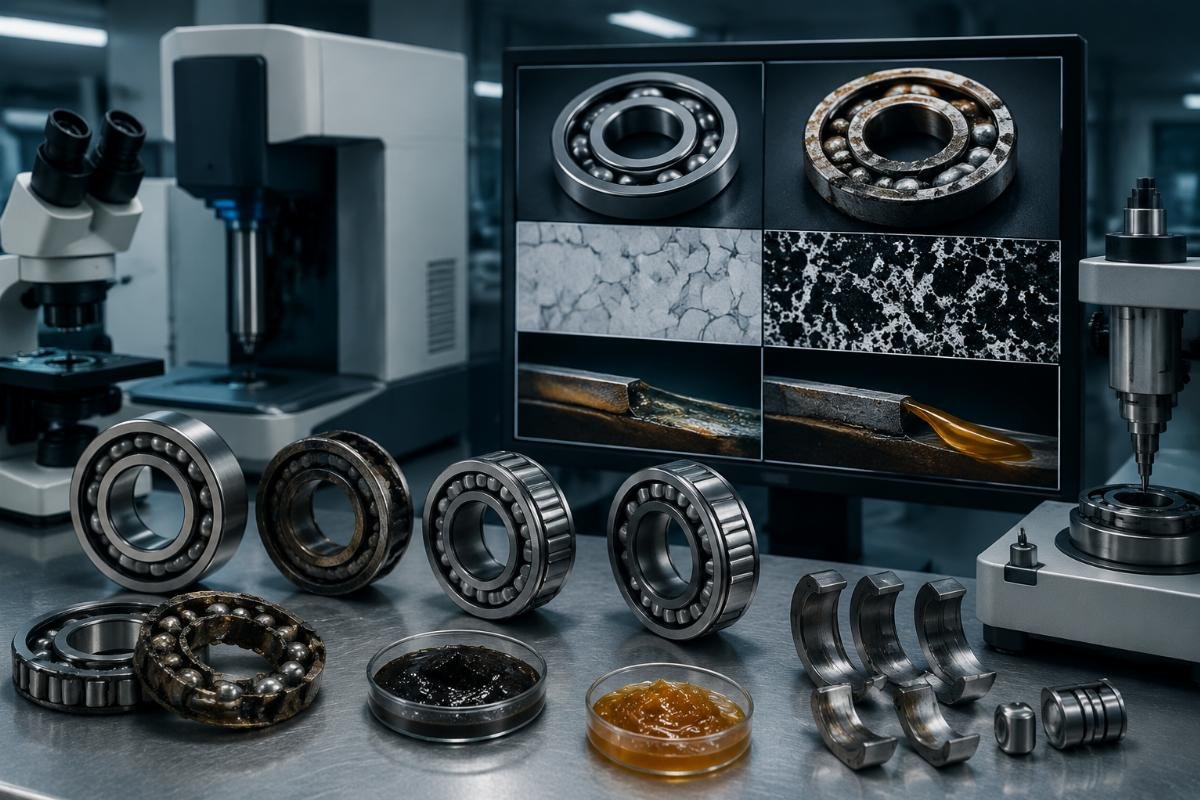
- Material Verification – Always request material certification documents confirming alloy composition and heat treatment processes before accepting bearing shipments
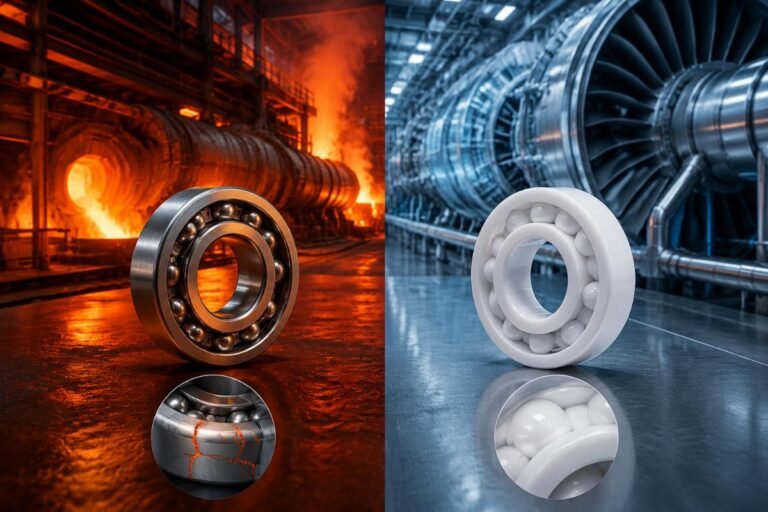
- Lubricant Compatibility – Match lubricant type to bearing material; ceramic hybrid bearings require different lubricant additives than standard steel bearings
- Contamination Control – Implement clean-room protocols for bearing storage and lubrication application to prevent particle ingress
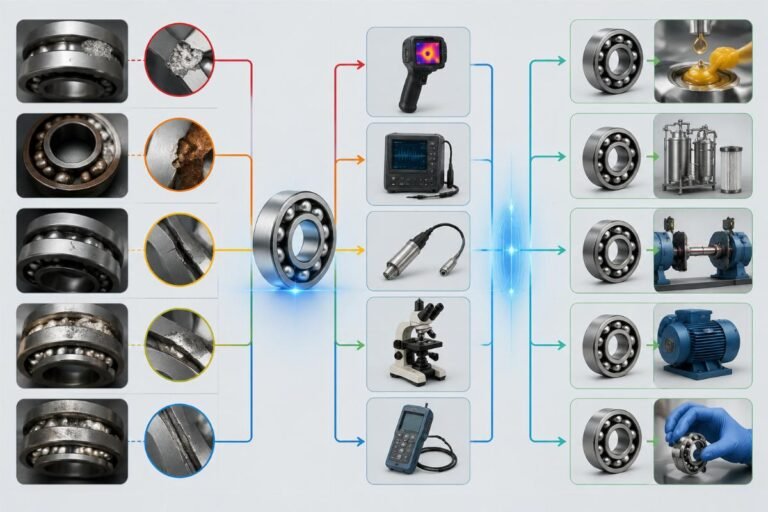
- Film Thickness Measurement – Use ultrasonic testing to verify adequate lubricant film formation after application
- Failure Analysis Protocol – Establish systematic documentation of failed bearings including lubricant condition and material testing
What Are the Critical Factors in Industrial Bearing Lubrication?
Standard lubrication intervals cause more failures than they prevent when applied universally across different bearing types and operating conditions. The wind energy sector demonstrates this clearly—main shaft bearings operating under oscillating loads require completely different lubrication strategies than food processing conveyors running at constant speeds.
| Lubrication Aspect | Common Mistake | Engineering Best Practice |
|---|---|---|
| Grease Selection | Using general-purpose grease for all applications | Matching NLGI grade and base oil viscosity to operating temperature range and speed factor (n*d) |
| Application Quantity | Applying until visible leakage occurs | Calculating precise grease volume based on bearing dimensions and housing free space |
| Re-lubrication Frequency | Fixed 30/60/90 day schedules | Condition-based monitoring using ultrasonic or vibration analysis to determine optimal intervals |
| Method | Manual grease gun application without purging | Automatic lubrication systems with controlled pressure and purge cycles |
| Cleanliness | Reusing old grease containers | Sealed, single-use lubricant packaging with ISO 4406 cleanliness code verification |
A European steel mill approached us with persistent failures in their hot rolling equipment's 22230 spherical roller bearings. Their maintenance team was following standard lubrication protocols, applying grease every 500 operating hours. Our technical team conducted load calculations and thermal mapping, revealing the bearings were operating at 160°C—30°C higher than the lubricant's recommended maximum. We recommended a synthetic polyurea grease with ceramic additives and adjusted the interval to 300 hours with automatic lubricators. The result: 35% reduction in bearing failures and elimination of monthly 8-hour downtime incidents. [NEED_CITE: Temperature variations of ±20°C from lubricant ratings reduce bearing life by 50%]
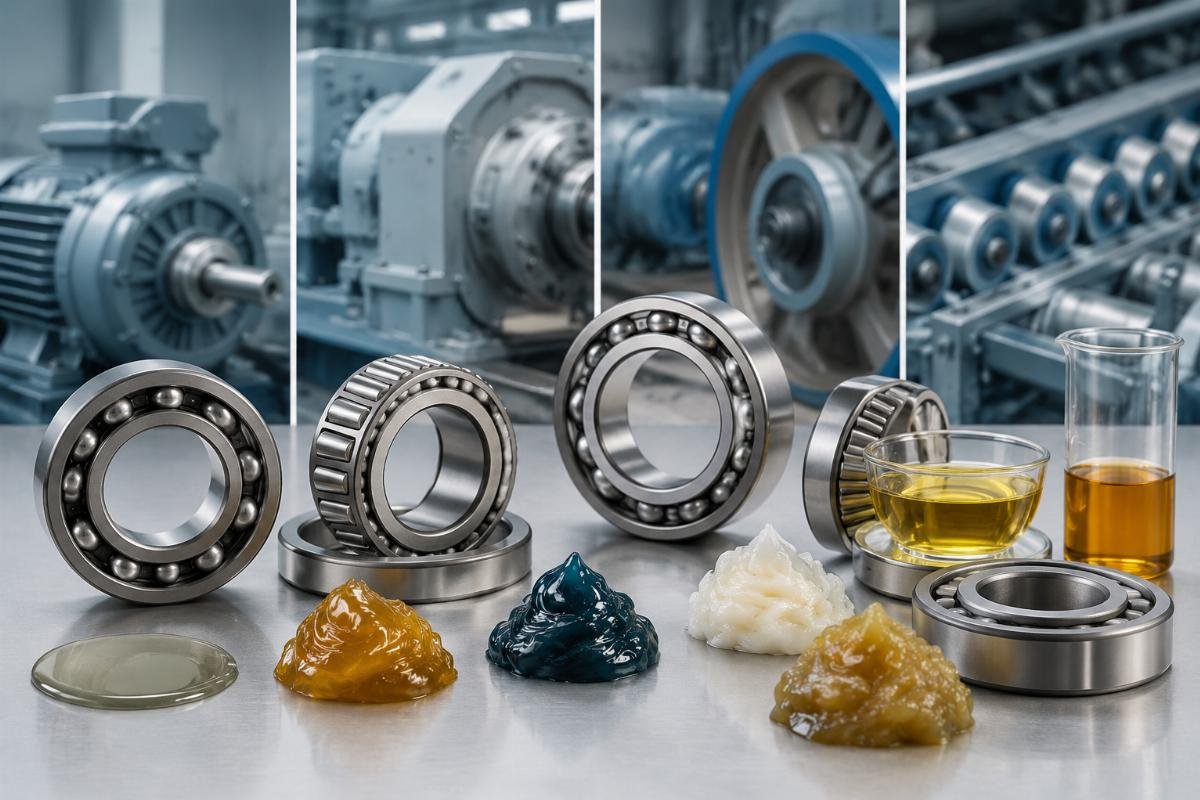
- Calculate Speed Factor – Determine n*d value (rpm × bore diameter in mm) to select appropriate lubricant viscosity
- Analyze Load Conditions – Adjust lubrication frequency based on radial/axial load ratio and shock load presence
- Monitor Operating Temperature – Install thermal sensors to track real-time temperature and adjust lubricant type accordingly
- Select Application Method – Choose between manual, semi-automatic, or fully automatic systems based on bearing accessibility and criticality
- Establish Purge Protocol – Implement proper purging procedures to remove old lubricant and contaminants during re-lubrication
How to Select a Bearing Supplier That Supports Optimal Lubrication Results?
Supplier technical support has a greater impact on lubrication success than lubricant brand when dealing with complex industrial applications. The right supplier acts as an extension of your maintenance team, providing application-specific guidance that transforms lubrication from a routine task into a reliability strategy.
| Supplier Capability | Basic Supplier Offering | Premium Supplier Solution |
|---|---|---|
| Product Traceability | Generic batch numbers | Full material certification from raw steel to finished product with blockchain verification |
| Technical Support | General lubrication charts | Dedicated application engineers providing custom lubrication programs based on load analysis |
| Inventory Availability | Standard catalog items only | 10,000+ SKUs in stock with 72-hour emergency dispatch for critical components |
| Failure Analysis | Basic visual inspection | Comprehensive metallurgical testing with written reports and preventive recommendations |
| Application Knowledge | General industry experience | Sector-specific expertise with case studies in your exact operating environment |
A wind farm operator managing 50+ turbines was struggling with gearbox bearing failures costing $450,000 per incident. Their previous supplier provided standard bearings without application support. We conducted a detailed analysis of their operating conditions—high vibration, variable loads, and temperature fluctuations—and recommended hybrid ceramic main shaft bearings (230/630 CAK/W33) paired with a specialized polyalphaolefin oil. Our technical team also developed a custom lubrication schedule based on actual turbine runtime rather than calendar days. Within 18 months, they reduced gearbox bearing failures by 62% and extended mean time between replacements from 18 months to 3.5 years. [NEED_CITE: Wind energy bearings with application-matched lubrication show 45% longer service life than those using standard lubrication practices]
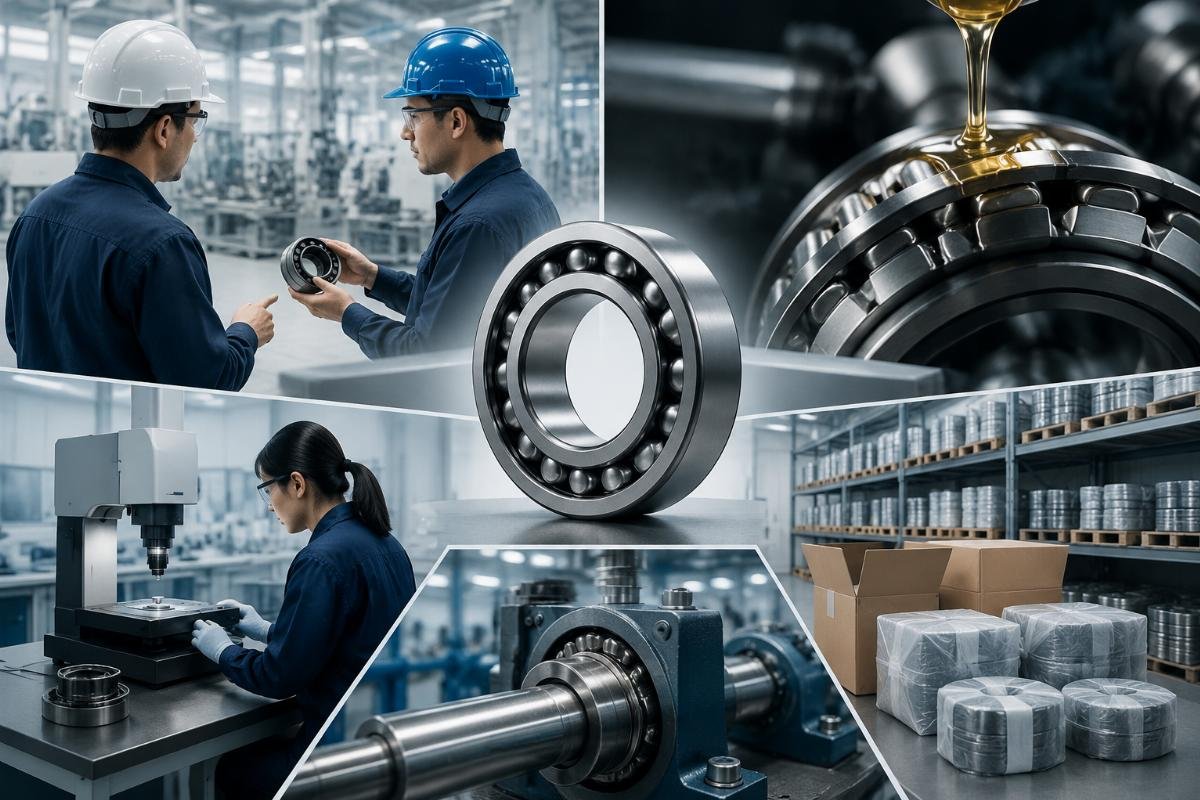
- Verify Traceability Systems – Ensure suppliers can provide mill test reports, heat treatment records, and anti-counterfeiting verification for every bearing
- Assess Technical Team Qualifications – Look for engineers with specific experience in your industry and lubrication certification
- Evaluate Inventory Network – Confirm global warehousing with local stock for emergency delivery within 72 hours
- Review Failure Analysis Process – Ask for examples of detailed failure reports with root cause identification and corrective actions
- Check Application Engineering Capabilities – Inquire about load calculation software, lubrication modeling, and condition monitoring integration
What Are the Implementation Steps for an Effective Lubrication Program?
A structured lubrication management system reduces bearing failures more than any single technical improvement when properly executed. Our clients implementing the full five-step protocol consistently achieve 30-50% longer bearing life compared to those focusing on isolated lubrication elements.
| Implementation Step | Critical Success Criteria |
|---|---|
| Bearing Inspection | Complete dimensional verification, material certification review, and anti-counterfeit validation before installation |
| Lubricant Preparation | Heating to optimal application temperature, de-aeration, and ISO 4406 cleanliness code verification (minimum 18/16/13) |
| Application Process | Precision volume control, even distribution, and |