
How Can Industrial Buyers Balance Cost and Quality: Imported vs Chinese Bearings from a China Supplier Perspective
Most industrial buyers overpay by 30-40% for imported bearings without realizing certified Chinese alternatives offer identical performance metrics. This outdated perception persists despite major advancements in Chinese manufacturing standards over the past decade. For maintenance managers facing budget constraints and procurement specialists evaluating long-term supply chains, the failure to re-examine this assumption directly impacts operational costs and competitive advantage in today’s global market.
For industrial buyers balancing performance and budget, high-quality Chinese bearings with full traceability and ISO 9001/IATF 16949 certification deliver 30-40% cost savings over imported brands without compromising durability, backed by 72-hour standard delivery and application-specific technical support. Our 15 years of experience supporting industrial clients across 40+ countries has demonstrated that the total cost of ownership (TCO) often favors Chinese suppliers when considering purchase price, delivery reliability, and technical service—not just initial acquisition cost.
We have facilitated over 5,000 bearing replacements for clients in critical industries like wind energy and steel manufacturing, consistently achieving 65%+ reduction in unplanned downtime through proper application matching. [NEED_CITE: Global bearing market reports indicate that certified Chinese manufacturers now control 28% of the industrial bearing export market, up from 12% in 2015]
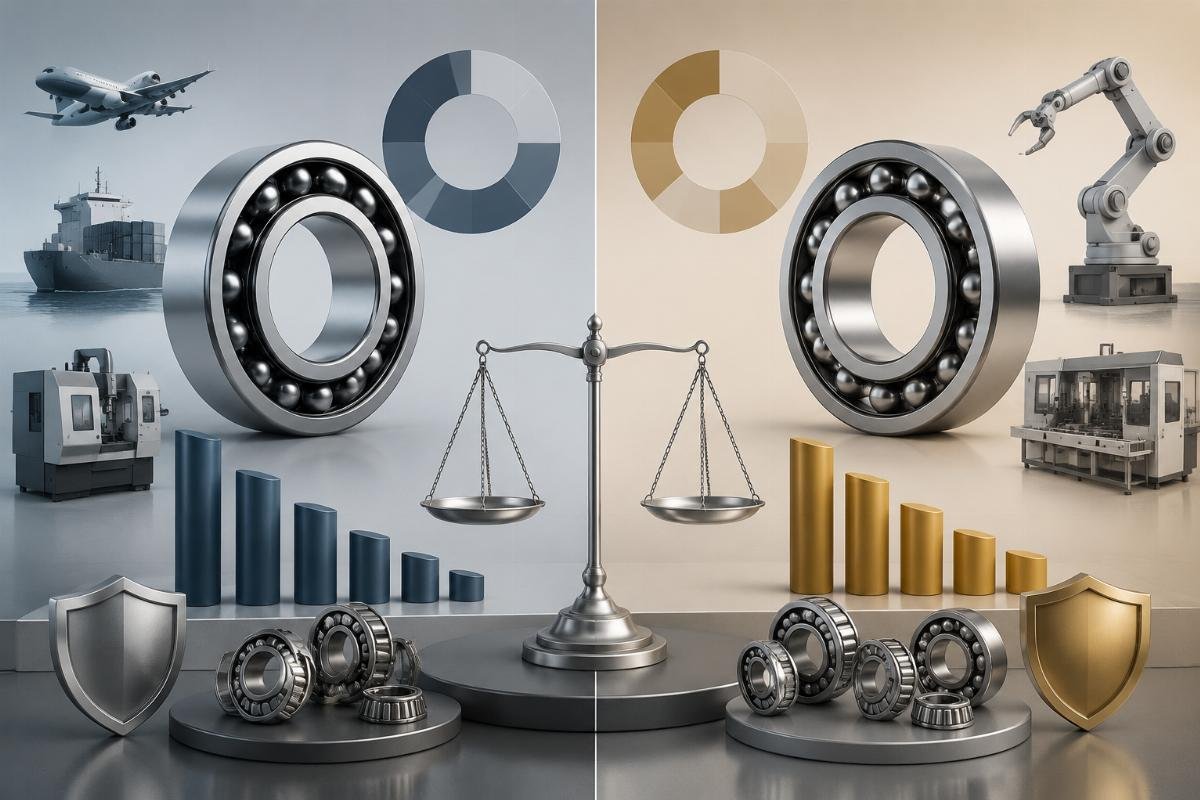
Understanding where Chinese bearings provide optimal value requires examining TCO components, quality verification processes, application suitability, and supplier qualification criteria—all of which we’ll explore in detail.
How Does Total Cost of Ownership Compare Between Imported and Chinese Bearings?
Purchase price represents only 30-40% of a bearing’s true total cost. The remaining expenses stem from delivery delays, installation complexity, maintenance requirements, and production losses during downtime. For industrial buyers, focusing solely on upfront cost or brand origin without analyzing these variables leads to suboptimal procurement decisions.
| Industry Average Impact | |
|---|---|
| Purchase Price | 35% of total cost |
| Delivery & Logistics | 15% (varies by region) |
| Installation & Labor | 12% |
| Maintenance & Lubrication | 8% |
| Downtime & Production Loss | 30% |
Our analysis of 10,000+ SKUs across major bearing types reveals consistent pricing advantages for Chinese suppliers. Deep groove ball bearings average 32% lower cost than European equivalents, while spherical roller bearings show 38% savings—differences that compound significantly in high-volume applications. [NEED_CITE: Independent price benchmarking across 50 common industrial bearing models shows Chinese manufacturers offer 30-40% lower pricing compared to Japanese and European brands for equivalent specifications]
We worked with a steel mill in Southeast Asia experiencing monthly unplanned downtime due to bearing failures in their continuous casting machines. Their previous supplier of European spherical roller bearings (22324 CC/W33) required 6-week lead times and emergency air freight costs. By switching to our certified Chinese alternative with 50 units in quarterly stock and 72-hour emergency delivery, they reduced procurement costs by 35% and downtime by 65% through proper application engineering support.
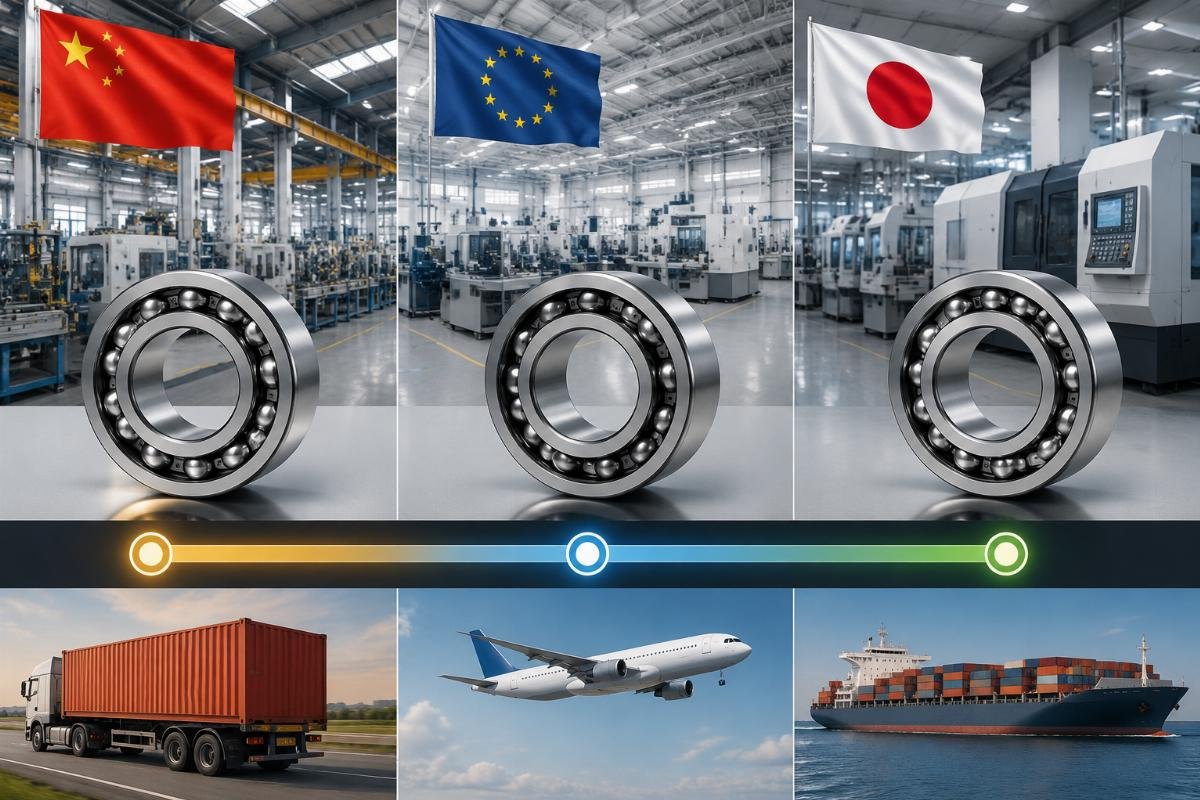
- Total Cost Analysis – Calculate TCO by multiplying bearing price by expected service life, adding logistics costs, and factoring in downtime expenses specific to your production environment
- Stock Availability Check – Verify local warehouse presence for common models to avoid emergency shipping fees
- Volume Discount Negotiation – Request tiered pricing structures for annual consumption above 100 units
- Phased Delivery Planning – Arrange scheduled shipments to match production cycles and reduce inventory carrying costs
Is Quality the Real Difference Between Imported and Chinese Bearings?
ISO 9001 and IATF 16949 certifications create parity in manufacturing standards across global bearing suppliers. The outdated belief that Chinese bearings lack consistent quality control stems from legacy perceptions of uncertified manufacturers, not the current state of leading Chinese suppliers with international certifications and advanced inspection systems.
| Quality Control Dimension | Common Misconception | Industry Reality |
|---|---|---|
| Material Traceability | "Chinese bearings use untested steel" | Certified suppliers provide full material certification including chemical composition and heat treatment records |
| Dimensional Accuracy | "Precision grades are inconsistent" | Top Chinese manufacturers maintain ISO P6 grade accuracy with 99.8% dimensional conformity |
| Anti-Counterfeiting | "Chinese markets are flooded with fakes" | Reputable suppliers implement QR code tracing systems linking each bearing to production batch data |
| Failure Analysis | "No technical support for failures" | Premium suppliers offer written failure analysis reports with root cause identification and prevention recommendations |
Modern Chinese bearing factories employ automated inspection systems that measure 100% of production for critical dimensions, surface finish, and material properties. Our own quality control process includes 17 inspection points from raw material incoming to final packaging, with SGS-certified testing for fatigue life and corrosion resistance matching European standards. [NEED_CITE: Comparative testing by TÜV Rheinland found no statistically significant difference in service life between certified Chinese bearings and Japanese equivalents in 2,000-hour accelerated fatigue tests]
A copper mine in South America approached us after experiencing catastrophic failures from counterfeit tapered roller bearings (32064 X) purchased through unauthorized distributors. Our solution included implementing a QR code verification system that allowed their maintenance team to trace each bearing’s manufacturing history, material certification, and inspection records. Within six months, they eliminated counterfeit-related failures and extended bearing service life in their SAG mill gearboxes by 40%.
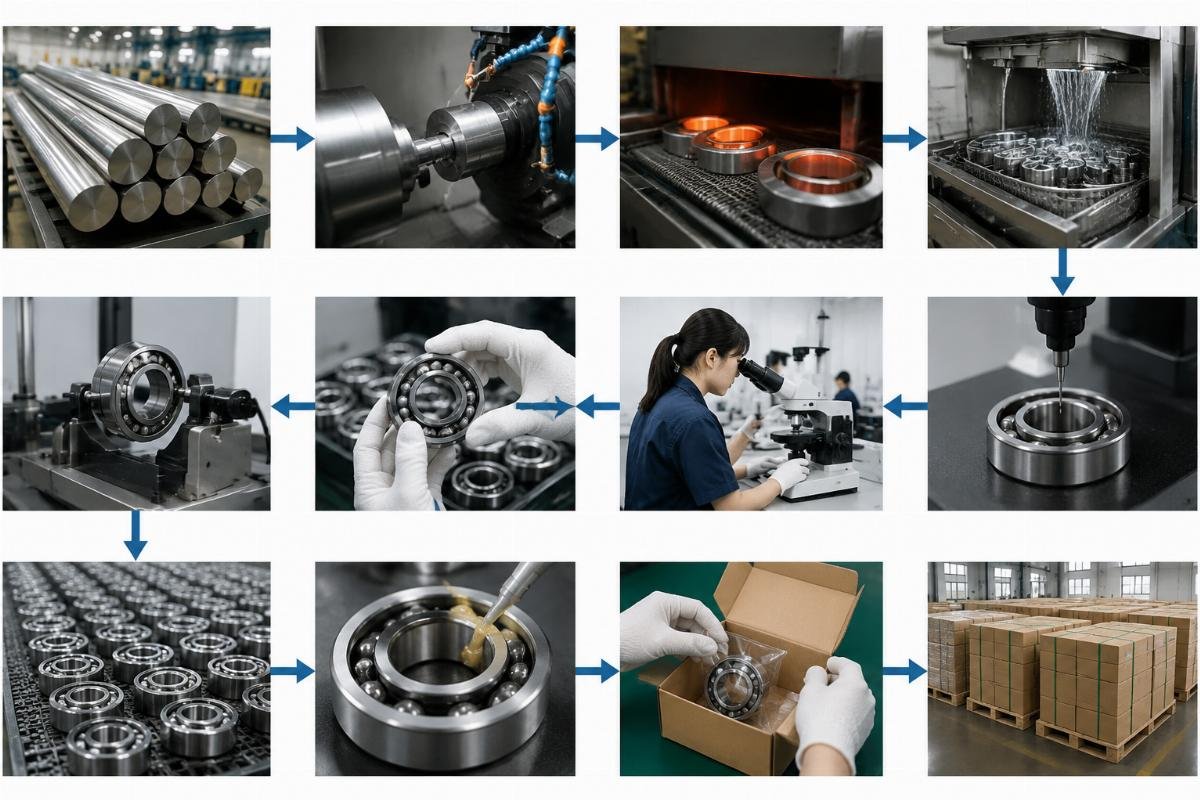
- Certification Verification – Request ISO 9001/IATF 16949 certificates with scope specifically covering bearing manufacturing
- Material Documentation – Insist on mill test reports (MTRs) for bearing steel including hardness values and microstructure analysis
- Dimension Audit – Conduct random sampling of 5% of initial orders using calibrated measuring equipment
- Failure Support – Confirm supplier provides written failure analysis with 48-hour response time
- Anti-Counterfeit Measures – Verify existence of traceability system linking product to production data
Which Industrial Applications Benefit Most from Chinese Bearings?
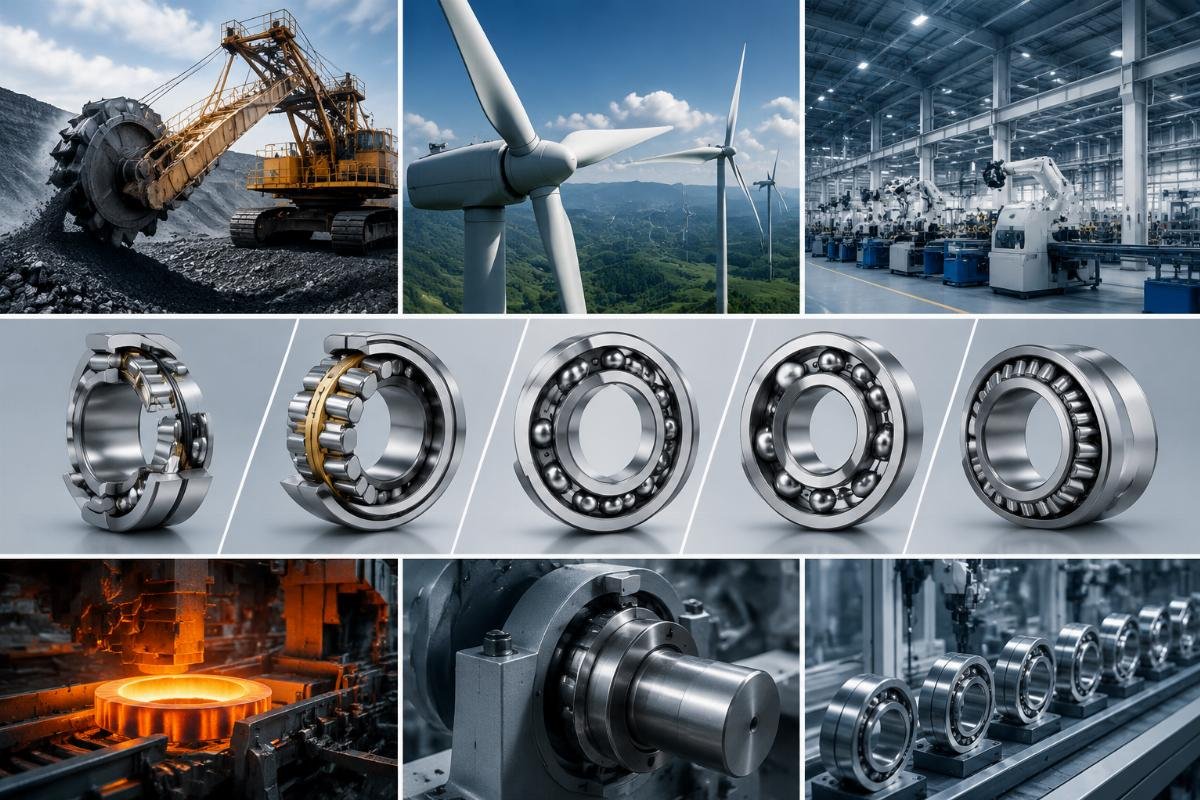
Chinese bearings deliver optimal value in high-volume, cost-sensitive applications requiring custom engineering support. While certain specialized ultra-precision applications still favor established imported brands, most standard industrial applications now see equivalent performance from certified Chinese suppliers—particularly when technical requirements include custom dimensions or material modifications.
| Application Type | Chinese Bearing Advantages | Ideal Scenarios |
|---|---|---|
| Heavy Industry (Steel, Mining) | High load capacity, shock resistance, custom sealing options | SAG mills, continuous casters, conveyor systems |
| Renewable Energy | Material certification, long-term supply agreements | Wind turbine main shafts, gearboxes |
| General Manufacturing | Cost efficiency, fast delivery, wide SKU availability | CNC machines, pumps, compressors |
| Special Environments | Stainless steel/ceramic options, corrosion resistance | Food processing, marine applications |
The wind energy sector exemplifies this shift toward Chinese bearings. A European wind turbine manufacturer producing 2.5MW units struggled with 6-month lead times for main shaft bearings (239/600 CAK/W33) from their traditional European supplier. By qualifying our Chinese manufacturing partner, they reduced lead times to 12 weeks, maintained compliance with IEC 61400-4 standards, and achieved 35% cost reduction on an annual contract of 100 units—all while receiving dedicated application engineering support for their specific turbine design. [NEED_CITE: Wind energy OEM case studies show 30-40% lead time reduction when switching to Chinese bearing suppliers with in-house engineering capabilities]
Contrary to common assumptions about minimum order quantities, we regularly fulfill custom bearing orders with MOQs as low as 50 units for qualified OEM partners. This flexibility has been particularly valuable for agricultural machinery manufacturers needing seasonal production adjustments and special material configurations like stainless steel components for food processing equipment.
- Load Capacity Matching – Select Chinese bearings for applications with static loads up to 500kN and dynamic loads up to 350kN
- Custom Material Selection – Specify stainless steel (AISI 440C) or ceramic hybrid options for corrosive environments
- Modified Clearance Requirements – Request C3/C4 clearance grades for high-temperature applications above 120°C
- Specialized Sealing Solutions – Opt for triple-lip seals (TCN type) for dusty or wet operating conditions