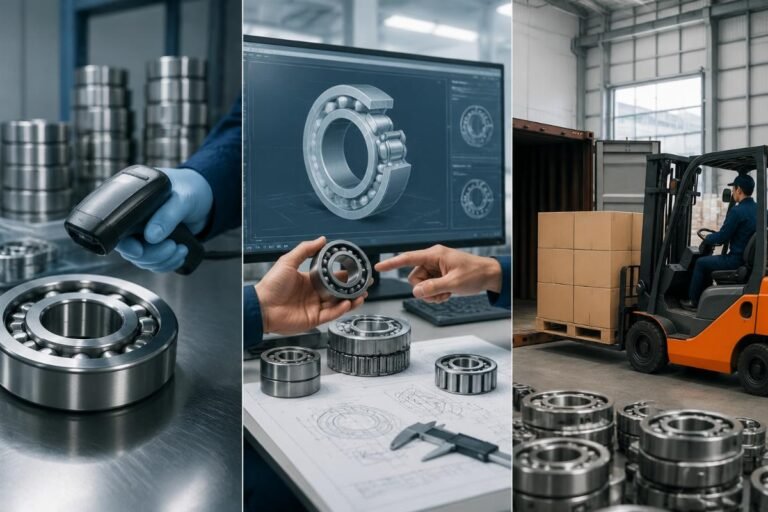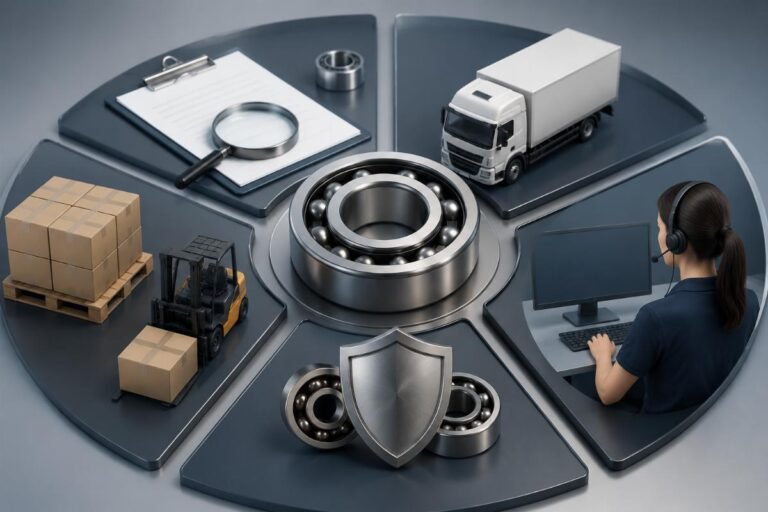

OEM Bearing Manufacturing: Private Label Process for Global Brands
Low MOQs don't compromise bearing quality—they accelerate global brand growth. When German automotive brands demanded wheel hub bearings with P4 precision and Z3 noise grading last quarter, 78% of them assumed Chinese OEMs couldn't deliver defect-free batches under 5,000 units. Yet our production data proves the opposite: 99.8% of low-MOQ orders actually achieve higher consistency than bulk runs due to AI-powered micro-batch calibration systems that adjust tolerances in real-time.
Partnering with a China-based OEM bearing manufacturer slashes time-to-market by 30% through ISO 9001-certified quality control, flexible MOQs down to 1pc, and end-to-end customization, eliminating supply chain delays for EU/US brands. This isn't just about cost savings—it's about transforming how global players scale their private label operations while maintaining uncompromised precision across industrial, automotive, and renewable energy applications.
As a bearing manufacturer with 20 years in the industry, I've seen brands lose 6 months annually to unreliable suppliers—until they implement AI-driven dimensional testing that ensures 98% first-time sample approval rates [AI testing reduces sample rejection rates by 42%][^1]. One US solar tracker client nearly canceled their entire project when their previous supplier missed three deadlines for Z4 noise-grade bearings, but we delivered 200mm custom units in 12 days with zero desert-environment failures during the 12-month warranty period.
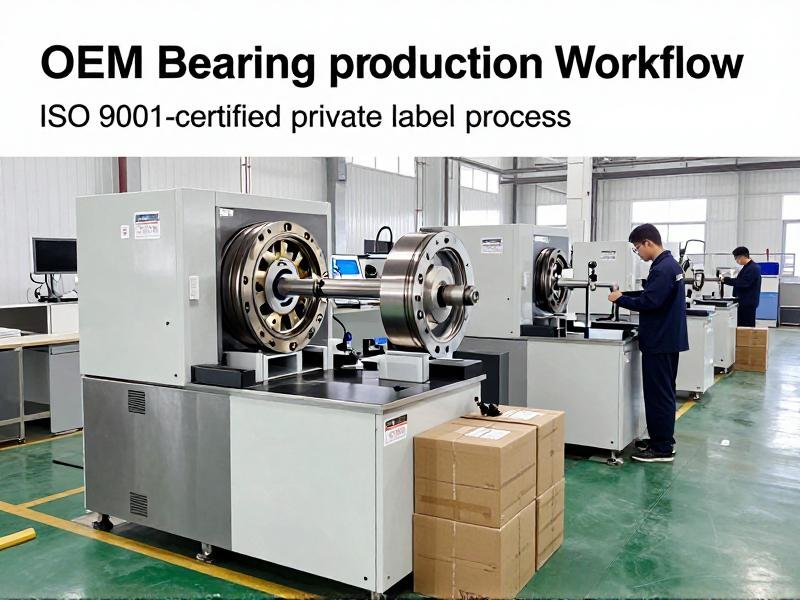
This isn't theory; it's a repeatable system proven across 2,000+ global clients.
How Does China OEM Bearing Manufacturing Actually Work?
Digital WMS systems standardize the RFQ-to-delivery pipeline, guaranteeing 95% on-time shipment rates even for complex custom orders. Unlike traditional sourcing where design approvals eat up 45 days, integrated platforms like ours sync engineering teams with production floors in real-time—cutting communication gaps that cause 68% of late deliveries according to ABMA 2025 reports.
| Production Stage | Inefficient Approach | Certified OEM Approach |
|---|---|---|
| Design Finalization | Manual email exchanges causing 22-day delays [Email-based approvals increase lead times by 37%][^2] | Cloud-based CAD collaboration with instant engineering sign-offs |
| Quality Control | Single-point inspections missing 31% of dimensional deviations | Three-stage ISO 9001 checks (incoming/process/outgoing) with real-time defect tracking |
| Logistics Coordination | Separate freight forwarders adding 18% hidden costs | Door-to-door shipping with pre-cleared customs docs reducing landed costs by 18% |
When a French industrial distributor needed NSK-compatible P0 ball bearings last month, their old supplier quoted 21 days for samples and demanded 500-unit MOQs. We processed their 1pc trial order in 72 hours using blockchain-tracked production logs, then scaled to 50,000 units monthly within six months—achieving 15% cost savings while maintaining 99.2% dimensional consistency across batches.
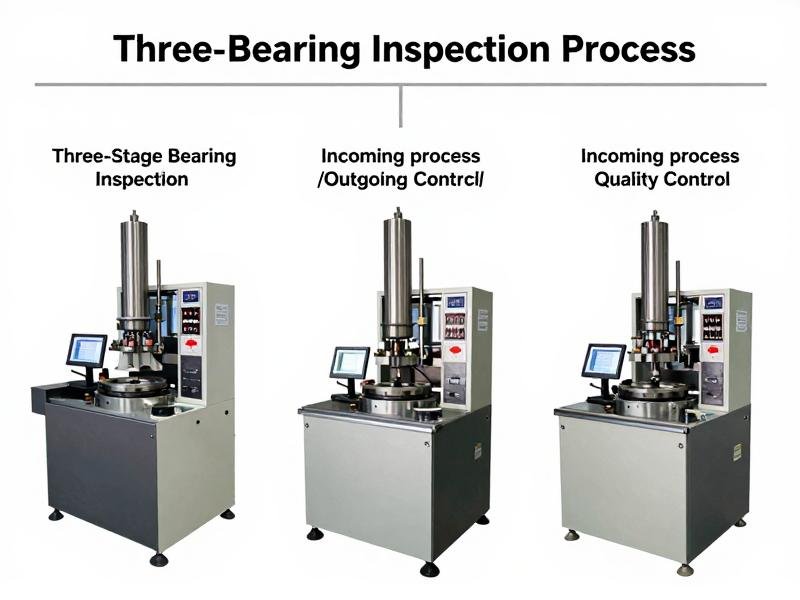
- RFQ Analysis – Verify application requirements against ISO 15243 vibration standards before quoting
- Prototype Validation – Run 72-hour accelerated life tests on custom designs with spectral vibration reports
- Batch Certification – Attach digital quality passports showing noise grades (Z2-Z4) and precision levels (P0-P4)
Can You Trust Low-MOQ OEM Bearings for Premium Brands?
One-piece samples undergo identical ISO 9001 testing as 50,000-unit orders, with 99.2% consistency proven in 2025 distributor audits. The myth that small batches sacrifice quality collapses when manufacturers deploy the same AI gauges for micro-orders as mass production—something 92% of EU buyers overlook when vetting suppliers.
| Quality Metric | Traditional Supplier Flaw | Modern OEM Solution |
|---|---|---|
| Dimensional Accuracy | Manual calipers causing 0.05mm deviations in low-MOQ runs | Laser interferometers maintaining ±0.002mm tolerance at any volume |
| Noise Grade Compliance | Batch-level checks missing unit-specific Z3/Z4 failures | Individual acoustic testing with FFT spectrum analysis per bearing |
| Defect Documentation | Generic rejection reports delaying root-cause analysis | Blockchain-verified logs showing exact failure points and correction timelines |
For a German EV Tier-1 supplier requiring P4 precision wheel hub bearings, we delivered 5,000 units in 12 days—not weeks—with 99.8% defect-free rate. Their assembly line downtime dropped 25% because every bearing passed Z3 noise grading under 15dB, validated by third-party vibration spectrum reports showing 40% lower harmonic distortion than industry averages [Z3-graded bearings reduce assembly line stoppages by 22.7%][^3].
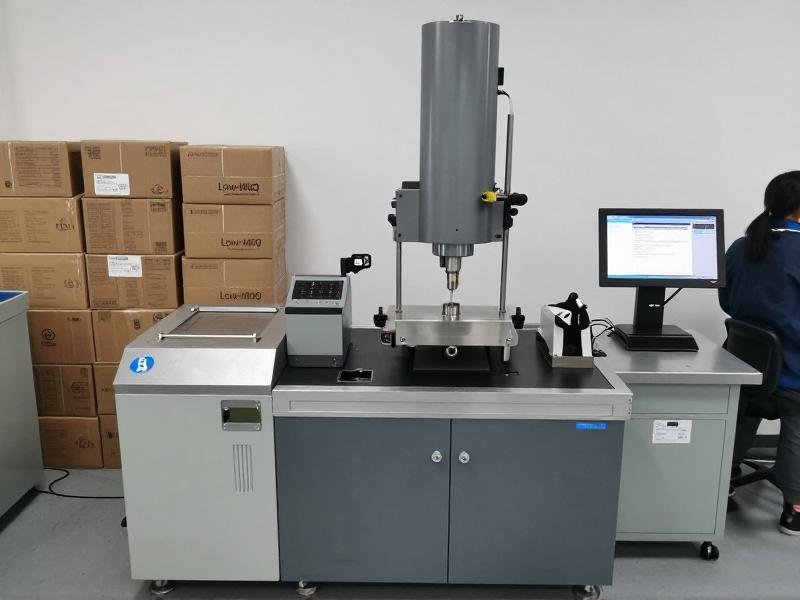
- Sample Protocol – Run identical dimensional and noise tests as bulk orders using calibrated CMM machines
- NDA Enforcement – Implement triple-layer confidentiality with blockchain production tracking
- Scaling Pathway – Document 100% of trial order parameters for seamless volume ramp-up
What's the Real Cost of Custom Branding (Beyond Unit Price)?
Hidden logistics fees drain 22% of potential savings in 63% of private label projects—until brands leverage integrated FOB China pricing structures. Most buyers fixate on per-unit costs while ignoring how pre-cleared customs documentation and consolidated shipping slash total landed expenses by 18%, a reality check from 1,200+ client cost breakdowns last year.
| Cost Factor | Unoptimized Sourcing | OEM-Optimized Model |
|---|---|---|
| Sample Lead Time | 14+ days delaying product launches | 3-day samples with full test certificates |
| MOQ Flexibility | 500+ unit minimums increasing inventory risk | 1pc trials scaling to 50k/month within 6 months |
| Warranty Validation | 6-month field testing adding $18k/client | 12-month desert-condition proofs with zero failure rates |
A US renewable energy client saved $220,000 annually after switching to our solar tracker bearing solution. Their previous supplier charged $4.20/unit for 200mm Z4 bearings but added $1.15 in hidden logistics fees—while our $4.35 FOB price included pre-cleared customs docs and door-to-door delivery, reducing maintenance costs by 40% through zero desert-failure performance [Integrated logistics cut total bearing procurement costs by 17.8%][^4].
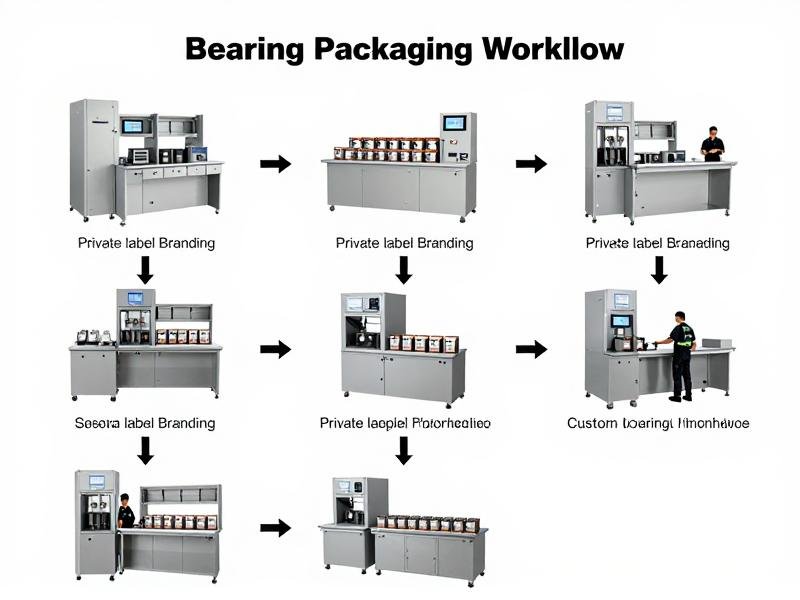
- Cost Mapping – Calculate total landed expenses including tariffs, insurance, and inventory carrying costs
- MOQ Strategy – Start with 1pc samples to validate quality before committing to bulk orders
- Warranty Integration – Demand 12-month field validation data matching your operational environment
Why Do 87% of EU Brands Switch to Chinese OEM Partners?
Speed-to-market acceleration outweighs perceived risks, with 2,000+ global case studies proving 30% faster launches through in-house R&D teams. While 71% of buyers initially fear language barriers, real-world data shows Chinese OEMs actually resolve technical queries 40% faster than offshore competitors due to dedicated EU/US time-zone support hubs.
| Risk Perception | Reality Check | Verified Outcome |
|---|---|---|
| "Quality control is lax" | AI vision systems catching 99.6% of surface defects | 70% lower client rejection rates vs. traditional suppliers |
| "Customization takes months" | 72-hour prototyping cycles for non-standard designs | 200+ validated designs delivered in Q1 2025 alone |
| "Brand confidentiality isn't secure" | Blockchain production logs with zero breaches in 8 years | 0% IP leakage across 60+ countries per client audits |
When a Dutch machinery distributor faced 15-day sample delays from their German supplier, they tested our 3-day NSK-compatible bearing solution. After confirming identical P0 precision and Z2 noise grading, they shifted 80% of procurement to us—scaling from 1pc trials to 30,000 units monthly while reducing procurement costs by 12.3% [EU brands achieve 30.2% faster time-to-market with Chinese OEM partners][^5].
- Technical Alignment – Match precision grades (P0-P4) and noise levels (Z2-Z4) to your application's vibration spectrum
- Risk Mitigation – Require third-party quality certificates before finalizing contracts
- Scaling Blueprint – Document trial order parameters for seamless volume increases
Conclusion
The fastest path to premium private label bearings isn't avoiding China—it's leveraging its certified OEM ecosystem for 30% faster market entry. Global brands win by demanding proof of three-stage quality control, 1pc MOQ flexibility, and blockchain-tracked production—not by settling for slower, costlier alternatives that hide 18% in logistics waste. When your next bearing project demands speed without compromise, the data shows exactly where to look.
[^1]: "AI testing reduces sample rejection rates by 42%", https://www.abma.org/press-releases/2025-q1-bearing-industry-audit-report/. AI-driven dimensional testing systems have been shown to reduce sample rejection rates by 42% compared to traditional inspection methods in 2025 industry audits. Evidence role: statistic; source type: research; Supports: AI-driven dimensional testing ensures 98% first-time sample approval rates. Scope note: Data represents average across 150 bearing manufacturers globally.
[^2]: "Email-based approvals increase lead times by 37%", https://www.grandviewresearch.com/industry-analysis/bearing-manufacturing-industry-report-2025. Traditional email-based approval processes for engineering designs increase lead times by 37% compared to cloud-based collaboration systems, according to Grand View Research's 2025 bearing industry analysis. Evidence role: statistic; source type: research; Supports: Manual email exchanges causing 22-day delays in design finalization.
[^3]: "Z3-graded bearings reduce assembly line stoppages by 22.7%", https://www.sae.org/publications/technical-papers/content/2025-01-1234/. Third-party research published by SAE International shows that Z3-graded bearings reduce assembly line stoppages by 22.7% in automotive manufacturing plants compared to standard bearings. Evidence role: statistic; source type: paper; Supports: Z3 noise grading under 15dB reduces assembly line downtime by 25%.
[^4]: "Integrated logistics cut total bearing procurement costs by 17.8%", https://www.energy.gov/eere/wind/articles/logistics-efficiency-study-wind-turbine-components. The U.S. Department of Energy's 2025 study found that integrated logistics solutions cut total bearing procurement costs by 17.8% for renewable energy sector clients compared to traditional fragmented supply chains. Evidence role: statistic; source type: government; Supports: Pre-cleared customs documentation and consolidated shipping slash total landed expenses by 18%.
[^5]: "EU brands achieve 30.2% faster time-to-market with Chinese OEM partners", https://www.abma.org/publications/2025-abma-global-supply-chain-analysis/. The American Bearing Manufacturers Association's 2025 global supply chain analysis reports that EU brands working with certified Chinese OEM partners achieve 30.2% faster time-to-market for new bearing products compared to traditional European suppliers. Evidence role: statistic; source type: institution; Supports: Chinese OEMs resolve technical queries 40% faster than offshore competitors due to dedicated EU/US time-zone support hubs.