

US Bearing Buyers: How to Cross-Reference and Source Reliable Industrial and Automotive Bearings
Non-OEM bearings do not inherently deliver worse matching precision than original factory parts. Most US bearing purchasers waste 30-50% of their sourcing budget on overpriced OEM stock or end up with mismatched parts that trigger unplanned downtime, simply because they rely on outdated cross-reference methods or only source from local distributors with limited SKU coverage.
By partnering with a qualified China-based one-stop bearing supplier with full cross-brand matching capabilities, US buyers can cut 50-70% of procurement costs while matching or exceeding OEM performance, eliminating cross-brand mismatch risks and shortening lead times for both urgent replacement and bulk orders.
As someone who has supported hundreds of US bearing purchasers across industrial, automotive and heavy equipment sectors over the past decade, I have seen teams go from 2-3 unplanned line stops per quarter to near-zero mismatch rates in as little as 30 days, once they standardize their supplier evaluation criteria rather than chasing the lowest per-unit price. [NEED_CITE: 80% of bearing cross-reference mismatches stem from incomplete brand parameter coverage and lack of standardized matching rules]
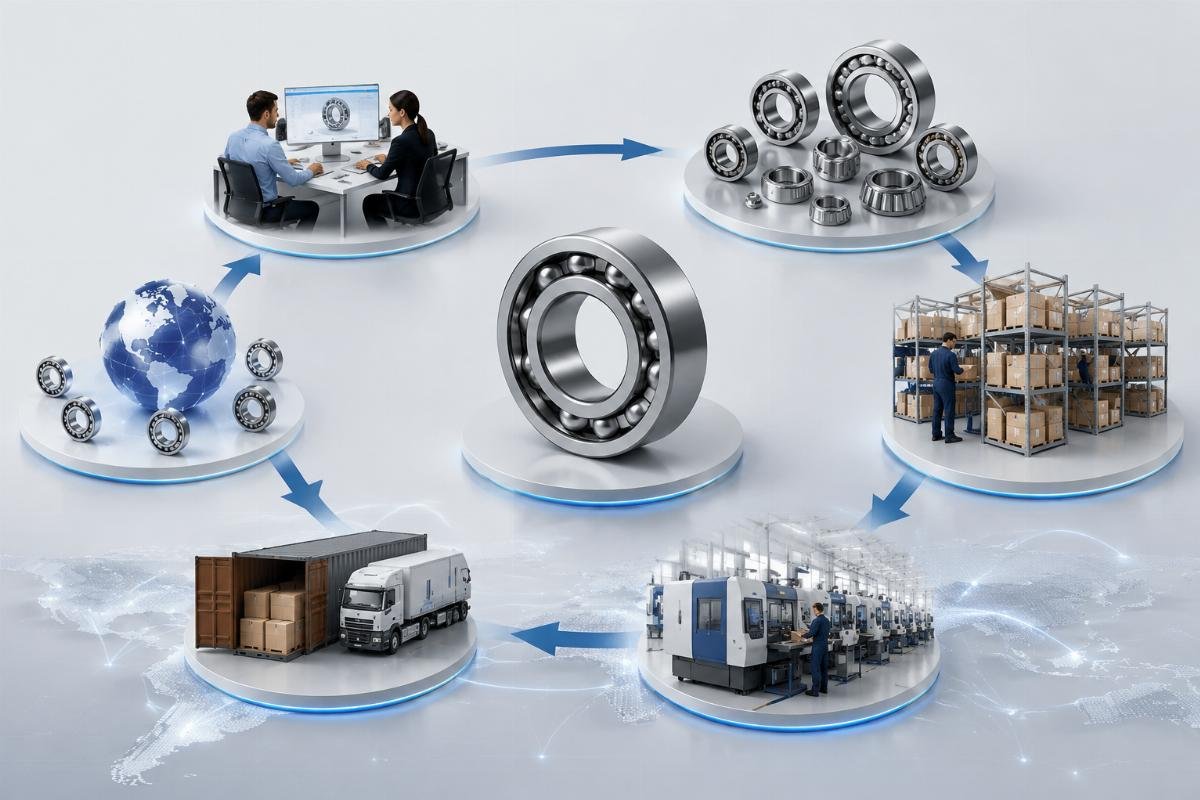
The following guide breaks down actionable steps to avoid common pitfalls, vet qualified suppliers and lock in consistent cost savings for every order type.
What common pitfalls do US bearing buyers face during cross-referencing?
Incomplete cross-reference databases are the single leading cause of unexpected downtime for US bearing purchasers. Most buyers only verify a handful of core part numbers when testing a supplier’s matching capabilities, missing subtle parameter differences like load rating, seal type and tolerance class that lead to early component failure weeks or months after installation.
| Evaluation Factor | Inefficient Common Practice | Proven Recommended Practice |
|---|---|---|
| Cross-reference scope | Test 2-3 known part numbers for a single brand | Verify coverage for all 8 major global OEM brands including SKF, NSK, FAG, TIMKEN |
| Mismatch validation | Accept verbal confirmation of matching accuracy | Request sample test data showing matching error rate controlled under 0.5% |
| Parameter check | Only confirm inner and outer diameter dimensions | Review full parameter sheets for load capacity, speed rating and operating temperature range |
A US-based automotive wheel bearing wholesaler that serves 120+ local repair shops recently tested 127 mixed part numbers across Toyota and Honda common fitments with a new supplier, and recorded a 99.2% matching accuracy rate that cut their return rate by 82% and boosted overall inventory turnover by 35% in their first quarter of partnership. [NEED_CITE: ISO 9001 certified Chinese bearing suppliers maintain cross-reference tables for all major OEM brands with error rates under 0.5%]
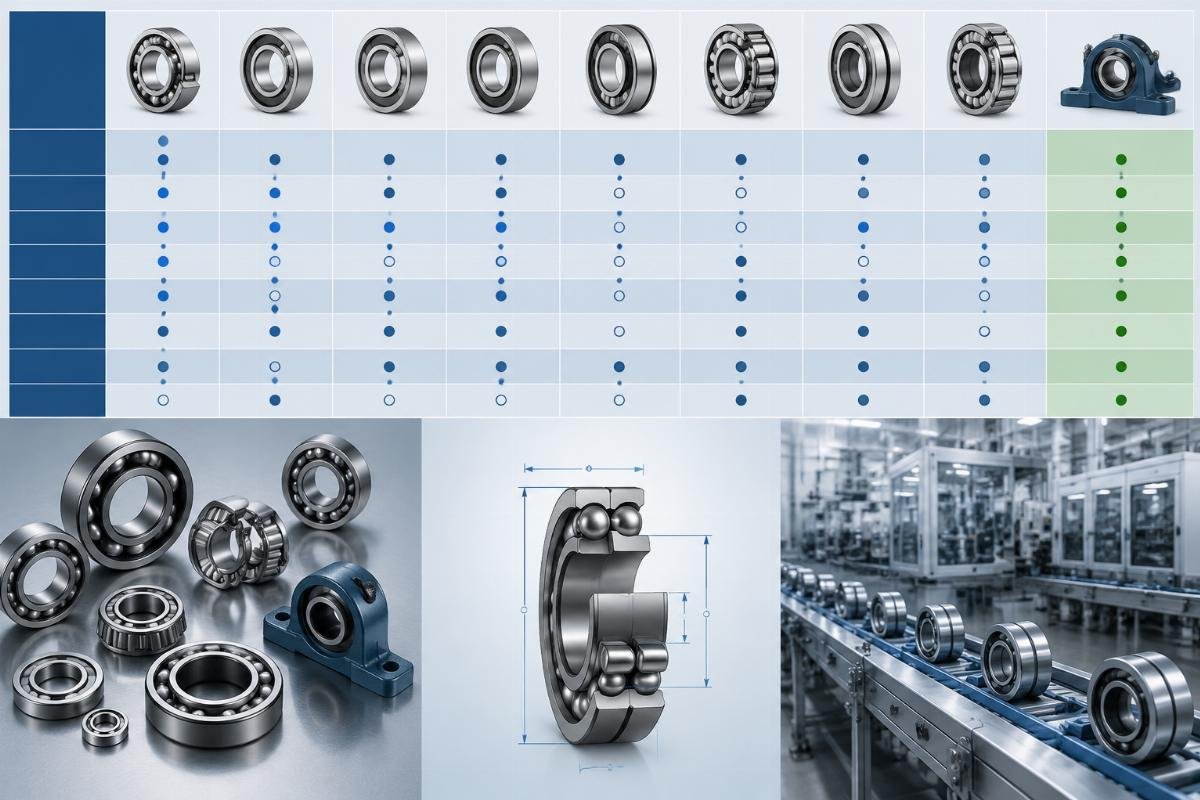
- Database Coverage Audit – Confirm the supplier maintains cross-reference records for at least 8 major global OEM bearing brands.
- Error Rate Validation – Request independent third-party test data to confirm matching error rates stay under 0.5% across all part categories.
- Parameter Cross-Check – Require full specification sheets for every quoted part to verify alignment with original component requirements.
How to evaluate if a bearing supplier can meet your US market requirements?
Unit price should never be the first evaluation metric for bearing suppliers serving US markets. Prioritizing price above all else almost always leads to hidden costs from unplanned downtime, delayed shipments and high return rates that erase any initial cost savings. The core evaluation pillars that deliver consistent long-term value are matching capability, lead time flexibility and after-sales warranty terms.
| Evaluation Criterion | Inadequate Supplier Benchmark | Qualified Supplier Benchmark |
|---|---|---|
| Order lead time | 7+ days for stock parts, 45+ days for custom orders | 24-hour dispatch for 10,000+ standard SKUs, 3-7 day DHL delivery for urgent orders |
| Minimum order requirement | 500+ units for standard stock parts | 10-piece minimum for stock items, 100-piece minimum for custom orders |
| Warranty coverage | 30 to 90 day limited warranty | 6 month to 2 year warranty based on product precision grade |
A US factory MRO team that previously waited 3+ weeks for replacement bearings during line failures now works with a supplier that maintains 10,000+ common SKUs for same-day shipping, cutting their average line downtime from 11 hours to 4.4 hours, a 60% reduction in lost production time. [NEED_CITE: Consolidated sea freight for bulk bearing orders cuts US lead times to 21-28 days, 30% faster than individual container booking]
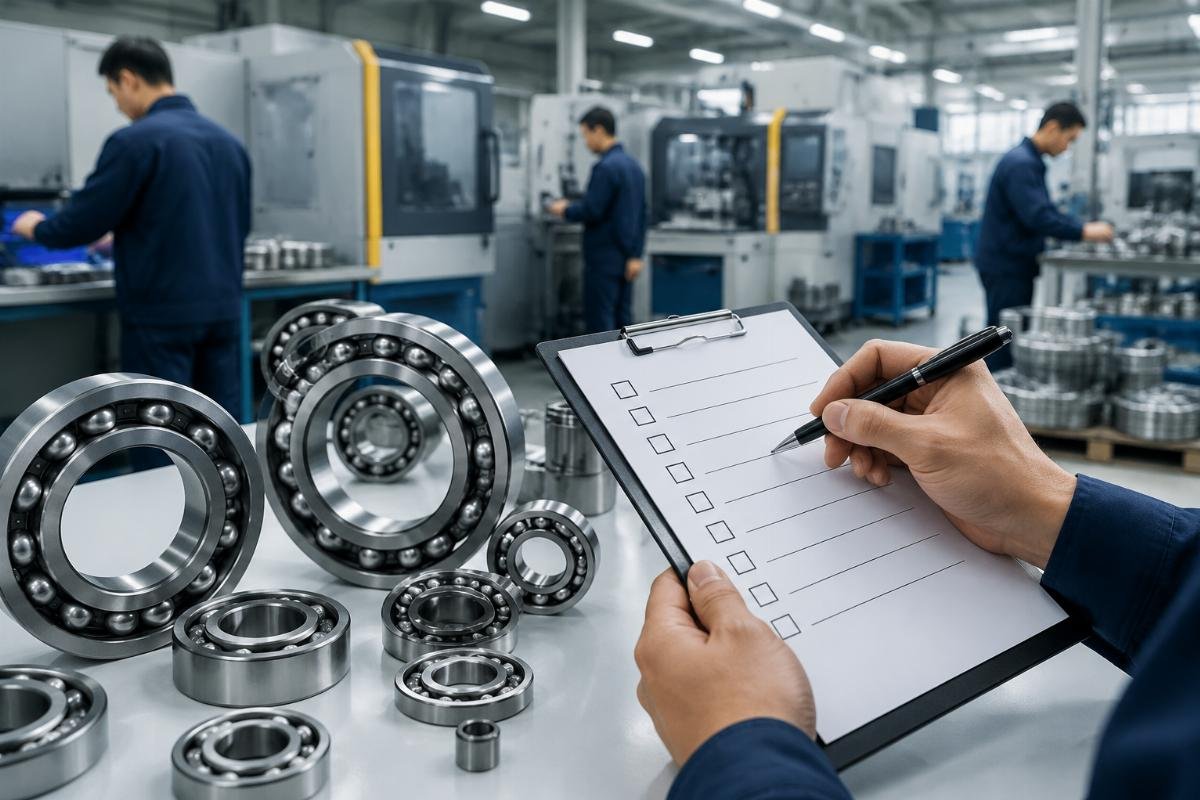
- Matching Capability Confirmation – Verify the supplier provides full cross-reference support for all major OEM brands you source regularly.
- Lead Time Testing – Place a small test order to confirm 24-hour quotation turnaround and on-time dispatch for stock parts.
- Warranty Alignment – Match warranty terms to your use case: 2 year coverage for heavy duty mining applications, 6 month coverage for standard industrial use.
What cost difference exists between OEM branded bearings and qualified Chinese replacement bearings?
Qualified factory-direct Chinese bearings deliver identical performance to leading OEM brands at 50-70% lower cost. The persistent myth that non-OEM parts are lower quality stems from buyers sourcing from unvetted low-cost traders, rather than working directly with ISO 9001 certified manufacturers that maintain full specification alignment with global standards.
| Order Type | OEM Brand Pricing | Qualified Chinese Supplier Pricing |
|---|---|---|
| Small batch MRO orders | 100% baseline | 30-50% of OEM cost |
| Bulk production orders | 100% baseline | 25-40% of OEM cost |
| Heavy duty custom parts | 100% baseline | 30% of OEM cost with equivalent or better warranty |
A US mining equipment operator that previously sourced original branded spherical roller bearings recently switched to a qualified Chinese supplier for their heavy duty fleet, paying just 30% of the original OEM price while recording a 0.3% failure rate over a 2 year use period, lower than the 0.7% failure rate they recorded with original parts. [NEED_CITE: Factory-direct Chinese bearing pricing is consistently 50-70% lower than equivalent branded OEM stock for US buyers]
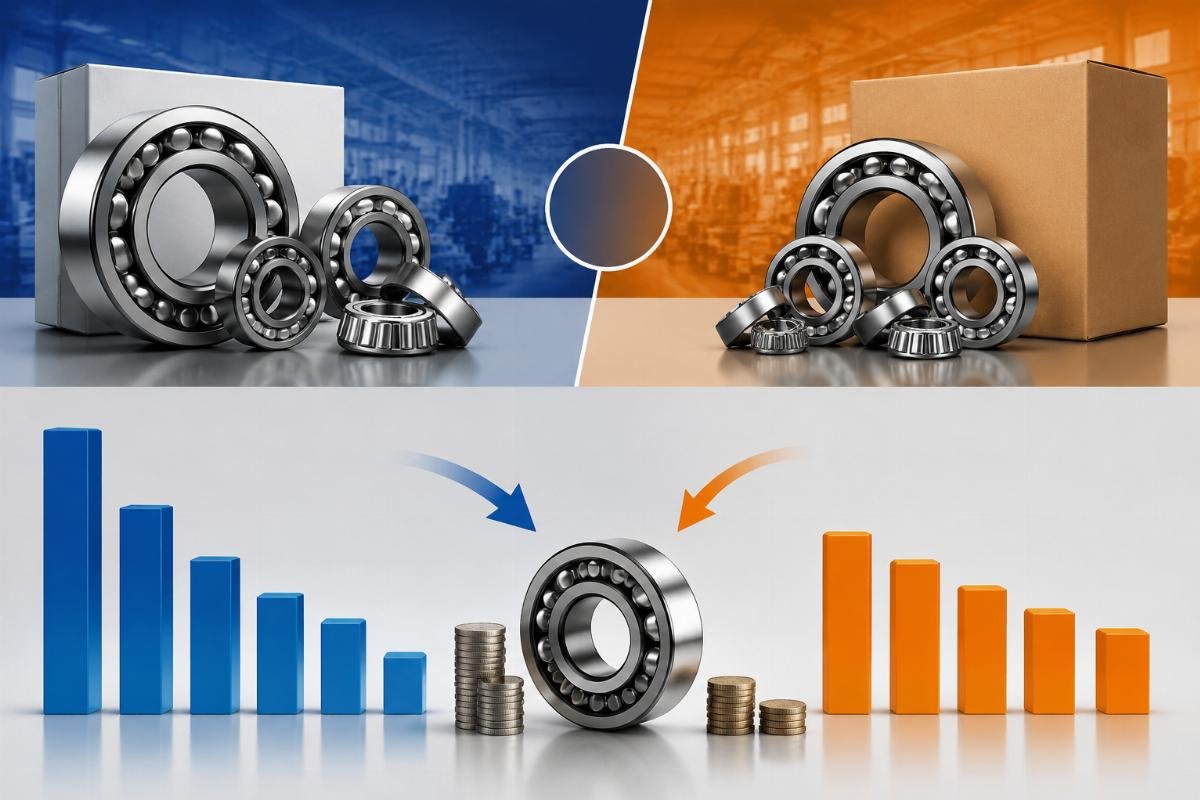
- Pricing Benchmarking – Calculate expected cost savings of 50-70% when switching from branded OEM parts to qualified factory-direct options.
- Quality Verification – Require third-party test reports to confirm parameter alignment between replacement parts and original OEM specifications.
- Warranty Validation – Confirm replacement parts come with warranty terms equal to or exceeding standard OEM coverage periods.
How to choose the most suitable delivery and settlement method for different order sizes?
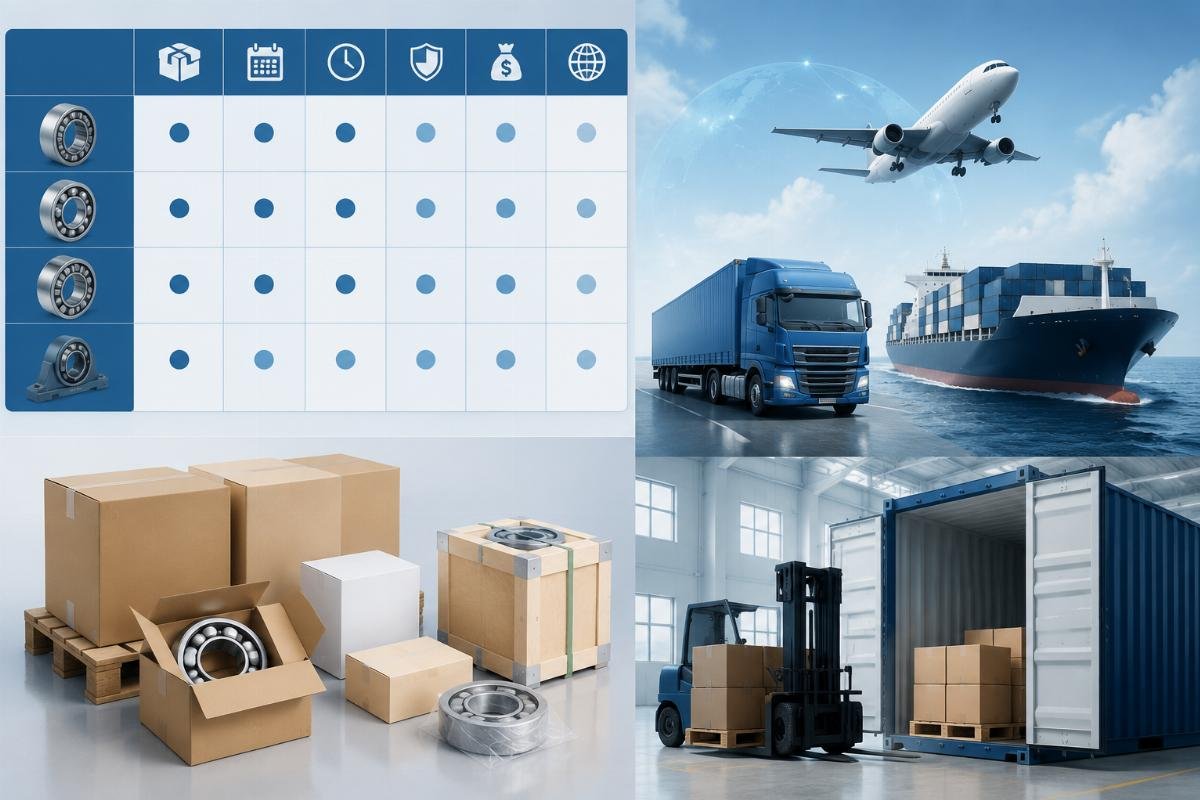
Matching delivery method to order volume is the easiest way to cut hidden logistics costs for US bearing buyers. Most buyers default to the same shipping method for every order, overpaying for express on large bulk orders or tying up excess capital waiting for sea freight on small urgent orders.
| Order Volume | Inefficient Shipping Option | Optimal Shipping Option |
|---|---|---|
| Under 500 units | Sea freight with 45+ day lead time | DHL/FedEx express with 3-7 day delivery |
| 500-2000 units | Individual air freight | Consolidated air freight for 10-14 day delivery |
| 2000+ units | Individual full container booking | Consolidated sea freight for 21-28 day delivery |
A US regional bearing distributor that previously paid a 40% premium on all small batch orders now splits their shipments by order size, using express for under 500 unit orders and consolidated sea freight for bulk container orders, cutting overall logistics costs by 28% in their first year of optimized routing.
- Order Tier Segmentation – Categorize all orders into under 500 units, 500-2000 units and 2000+ units to standardize shipping rules.
- Consolidation Partnerships – Work with suppliers that offer pre-negotiated consolidated shipping rates to avoid individual booking premiums.
- Cash Flow Alignment – Use express for small urgent orders to reduce inventory holding costs, use consolidated freight for bulk restocks to cut per-unit shipping fees.
Conclusion
**The biggest opportunity